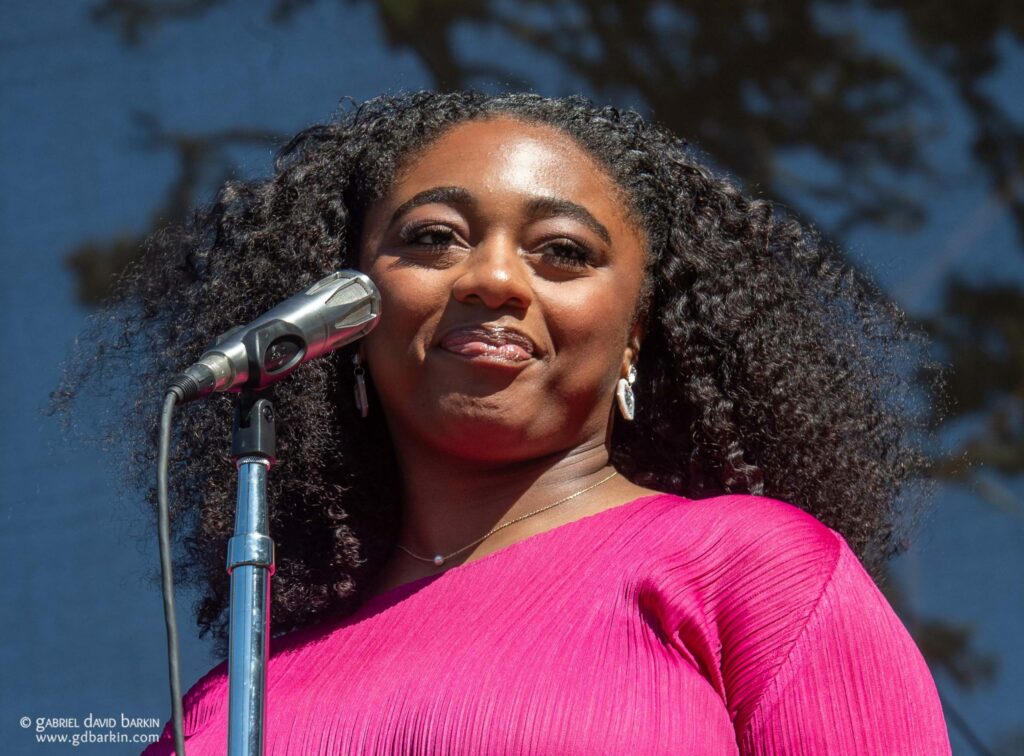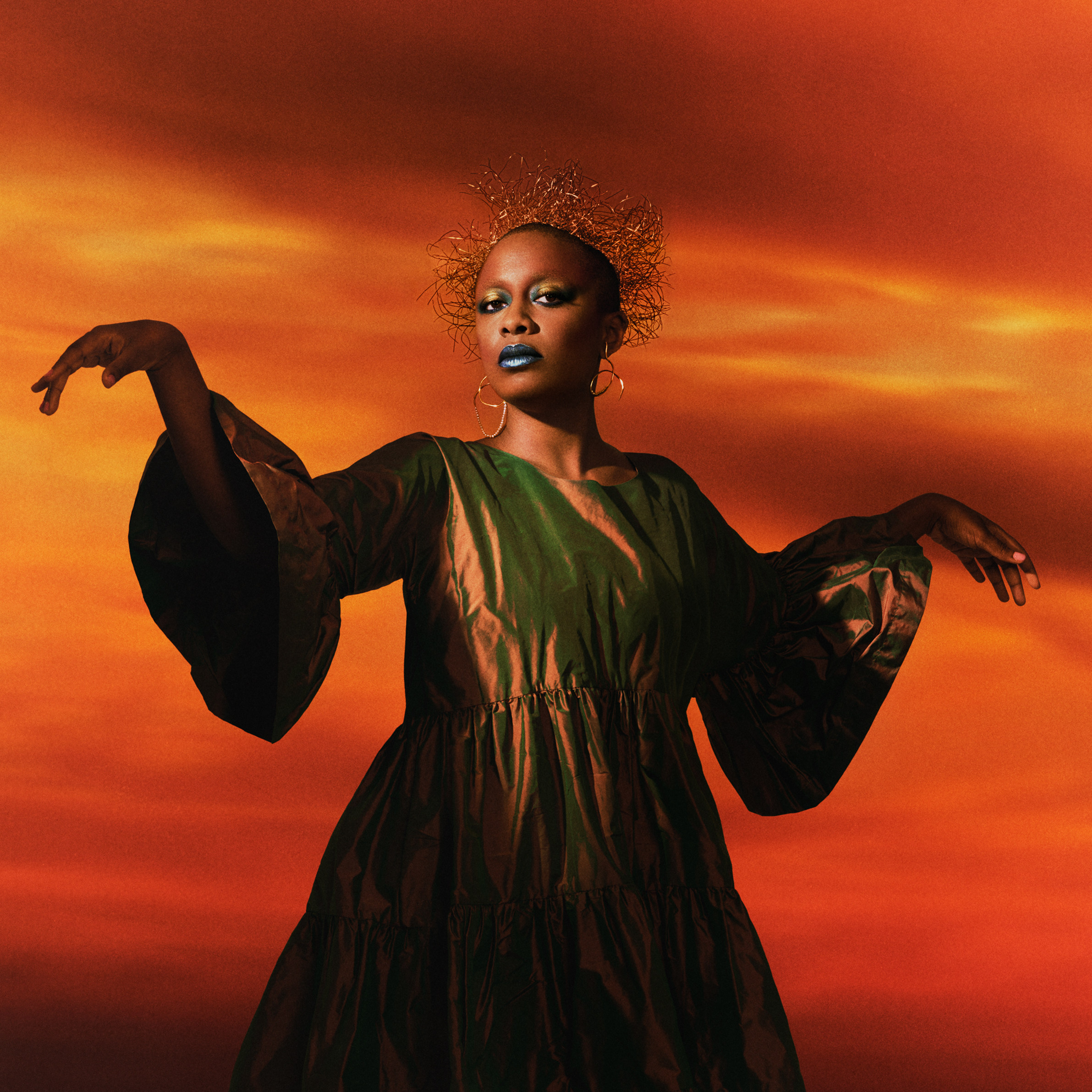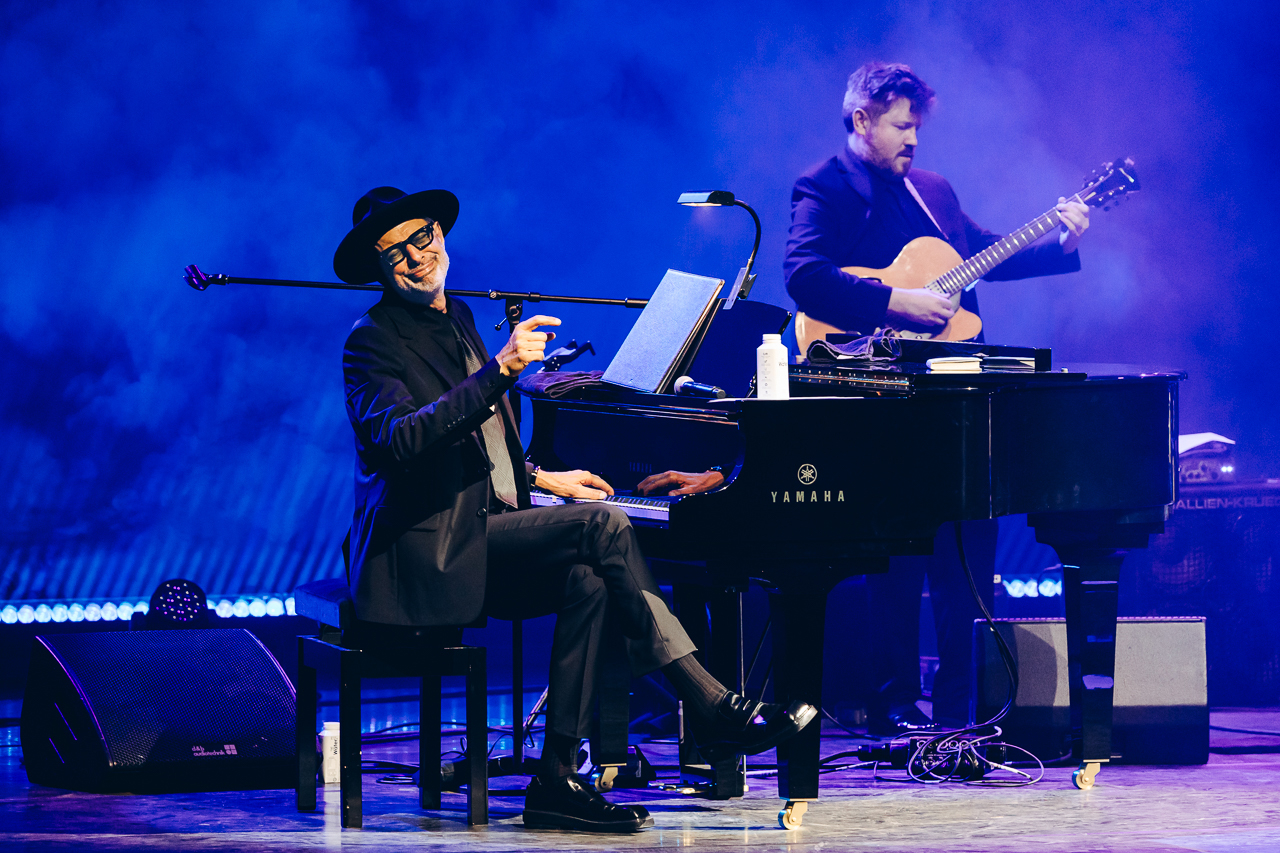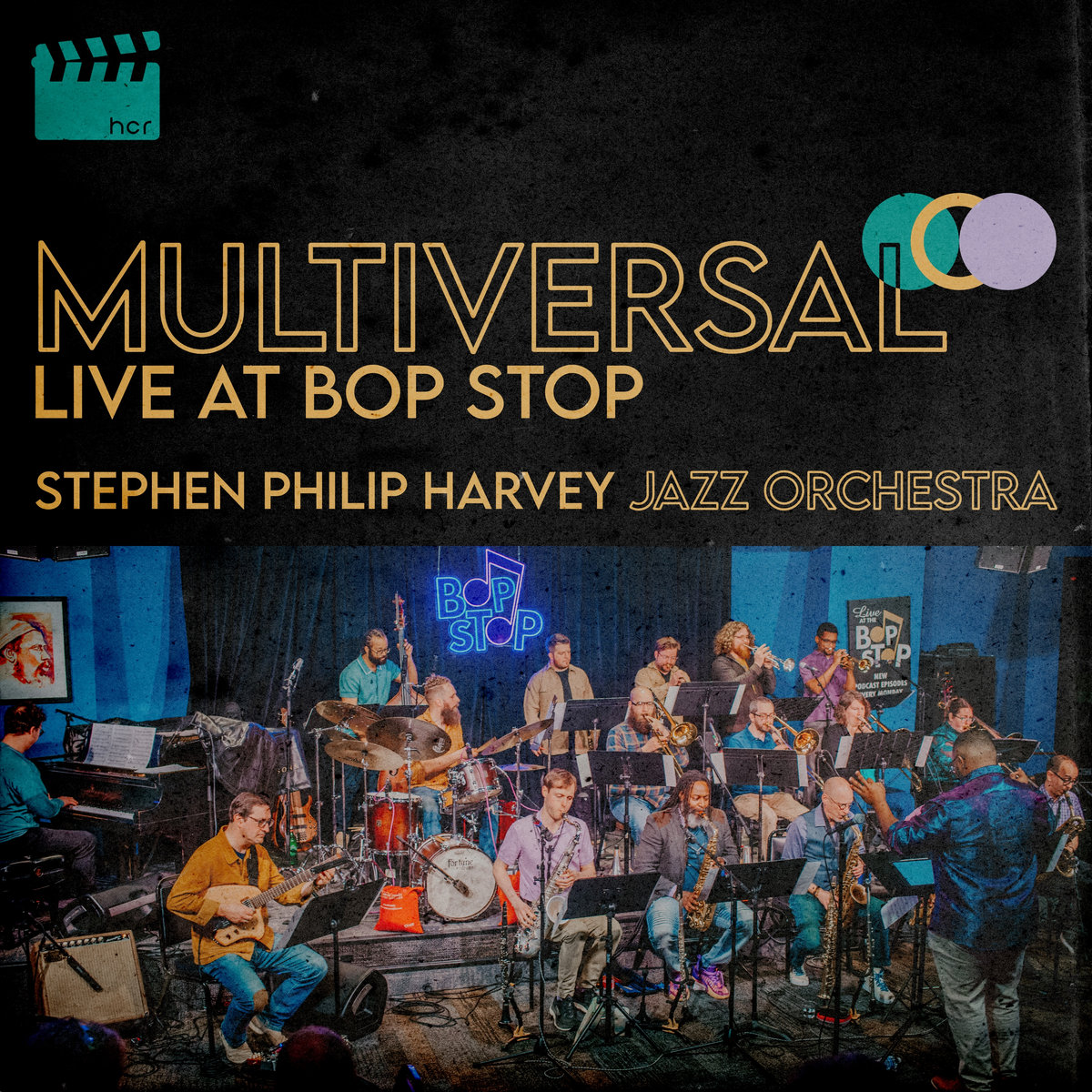
683775576_1514098056745740_5075267389618629187_n

Munich Swings Into the Spotlight as Rock That Swing Festival 2026 Reinforces the Global Power of Live Big Band and Dance Culture

There are moments in the global jazz and swing calendar that don’t just celebrate the music—they validate its ongoing relevance, its physicality, and its deep cultural endurance. The 2026 edition of the Rock That Swing Festival in Munich stands firmly in that category, delivering a fully immersive experience where live big band performance, social dance, and historical authenticity converge into something unmistakably alive. For a platform like The Improv Cafe’, where every note broadcast is rooted in live jazz, live big band, and live swing, this festival isn’t just an international highlight—it is a real-time affirmation of everything the station represents.

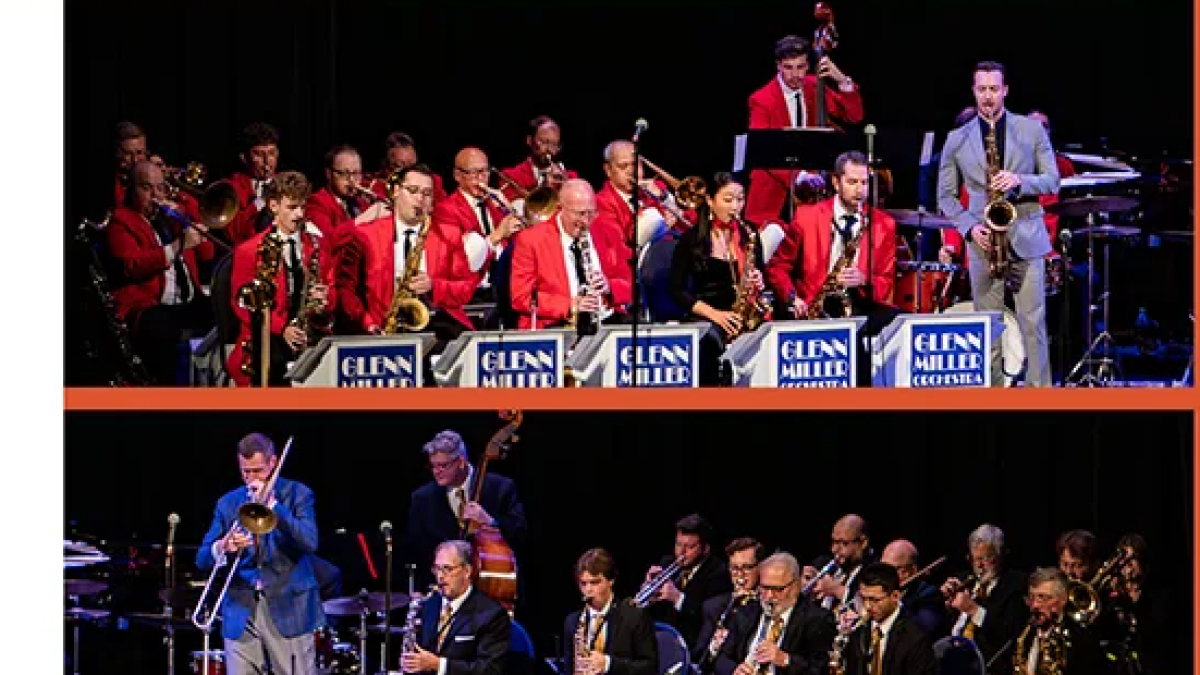
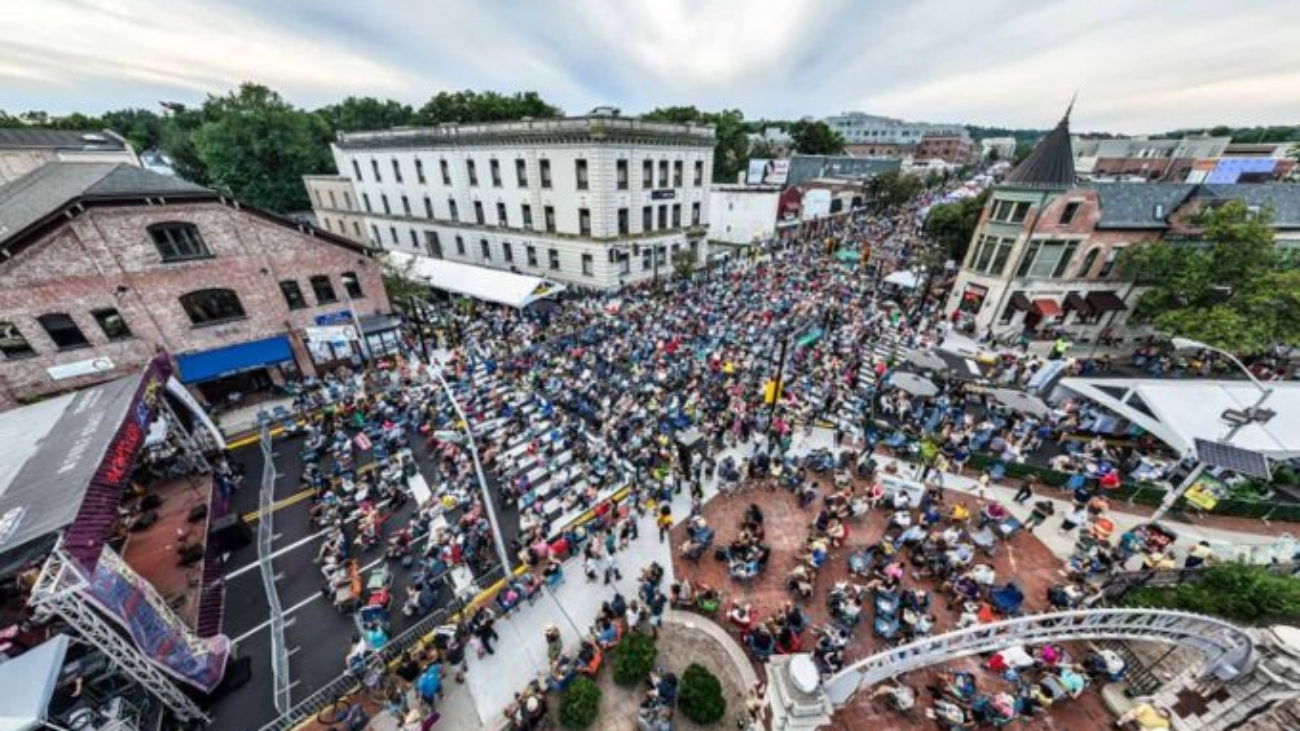
Held from February 12 through February 16, the 19th installment of the Rock That Swing Festival once again transformed Munich into a global epicenter for swing-era revival, drawing dancers, musicians, and enthusiasts from across continents. What distinguishes this event is not just its scale, but its precision: an intentional recreation and recontextualization of the 1920s through the 1950s, executed with modern energy but without sacrificing stylistic integrity. The result is a rare environment where the music is not passive—it dictates movement, shapes interaction, and becomes the central force driving every room it fills.

At the heart of this year’s program was a series of gala evenings staged in Munich’s most distinguished venues, including the Deutsches Theater and the Künstlerhaus. These were not casual performances; they were curated showcases of elite international bands operating at the highest level of swing execution. Across multiple nights, the festival delivered a continuous rotation of live orchestras, each one pushing the boundaries of what vintage jazz can feel like in a contemporary setting.

Among the standout performers anchoring the 2026 edition was Naomi & Her Handsome Devils, a seven-piece ensemble that has become synonymous with the modern swing revival done right. Led by vocalist and internationally recognized Lindy Hop champion Naomi Uyama, the group embodies a rare dual authority: musical authenticity paired with a dancer’s instinct for rhythm, pacing, and momentum. That distinction matters. In swing, the band doesn’t just play—the band leads the floor.
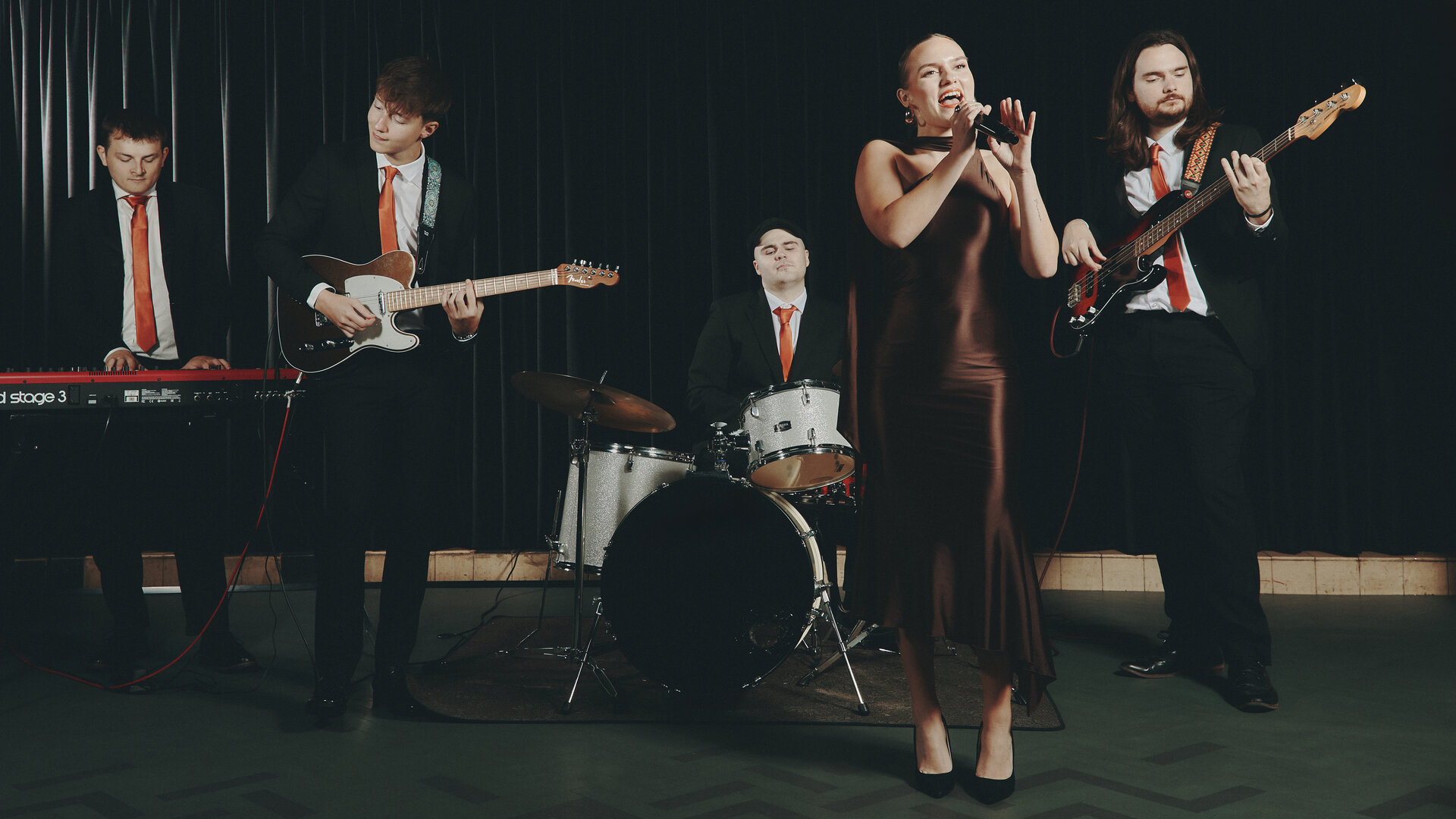
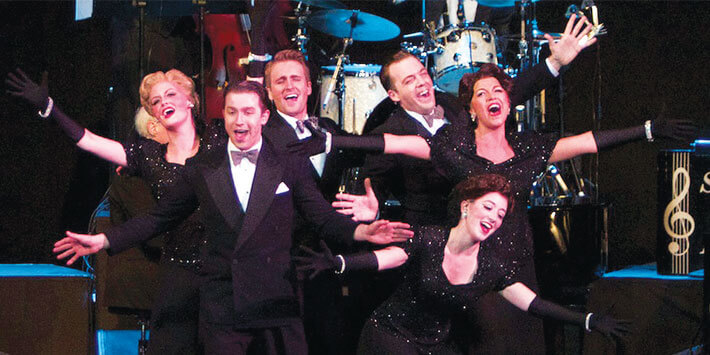
Formed in 2013 with a very specific mission, Naomi & Her Handsome Devils were built to capture the feel of late-Count Basie-era swing while maintaining the intimacy and responsiveness required for live dance environments. Their arrangements are not museum recreations; they are living frameworks designed to keep bodies moving. Every tempo choice, every horn accent, every vocal phrasing is engineered with dancers in mind, and that philosophy was on full display throughout their multi-night presence at the festival.

Their schedule alone illustrates the scale and demand surrounding their performances. On February 13, they delivered two high-energy sets during Hep Cats Night in the Künstlerhaus Ballroom, setting a tone that immediately bridged traditional swing aesthetics with contemporary crowd engagement. The following evening, February 14, placed them on one of the festival’s most prestigious stages at the Rock That Swing Ball inside the Deutsches Theater, sharing the spotlight with a select group of the world’s top swing orchestras. By February 15, they returned for the Jamboree Ball, commanding both the Main Ballroom and the Silbersaal with performances that reinforced their role as one of the defining bands of the current swing movement.

What makes their impact particularly significant is how it reflects a broader shift in the global jazz ecosystem. Swing is no longer being preserved—it is being actively lived. Festivals like this are not nostalgia-driven gatherings; they are functional communities where music, dance, and culture operate in real time. The presence of over 300 workshops led by more than 70 international instructors during the festival’s Dance Camp component underscores that point. This is a training ground, a cultural exchange, and a performance circuit all at once, where the next generation of dancers and musicians are shaped directly within the tradition they are preserving.

And that is precisely where The Improv Cafe’ aligns seamlessly with this global movement. The station’s commitment to exclusively broadcasting live recordings—whether it’s a roaring big band set, a tight swing combo, or a vocal jazz performance captured in front of an audience—mirrors the same ethos driving events like Rock That Swing. There is an immediacy to live music that cannot be replicated, and in the swing world, that immediacy is inseparable from the dance floor. It’s not just about hearing the music; it’s about feeling its propulsion, its elasticity, and its unpredictability.

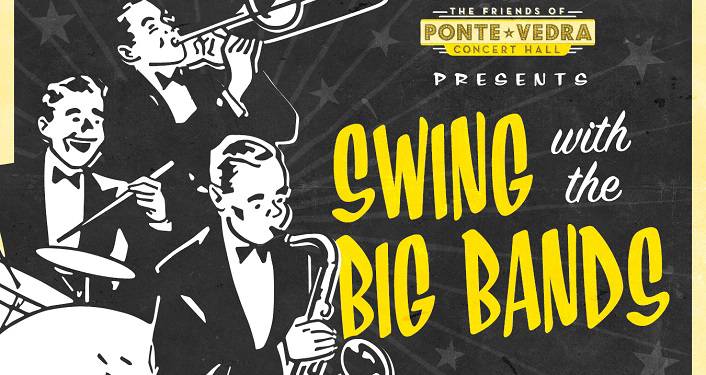
That energy carries directly into tonight’s programming, where The Improv Cafe’ continues that tradition with its “Swing with the Big Bands” radio show. Designed as a Friday night destination, the show is built around legendary live performances from the most influential big band leaders and orchestras in history. This isn’t a passive listening experience—it’s an invitation to move. Whether it’s the precision of a horn section locked into a driving rhythm or the spontaneous interplay between soloists, the broadcast captures the same spirit that defines a packed ballroom in Munich or a late-night dance floor anywhere in the world.

The connection between a global festival stage and a radio broadcast may seem abstract at first glance, but in reality, they operate on the same principle: preservation through performance. Every time a live swing recording is played, it extends the life of that moment. Every time a listener gets up and moves to the music, it reinforces the purpose behind it. And every time a band like Naomi & Her Handsome Devils takes the stage in front of a room full of dancers, it proves that swing is not a closed chapter in music history—it is an ongoing, evolving conversation.

Munich’s Rock That Swing Festival 2026 didn’t just showcase that reality—it amplified it. It demonstrated that the infrastructure supporting swing culture is not only intact, but thriving at an international level. It confirmed that audiences are still seeking out authentic live experiences. And it reinforced that the relationship between musicians and dancers remains one of the most dynamic and interactive forms of artistic expression in the modern era.

For listeners tuning into The Improv Cafe’, that same world is only a click away. The sounds coming through the speakers are not distant echoes of the past—they are living documents of a tradition that continues to fill rooms, move crowds, and define nights. And on a Friday evening, as “Swing with the Big Bands” takes over the airwaves, that connection becomes immediate, tangible, and impossible to ignore.

slomp_2018_750x500

Chicago’s All-Star Global Concert Brings Live Jazz to a Worldwide Audience Tonight

International Jazz Day 2026 Reaches Its Defining Moment in Chicago as The Improv Cafe’ Elevates the Global Stage of Live Jazz. There are nights in music when everything converges—history, artistry, culture, and the undeniable electricity of live performance—and tonight, April 30, 2026, stands as one of those rare inflection points. Chicago becomes the epicenter of the jazz universe as the International Jazz Day All-Star Global Concert unfolds inside the Lyric Opera of Chicago, a three-hour masterclass in live improvisation, cultural dialogue, and musical legacy that aligns seamlessly with the core identity of The Improv Cafe’: a station built entirely on the power and authenticity of live jazz, live big band, and live swing.

While the headline acts were mentioned, the All-Star Global Concert features a record-breaking roster of over 40 artists.

  • Complete Performer Highlights: Additional confirmed stars include Renée Fleming, Béla Fleck, Dianne Reeves, Lizz Wright, Gonzalo Rubalcaba, and Terri Lyne Carrington.
  • Chicago’s Finest: Local artists performing include Bobby Broom, Ernest Dawkins, Marquis Hill, Joel Ross, Jahari Stampley, and Dee Alexander.
  • Special Appearances: The broadcast will feature guest appearances by actors Michael Douglas, Hellen Mirren, Will Smith, Morgan Freeman, and Jeremy Irons.

Today’s Education & Community Schedule (CT)

Chicago is hosting free public educational events leading up to the main performance:

  • 10:00 AM: Official Opening Ceremony at Pritzker Pavilion, Millennium Park.
  • 11:00 AM – 3:00 PM: Sidewalk Sessions—free pop-up jazz performances across Millennium Park featuring the South Side Jazz Coalition  and Windy City Ramblers.
  • 11:15 AM: Jazz, Film, and Storytelling panel featuring Herbie Hancock, Marcus Miller, and Kris Bowers.
  • 3:15 PM: Jazz Masterclass with Paul Cornish and Michael Mayo.
  • 5:45 PM: Special Tribute to Herbie Hancock at Hyde Park Academy High School.

From 7:00 PM to 10:00 PM Central Time, the world is not just watching a concert—it is witnessing a living archive of jazz being created in real time. Broadcast globally in pristine 4K across digital platforms, the event delivers something increasingly rare in modern media: a fully realized, unfiltered, live musical experience where spontaneity defines the outcome and no two moments can ever be repeated. That principle is the foundation of The Improv Cafe’ and the reason this night resonates far beyond Chicago.

Curated by the visionary leadership of Herbie Hancock and the refined vocal artistry of Kurt Elling, the All-Star Global Concert assembles one of the most ambitious lineups ever presented under the International Jazz Day banner. This is not simply a roster—it is a cross-generational summit of artists who have defined, reshaped, and expanded the language of jazz across continents and decades. Voices like Dee Dee Bridgewater and Gregory Porter bring depth and storytelling, while innovators such as Robert Glasper and Jacob Collier push harmonic boundaries into new territory. Instrumental brilliance flows through the presence of Marcus Miller and Terence Blanchard, each embodying the modern evolution of the jazz tradition.

The scale expands even further with additional performances from Renée Fleming, Béla Fleck, Dianne Reeves, Lizz Wright, Gonzalo Rubalcaba, and Terri Lyne Carrington—a lineup that underscores the genre’s boundless reach and its ability to absorb and reinterpret musical influences from around the world. Chicago’s own deep jazz lineage is equally represented, with artists like Bobby Broom, Ernest Dawkins, Marquis Hill, Joel Ross, Jahari Stampley, and Dee Alexander delivering performances rooted in the city’s storied musical DNA.

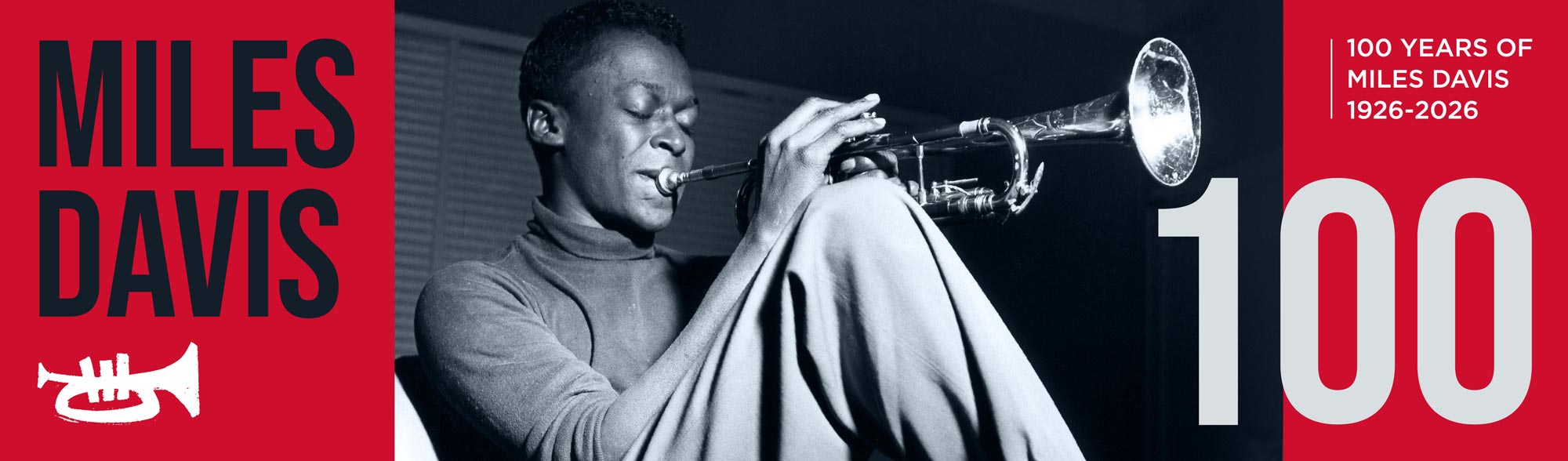
What elevates this event into something even more culturally significant is its broader context. The 2026 celebration aligns with the 250th anniversary of the United States, a milestone that reframes jazz not just as an art form, but as one of the country’s most influential global exports—a living, breathing expression of American creativity and resilience. It also honors what would have been the 100th birthday of Miles Davis, whose revolutionary approach to sound, structure, and improvisation continues to echo through every modern jazz performance. His spirit is embedded in tonight’s concert, not through replication, but through the fearless exploration that defined his career.

Beyond the stage at the Lyric Opera, Chicago itself has transformed into a citywide canvas for jazz. From the morning’s opening ceremony at Millennium Park’s Pritzker Pavilion to afternoon sidewalk performances featuring local collectives, the day has been a continuous flow of live music, education, and community engagement. Panels exploring jazz’s intersection with film and storytelling, masterclasses led by emerging and established artists, and tributes to living legends reinforce the idea that jazz is not static—it is a constantly evolving dialogue.

That philosophy extends into the evening across venues throughout the city. Spaces like Winter’s Jazz Club host deeply rooted celebrations of Chicago’s jazz heritage, while innovative environments like The Salt Shed and Reva and David Logan Center for the Arts create access points for new audiences through live performances and communal viewing experiences. Every room, every stage, and every note contributes to a single unified statement: jazz is alive, global, and more relevant than ever.

For The Improv Cafe’, this moment is not just coverage—it is validation. A station devoted exclusively to live jazz, live big band, live swing, and vocal jazz thrives on nights like this because they reinforce the irreplaceable value of performance in its purest form. Studio recordings have their place, but it is in the live setting—where tempo can stretch, solos can evolve mid-phrase, and musicians respond instinctively to one another—that jazz reveals its true identity. That is what The Improv Cafe’ delivers around the clock, and that is exactly what the world is experiencing tonight.

The presence of cultural figures such as Morgan Freeman, Helen Mirren, Will Smith, Michael Douglas, and Jeremy Irons within the broadcast further underscores the event’s reach beyond music into broader artistic and cultural territory. Jazz has always existed at the intersection of disciplines—film, literature, theater—and tonight’s production reflects that multidimensional influence.

As the final performances unfold and the global audience leans into every improvisational turn, one truth becomes undeniable: this is not just a concert, it is a defining cultural moment. It captures the essence of what jazz has always represented—freedom, collaboration, and the courage to create something entirely new in the moment it is needed most.

For listeners tuned into The Improv Cafe’, this is the standard. This is the benchmark. This is the reason live jazz matters.

And tonight, Chicago reminds the world exactly why.

maxresdefault (2)

The Improv Cafe’ Presents: International Jazz Day 2026 Ignites a Global Live Music Surge—From Chicago’s All-Star Stage to New Jersey’s Local Pulse

There are moments in the lifecycle of an art form when its global presence, cultural urgency, and live performance tradition align with unmistakable clarity. As April 30 approaches, the jazz world is not simply preparing for another annual celebration—it is converging around a milestone. The 15th anniversary of International Jazz Day is unfolding with Chicago at its epicenter, reaffirming jazz not as a genre confined to history, but as a living, breathing, evolving language rooted in performance. For a platform like The Improv Cafe’, where every note broadcast is drawn from live recordings, this moment represents something deeper than a headline—it is validation of a philosophy: jazz is meant to be experienced in real time, in real space, and in direct connection with the audience.

Chicago’s designation as the 2026 Global Host City is not symbolic—it is structural. The city’s lineage in jazz history, from South Side clubs to its role in shaping modern improvisational forms, makes it a natural focal point for a global gathering of artists. The centerpiece event at the Lyric Opera of Chicago will bring together a cross-generational lineup of musicians under the musical direction of Herbie Hancock, whose influence extends far beyond performance into cultural stewardship. The All-Star Global Concert is not designed as a retrospective—it is an active statement about where jazz exists today: borderless, collaborative, and grounded in live interpretation.

That emphasis on live performance is precisely where The Improv Cafe’ operates with authority. While streaming platforms continue to prioritize studio recordings and algorithmic discovery, this station’s commitment to exclusively live jazz, live big band, live swing, and live vocal jazz places it in direct alignment with the core of what International Jazz Day represents. The difference is not subtle. Live recordings capture the elasticity of tempo, the spontaneity of improvisation, the risk inherent in performance, and the chemistry between musicians that cannot be replicated in controlled environments. In many ways, what Chicago will present on April 30 is exactly what The Improv Cafe’ delivers every day—unfiltered, unscripted, and fully alive.

International Jazz Day is officially celebrated on April 30, and in 2026, Chicago is the Global Host City. While the main “All-Star Global Concert” is the centerpiece, cities across the world—including New Jersey and Philadelphia—host their own performances during the surrounding week. 

Global Centerpiece (Chicago, IL)
As the host city, Chicago is running a citywide program called “Neighborhood Nights”

  • All-Star Global Concert (Apr 30): Held at the Lyric Opera of Chicago, this flagship event is led by Herbie Hancock and Music Director John Beasley. It will be livestreamed globally. 
  • Jazz Day Club Tour (Apr 27): Reggies Chicago is hosting a three-room “Club Tour Experience” featuring Neal Alger and others. 
  • Neighborhood Jazz Night (Apr 30): A tribute to Ramsey Lewis and Herbie Hancock featuring the Theodis Rodgers Jr. Quartet at the Little Black Pearl Art Academy. 

New Jersey Shows

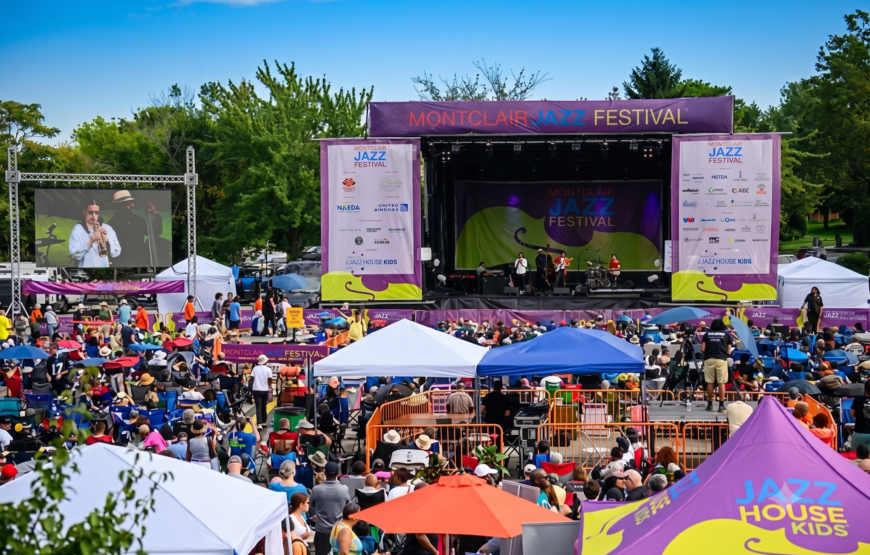
  • NJPAC (Newark) – Tomorrow, Apr 26: A free performance spotlighting the “next generation” of jazz artists, co-presented by JAZZ HOUSE KiDS. 
  • Metuchen Public Library – Apr 30: The Cornerstone Jazz Series will feature the Leonieke Scheuble Trio with jazz legend Bill Crow on bass. 
  • Rutherfurd Hall (Hackettstown) – Tomorrow, Apr 26: The Giacomo Gates Trio is performing a fundraiser set as part of their 2026 Jazz Series. 

Philadelphia & Regional Highlights
Sassafras (Old City) – Apr 30
This venue will host an official International Jazz Day celebration  to wrap up Philly Jazz Month.

A special Michael Brecker Jazz Showcase and Benefit featuring talented musicians paying tribute to the late saxophonist.

Online & Broadcast
If you can’t make it to a live venue, PBS just premiered a special called “International Jazz Day from Abu Dhabi,” featuring a 2025 All-Star concert hosted by Jeremy Irons. 

Beyond Chicago, the global circuit is equally active, reinforcing the scale and diversity of jazz as a worldwide movement. In London, the Brick Lane Jazz Festival is in its final stretch, offering a contemporary counterpoint to traditional forms, with emerging artists redefining genre boundaries through fusion and experimentation. Simultaneously, the Saint Lucia Jazz & Arts Festival begins its extended run, blending jazz with broader artistic disciplines and regional cultural expression. These festivals are not isolated events—they are nodes in a larger network that underscores jazz’s adaptability across geographies and audiences.

At the industry level, innovation continues to reshape how jazz is discussed, documented, and disseminated. The launch of the “Jazz Language” podcast by Chill Tone Records introduces a new layer of intellectual engagement, with Noah Preminger leading in-depth conversations with contemporary voices shaping the genre. This is not surface-level commentary—it is a technical and philosophical exploration of improvisation, composition, and the evolving vocabulary of jazz. For listeners who engage with The Improv Cafe’, this type of discourse complements the listening experience, offering context to the performances they hear.

Equally notable is the continued crossover between genres, exemplified by Flea and his debut jazz album Honora. His return to the trumpet and entry into the jazz space is more than a side project—it reflects a broader trend of artists revisiting foundational influences and engaging with jazz as a discipline rather than a novelty. This cross-pollination reinforces jazz’s role as both a foundation and a frontier within the music ecosystem.

Closer to home, the regional landscape across New Jersey and Philadelphia is not merely participating in this global moment—it is actively contributing to it. The Germantown Jazz Festival is currently in full swing, with a programming structure that blends performance and education. Today’s focus on Terell Stafford exemplifies that dual approach, pairing a master class with a live quintet performance at the Settlement Music School. This format is critical. Jazz has always been transmitted through mentorship and live demonstration, and festivals that prioritize both are essential to sustaining the art form.

In Newark, New Jersey Performing Arts Center is preparing to host a community-driven International Jazz Day celebration, emphasizing accessibility and youth engagement. The inclusion of emerging artists and student ensembles ensures that the next generation is not positioned as future participants, but as active contributors in the present. This aligns directly with the ethos of live jazz as a continuum rather than a fixed canon.

The regional calendar continues with performances that reflect the breadth of the jazz spectrum. At Rutherfurd Hall, the Giacomo Gates Trio will deliver a performance rooted in vocal jazz tradition, while the Monroe Quinn Trio brings a “Swing into Spring” program to the Mahwah Public Library, reinforcing the accessibility of live jazz in community spaces. Meanwhile, the Sunhouse Singers will perform in Wayne, extending the reach of vocal harmony traditions into local concert settings.

Taken together, these events illustrate a critical point: jazz is not centralized. It operates simultaneously at the highest levels of global production and within intimate local environments, each reinforcing the other. The same improvisational principles guiding an All-Star ensemble in Chicago are present in a trio performance in New Jersey or a festival set in Philadelphia. That continuity is what sustains the genre.

For The Improv Cafe’, this convergence is not just news—it is a moment of amplification. As International Jazz Day approaches, the station stands uniquely positioned to connect listeners with the essence of what is being celebrated worldwide. Every broadcast becomes part of a larger narrative, one that prioritizes authenticity, musicianship, and the irreplaceable energy of live performance. In an era where music consumption is increasingly fragmented and digitized, the commitment to live recordings is not nostalgic—it is forward-thinking.

April 30 will serve as a global focal point, but the reality is that jazz does not begin or end on a single date. It is ongoing, adaptive, and perpetually in motion. From Chicago’s grand stage to the clubs, halls, and community spaces of New Jersey and beyond, the message is consistent: jazz is alive, it is evolving, and it is meant to be heard as it happens.

zu-gast-bei-village-vanguard-03

Live at The Village Vanguard Tonight on The Improv Café: Where Jazz History Lives, Breathes, and Broadcasts in Real Time

There are very few phrases in music that carry the weight, credibility, and cultural permanence of Live at the Village Vanguard. It is not just a recording credit. It is a benchmark, a rite of passage, and in many cases, a defining moment in an artist’s career. On The Improv Café—your dedicated destination for live Jazz, live Big Band, live Swing, and live Vocal Jazz only—that phrase is not treated as nostalgia. It is presented as a living, ongoing experience, unfolding in real time every week.

Tonight, The Improv Café once again delivers one of its most powerful programming pillars: “Live at The Village Vanguard”, a five-hour continuous broadcast that captures the essence of jazz in its most authentic and unfiltered form. This is not a curated approximation of the genre. This is the real thing—live recordings from one of the most revered jazz rooms in the world, presented without compromise.

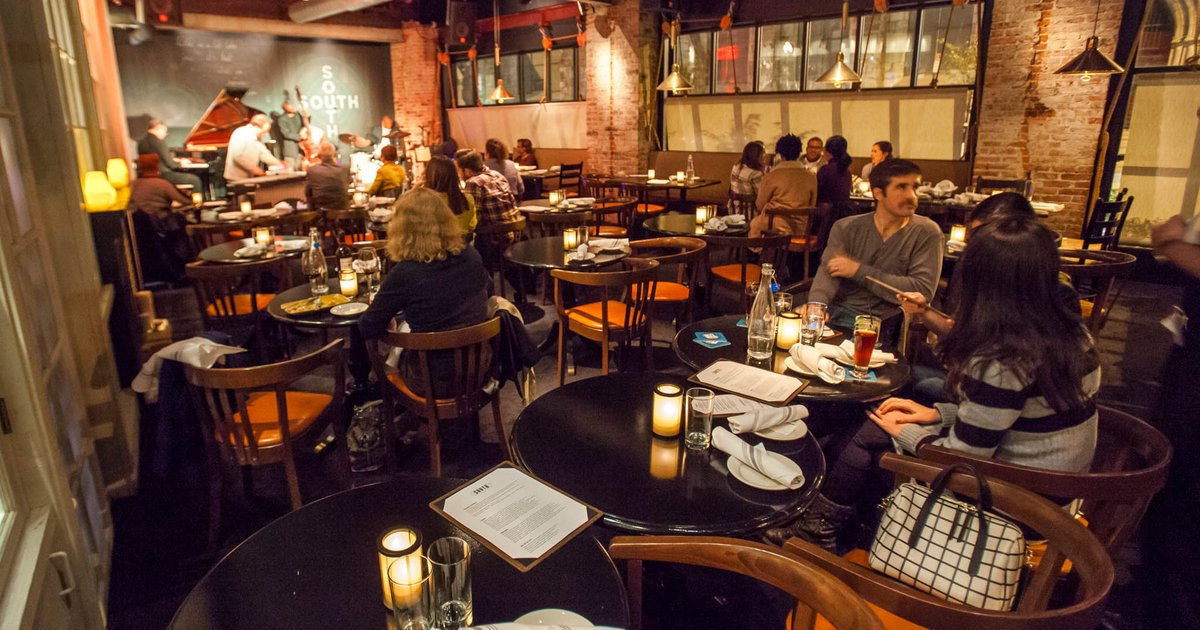
At the center of it all is Village Vanguard, a venue that has defined the sound, spirit, and trajectory of modern jazz for decades. Located in the heart of Greenwich Village, the Vanguard is unlike any other performance space. Its triangular layout, low ceilings, and dimly lit interior create an environment where proximity matters—where every note, every breath, and every improvisational decision is felt as much as it is heard.

This intimacy is precisely what makes live recordings from the Vanguard so enduring. When listeners tune into The Improv Café tonight, they are not hearing polished studio edits. They are stepping directly into the room—into a space where the audience is close enough to feel the vibration of a bass string, where the drummer’s brushwork becomes part of the atmosphere, and where the line between performer and listener dissolves entirely.

The history embedded within these recordings is staggering. The Vanguard stage has hosted transformative performances from artists such as John Coltrane and Bill Evans, whose live recordings at the venue are widely regarded as some of the most important documents in jazz history. That lineage continues into the present with modern innovators like Wynton Marsalis and Chris Potter, ensuring that the Vanguard is not frozen in time—it is evolving, adapting, and continuing to shape the future of the genre.

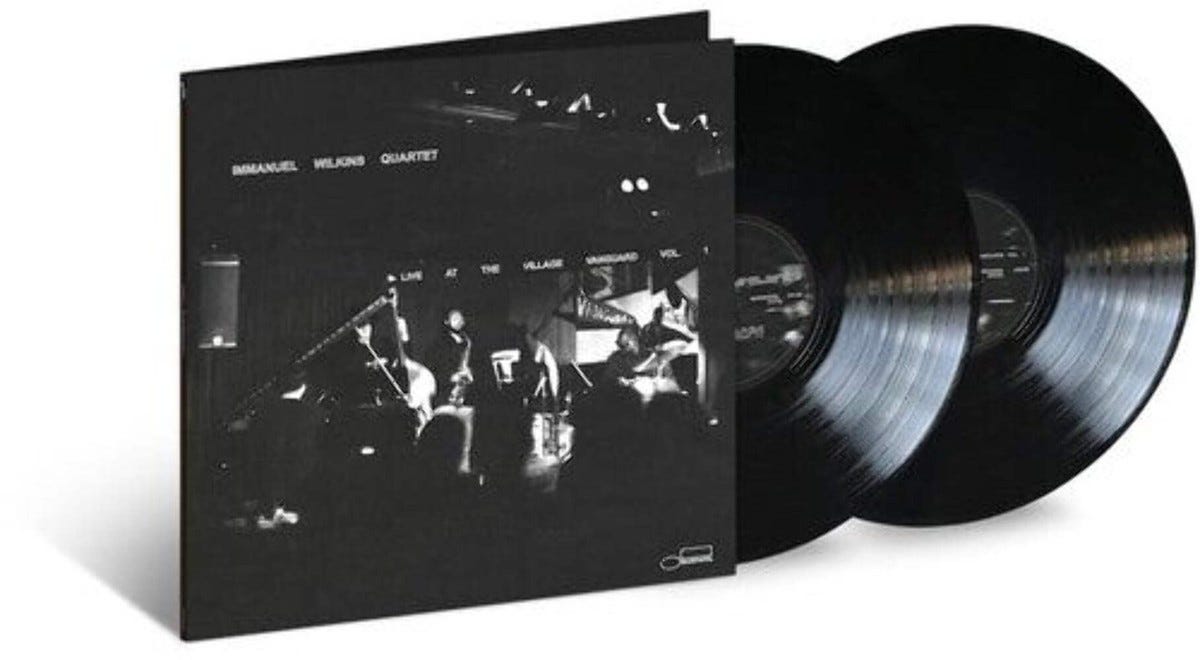
This week’s programming across the Vanguard ecosystem reinforces that ongoing relevance. Immanuel Wilkins, one of the most forward-thinking voices in contemporary jazz, has just released Live at the Village Vanguard, Vol. 2, the second installment in an ambitious multi-volume series documenting his work within the space. This release is not simply another live album—it is a continuation of the Vanguard tradition, where artists use the room itself as an instrument, responding to its acoustics, its energy, and its history.

At the same time, the venue remains as active as ever. The Brad Mehldau Trio is currently in residence, bringing its deeply introspective and harmonically rich approach to the Vanguard stage. The Vanguard Jazz Orchestra continues its legendary Monday night run, a tradition that has become one of the most enduring fixtures in live big band performance anywhere in the world. And soon, Joe Lovano will begin his own engagement, adding another chapter to a career already deeply intertwined with the venue.

What The Improv Café accomplishes with its Live at The Village Vanguard broadcast is something that goes beyond programming—it creates access. It bridges geography, allowing listeners who may never set foot in Greenwich Village to experience the Vanguard as it was meant to be experienced: live, immediate, and emotionally direct. This is particularly significant in a media environment where so much of music consumption has become compressed, algorithm-driven, and disconnected from the original performance context.

The Improv Café operates in direct opposition to that trend. By committing exclusively to live recordings—no studio tracks, no artificial enhancements, no compromises—it restores the integrity of the listening experience. Every performance aired is a moment in time, preserved and presented exactly as it happened. This approach is not only rare; it is essential for preserving the true character of jazz, a genre built on spontaneity, risk, and real-time interaction.

The five-hour continuous format of tonight’s broadcast is equally intentional. Jazz, particularly in its live form, is not designed to be consumed in fragments. It unfolds gradually, building tension, releasing it, and then rebuilding in new and unexpected ways. By extending the program across an uninterrupted block, The Improv Café allows listeners to fully immerse themselves in that process, to follow the arc of performances as they develop organically.

Beyond New York, the “Vanguard” name continues to resonate across multiple artistic disciplines, reinforcing its broader cultural significance. In Montclair, the Vanguard Theater is preparing its 2026 Illuminating New Voices Festival, showcasing original works and expanding the boundaries of contemporary performance. On the West Coast, the Santa Clara Vanguard is advancing both educational initiatives and major performance ambitions, demonstrating how the Vanguard identity continues to evolve across generations and geographies.

Yet it all traces back to that singular room in Greenwich Village—the one that continues to define what it means to perform, record, and experience jazz at the highest level.

For The Improv Café, aligning its programming with this legacy is not a branding decision. It is a statement of purpose. The station exists to deliver live music in its purest form, and there is no better embodiment of that mission than the recordings born within the Village Vanguard.

Tonight’s Live at The Village Vanguard broadcast is not just another radio show. It is a direct line into one of the most important cultural spaces in modern music history. It is an opportunity to hear jazz as it was intended to be heard—unfiltered, unrepeatable, and alive.

And in a world where so much content is manufactured, edited, and optimized for convenience, that kind of authenticity is not just refreshing. It is indispensable.

01jazzessay1-videoSixteenByNineJumbo1600

Swing Is Alive, Loud, and Unstoppable: Inside the Resurgence of Big Band Jazz and the Soundtrack of Friday Nights on The Improv Café Radio

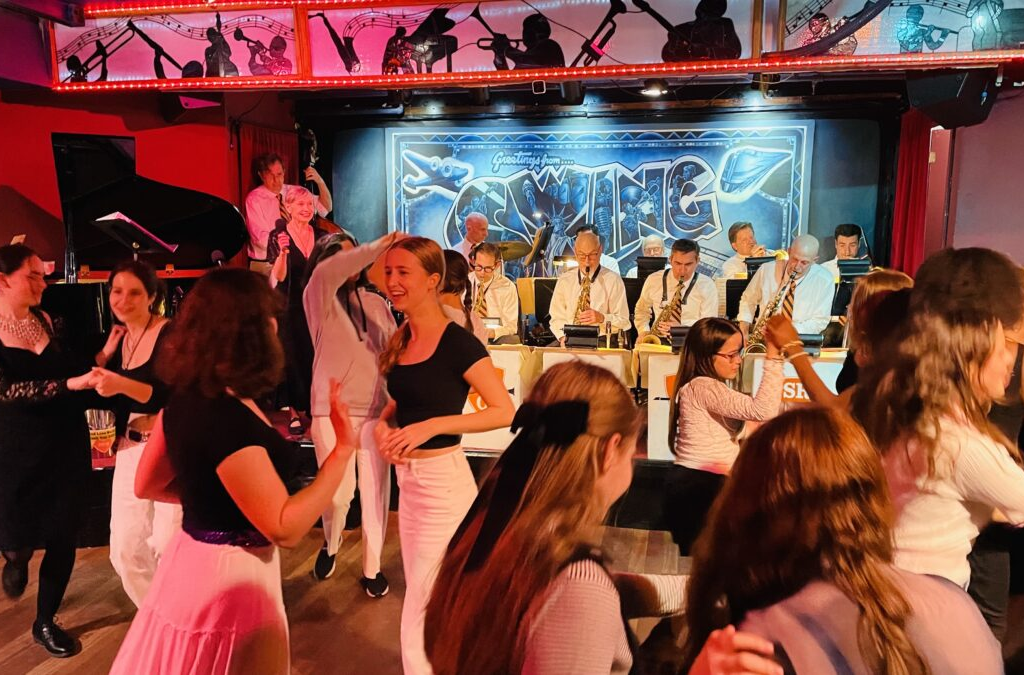
The Return of the Dance Floor: How Live Swing, Big Band Energy, and The Improv Café Are Driving a New Era of Movement and Music. There is a moment—just before the band hits full stride—when the room shifts. The horns rise, the rhythm locks in, and suddenly the floor is no longer a floor. It becomes a living, moving current of bodies in motion, responding in real time to something bigger than themselves. That moment, once synonymous with ballrooms of the 1930s and 40s, is happening again across New Jersey and Philadelphia, and it is being amplified every single week through The Improv Café Radio Station—a broadcast space where live jazz, live big band, and live swing are not curated nostalgia, but a present-tense experience.

At the center of that experience is tonight’s Swing with the Big Bands Radio Show, a Friday night ritual that continues to define what this station does best. This is not passive listening. It is a call to move, to respond, to reconnect with the pulse of live performance. Every track is pulled from real stages, real rooms, real audiences—capturing the immediacy that defines swing at its highest level. When the show begins, it does not simply play music; it recreates the conditions that made swing a cultural force in the first place.

That resurgence is not confined to the airwaves. Across the region, the dance floor is back in motion, and it is being driven by a network of venues, instructors, and communities that are rebuilding swing culture from the ground up. What makes this moment particularly compelling is its accessibility. You do not need years of training, a partner, or even prior experience. You only need the willingness to step into the rhythm.

In Madison, New Jersey, a growing swing community continues to gather for structured evenings that blend instruction with live energy. Events are designed to eliminate barriers, beginning with professional lessons that guide newcomers through the fundamentals before opening the floor to social dancing. The upcoming anniversary celebration featuring a full big band underscores how these gatherings are evolving—no longer niche events, but full-scale experiences that mirror the energy of historic swing nights.

Jersey City has emerged as another focal point, where dance studios are offering consistent programming that bridges traditional and modern swing styles. From foundational East Coast Swing to the more fluid dynamics of West Coast Swing, the city’s schedule reflects a demand for both structure and improvisation. These classes are not isolated sessions; they are entry points into a larger ecosystem where dancers continue to refine their movement through repetition, community, and exposure to live music.

Further south, Princeton’s swing community maintains a strong academic and cultural presence, with open-access lessons that invite participants from across the region. The absence of prerequisites—no partner required, no prior experience expected—creates an environment where the emphasis is placed entirely on participation. It is a model that aligns perfectly with the ethos of swing itself: inclusive, adaptive, and driven by interaction.

New Providence and surrounding areas continue to expand the scope even further, integrating Latin influences and advanced techniques into their programming. This blending of styles reflects a broader evolution within swing culture, where traditional forms are preserved while new interpretations are encouraged. The result is a dance scene that feels both rooted and progressive, capable of attracting a wide range of participants.

Statewide networks dedicated to West Coast Swing have also gained momentum, offering structured calendars that connect dancers across multiple venues. Workshops, weekend intensives, and rotating events ensure that the community remains active and interconnected. This level of organization is critical, as it transforms individual events into a sustained movement.

Philadelphia’s scene adds another dimension, with weekly gatherings that combine instruction, live music, and extended social dancing. In Rittenhouse Square and beyond, Thursday nights have become a cornerstone for Lindy Hop and swing enthusiasts, with lessons leading directly into hours of open dancing. These events capture the essence of swing as a social form—music and movement intertwined in a shared space.

Organizations dedicated to preserving authentic swing-era dance continue to play a vital role, offering progressive series that focus on technique, history, and stylistic accuracy. At the same time, beginner-focused programs ensure that new participants can enter the scene without intimidation. This balance between preservation and accessibility is what allows the culture to grow without losing its identity.

Signature events and outdoor programming further expand the reach of swing. Large-scale dance parties in urban parks bring live music and instruction into public spaces, creating opportunities for spontaneous participation. These gatherings echo the origins of swing as a communal experience, where the boundaries between performer and audience are fluid.

Back in New Jersey, milestone celebrations from long-standing dance organizations highlight the longevity of the scene. Anniversaries are not just commemorations—they are proof that swing has maintained a continuous presence, even as its visibility fluctuated over time. What is happening now is not a reinvention, but a reemergence.

Within this broader landscape, The Improv Café Radio Station serves as both anchor and amplifier. By committing exclusively to live recordings, the station preserves the authenticity that defines swing and big band music. Every broadcast captures the nuances that are often lost in studio production—the slight variations in tempo, the interplay between sections, the audible reaction of a live audience. These elements are not imperfections; they are the essence of the form.

Swing with the Big Bands Radio Show brings all of this into focus. The program is structured to move through eras and styles while maintaining a consistent throughline: the power of live performance. Legendary bandleaders, iconic vocalists, and lesser-known ensembles all share space within the broadcast, creating a listening experience that is both comprehensive and immediate.

What makes tonight’s show particularly relevant is its connection to the physical spaces where this music is once again being danced. The same rhythms driving dancers in Madison, Jersey City, Princeton, and Philadelphia are the rhythms being broadcast in real time. The radio becomes an extension of the dance floor, and the dance floor becomes a reflection of the music.

This convergence is what defines the current moment. Swing is not being preserved in isolation—it is being lived. It exists in studios, in community centers, in outdoor events, and in the curated broadcasts of The Improv Café. Each element reinforces the others, creating a cycle of engagement that continues to expand.

As Friday night arrives, the invitation is immediate and unmistakable. Turn on Swing with the Big Bands Radio Show, let the music take hold, and understand that what you are hearing is not a recreation—it is a continuation. The same energy that once filled ballrooms is present, alive, and accessible.

The dance floor is no longer confined to a single space. It is wherever the music is heard, wherever the rhythm is felt, and wherever someone is willing to move. At The Improv Café, that movement begins the moment the broadcast goes live, carrying forward a tradition that remains as vital and compelling as ever.

For swing and big band dancing, you have several excellent options in the New Jersey and Philadelphia areas. Many of these venues offer dedicated beginner lessons immediately before their social dances, making it easy to jump in even without a partner.

New Jersey Swing Dance Classes & Lessons

  • Let’s Swing NJ (Madison, NJ): This non-profit hosts regular dances at the Madison Community House. Every event begins with a professional lesson, and they have an Anniversary Celebration with the Swingadelic Big Band on May 9, 2026.
  • Jersey City Ballroom (Jersey City, NJ): Offers a variety of group classes including Smooth/Swing Fundamentals on Saturdays at 11:30 AM and West Coast Swing on Wednesdays at 8:30 PM.
  • Princeton University Swing Club (Princeton, NJ): Their lessons are open to the public at the Frist Campus Center. They typically offer All-Levels East Coast Swing lessons on Thursday nights, which are beginner-friendly and do not require a partner.
  • Swing Dance Plus (New Providence, NJ): Specializes in all types of swing and Latin dance, offering expert lessons and regular parties.
  • Jersey Westies (Statewide): A great resource for West Coast Swing, providing a detailed calendar of workshops and programs across the state, such as sessions at Starlight Dance Center and Le Pari.

Philadelphia Swing Dance Scene

  • Jazz Attack (Rittenhouse Square): Holds Lindy Hop & Swing classes every Thursday at the Philadelphia Ethical Society. Lessons run from 8:00–9:00 PM followed by social dancing until 11:00 PM.
  • Ragtag Empire (Philadelphia): A dedicated swing and jazz organization that offers progressive Lindy Hop series and workshops focused on authentic swing-era dancing.
  • Society Hill Dance Academy (Philadelphia): Offers a 6-week Swing for Beginners course that covers the basics of Lindy Hop and East Coast Swing.
  • University City Swing (West Philadelphia): Hosted at St. Mary’s at UPenn, they offer West Coast Swing lessons every Wednesday night, and your first visit is free. 

Free Outdoor & Signature Workshops

  • Bryant Park Dance Party (NYC): The 12th season returns this spring! You can catch a Swing Dance & Rock ‘n’ Roll night with expert instructors on May 7, 2026. Lessons start at 6:00 PM, followed by live music at 7:00 PM.
  • Central Jersey Dance Society (Princeton): Celebrating their 25th Anniversary on April 18, 2026, with a night of varied dancing including swing. 

There is a certain electricity that only live swing can generate—the kind that doesn’t just fill a room, but transforms it. In 2026, that energy is not confined to ballrooms or historic bandstands. It is moving through airwaves, across stages, and into a renewed cultural moment where big band jazz is once again commanding attention. At the center of that revival is The Improv Café Radio Station, a destination built on a singular promise: every note you hear is live, every performance is real, and every broadcast captures the unfiltered essence of jazz, big band, swing, and vocal tradition as it was meant to be experienced.

Friday nights have become the heartbeat of that mission with the station’s signature program, Swing with the Big Bands Radio Show. This is not background music. It is an immersive, high-impact listening experience that draws directly from legendary live recordings—performances that defined eras, shaped movements, and continue to influence musicians today. When the show goes live, it invites listeners to step into the pulse of history, where brass sections explode with precision, rhythm sections drive relentless momentum, and vocalists command the stage with presence and personality that cannot be replicated in a studio environment.

What makes this moment particularly significant is the broader resurgence happening around the genre. Across the New York and New Jersey region, big band and swing are not simply surviving—they are thriving. The current landscape is marked by a dynamic blend of heritage and reinvention, where traditional arrangements coexist with modern interpretations, and where audiences are rediscovering the power of large ensemble jazz in both live and broadcast formats.

Major events are fueling that momentum. One of the most anticipated gatherings of the season, the Battle of the Big Bands, is set to take place aboard the historic Intrepid Museum, transforming a naval flight deck into a high-energy swing arena under the open sky. It is a setting that perfectly captures the scale and spectacle of the genre, where multiple ensembles compete not just in sound, but in showmanship, inviting audiences to engage directly through dance and movement.

That sense of immersion continues with the Gotham Jazz Festival, an all-day experience that brings together some of the most accomplished hot jazz and swing ensembles in the region. Events like this are redefining how audiences interact with jazz, shifting from passive listening to active participation. The emphasis is no longer just on performance—it is on experience, community, and the shared energy that only live music can generate.

Philadelphia’s Germantown Big Band Jazz Battle adds another layer to this regional resurgence, highlighting the competitive and collaborative spirit that has always defined the big band tradition. These events are not isolated—they are part of a broader network of performances and gatherings that collectively signal a renewed cultural appetite for swing.

At the institutional level, Lincoln Center’s summer programming continues to reinforce the genre’s relevance, with large-scale swing dance events and big band showcases that bring together world-class musicians and audiences from across the spectrum. These performances serve as both celebration and validation, confirming that big band jazz remains a vital and evolving art form.

Weekly residencies further anchor this movement. Venues like Birdland Jazz Club in New York maintain a consistent presence, offering audiences the opportunity to experience live big band performances on a regular basis. The Birdland Big Band’s ongoing Friday appearances have become a cornerstone of the scene, while other ensembles continue to push the boundaries of what big band music can be.

Closer to home, New Jersey’s own swing culture remains deeply rooted and actively engaged. Spaces dedicated to dance and live performance continue to host regular events, creating environments where the music is not only heard but physically felt. Educational institutions are also playing a role, with university jazz programs contributing to the next generation of performers who are carrying the tradition forward while introducing new ideas and influences.

On a global scale, the genre’s reach continues to expand. Touring acts like the Mingus Big Band are bringing large ensemble jazz to international audiences, while groups rooted in the swing revival movement continue to blend traditional forms with contemporary elements. Even as the scene evolves, the core remains unchanged—the commitment to live performance, to spontaneity, and to the connection between musician and audience.

Within this broader context, The Improv Café Radio Station occupies a unique and essential position. By focusing exclusively on live recordings, the station preserves the authenticity that defines jazz at its highest level. There are no studio edits to smooth over imperfections, no artificial enhancements to shape the sound. What listeners hear is exactly what happened in the moment—the energy, the interaction, the risk, and the reward.

This commitment becomes especially powerful during Swing with the Big Bands Radio Show. Each broadcast is curated to reflect the depth and diversity of the genre, moving seamlessly between eras, styles, and ensembles. From the explosive precision of classic big band arrangements to the nuanced interplay of smaller swing groups, the show captures the full spectrum of what makes this music enduring.

There is also an element of discovery embedded within the program. While legendary performances remain a cornerstone, the show consistently introduces lesser-known recordings that reveal new dimensions of the genre. This balance ensures that the experience remains both familiar and fresh, appealing to longtime enthusiasts while inviting new listeners into the fold.

The cultural significance of this moment cannot be overstated. In an era dominated by digital production and algorithm-driven playlists, the return to live, unfiltered performance represents a shift in how audiences engage with music. There is a growing appreciation for authenticity, for the imperfections that make a performance human, and for the collective experience that defines live jazz.

For The Improv Café, this is not a trend—it is a foundation. The station’s identity is built on the belief that live music carries a weight and immediacy that cannot be replicated. Every broadcast reinforces that philosophy, creating a space where the past and present of jazz coexist in real time.

As Friday night approaches, the invitation is clear. Tune in to Swing with the Big Bands Radio Show and experience a form of music that continues to evolve while staying true to its roots. Let the horns lead, let the rhythm section drive, and let the music take over in a way that only live performance can deliver.

In 2026, swing is not a revival—it is a continuation. It is a living, breathing force that moves through venues, festivals, and airwaves alike. And at The Improv Café, it is happening live, exactly as it should be heard.

a0084861691_16

The Improv Cafe’ Expands the Living Archive of Jazz as 2026 Ignites with Breakthrough Releases, Historic Live Recordings, and a Global Resurgence of Performance Culture

There are moments in jazz when the present and the past converge with such clarity that the genre’s future becomes unmistakably visible. This week marks one of those moments. Across new releases, archival discoveries, major festival announcements, and the emergence of new performance spaces, live jazz is not simply enduring—it is expanding, evolving, and asserting itself once again as one of the most vital forms of musical expression in the world. At the center of that movement is The Improv Cafe’ Radio Station, a platform defined by its unwavering commitment to one principle: every note must be live. Live Jazz. Live Big Band. Live Swing. No exceptions, no compromises.

What is unfolding across the global jazz landscape right now reinforces exactly why that philosophy matters. The genre is experiencing a renewed surge of visibility and cultural relevance, driven not by studio polish, but by the raw, unfiltered energy of live performance. It is a shift that aligns perfectly with The Improv Cafe’s identity as a true broadcast home for performance in its purest form.

One of the most unexpected and compelling developments comes from outside the traditional jazz sphere. Flea, widely known for his role as bassist in the Red Hot Chili Peppers, has stepped decisively into the jazz world with his debut solo album Honora, released April 9, 2026. The project has rapidly ascended to become the No. 1 jazz album globally, signaling not only crossover appeal, but a deeper artistic commitment to improvisation and ensemble-driven performance. Featuring collaborators such as Jeff Parker and Anna Butterss, the album carries a distinctly live sensibility—fluid, exploratory, and grounded in interaction rather than perfection. It is not a departure from jazz tradition; it is an extension of it, demonstrating how the language of jazz continues to absorb and reinterpret influences from across the musical spectrum.

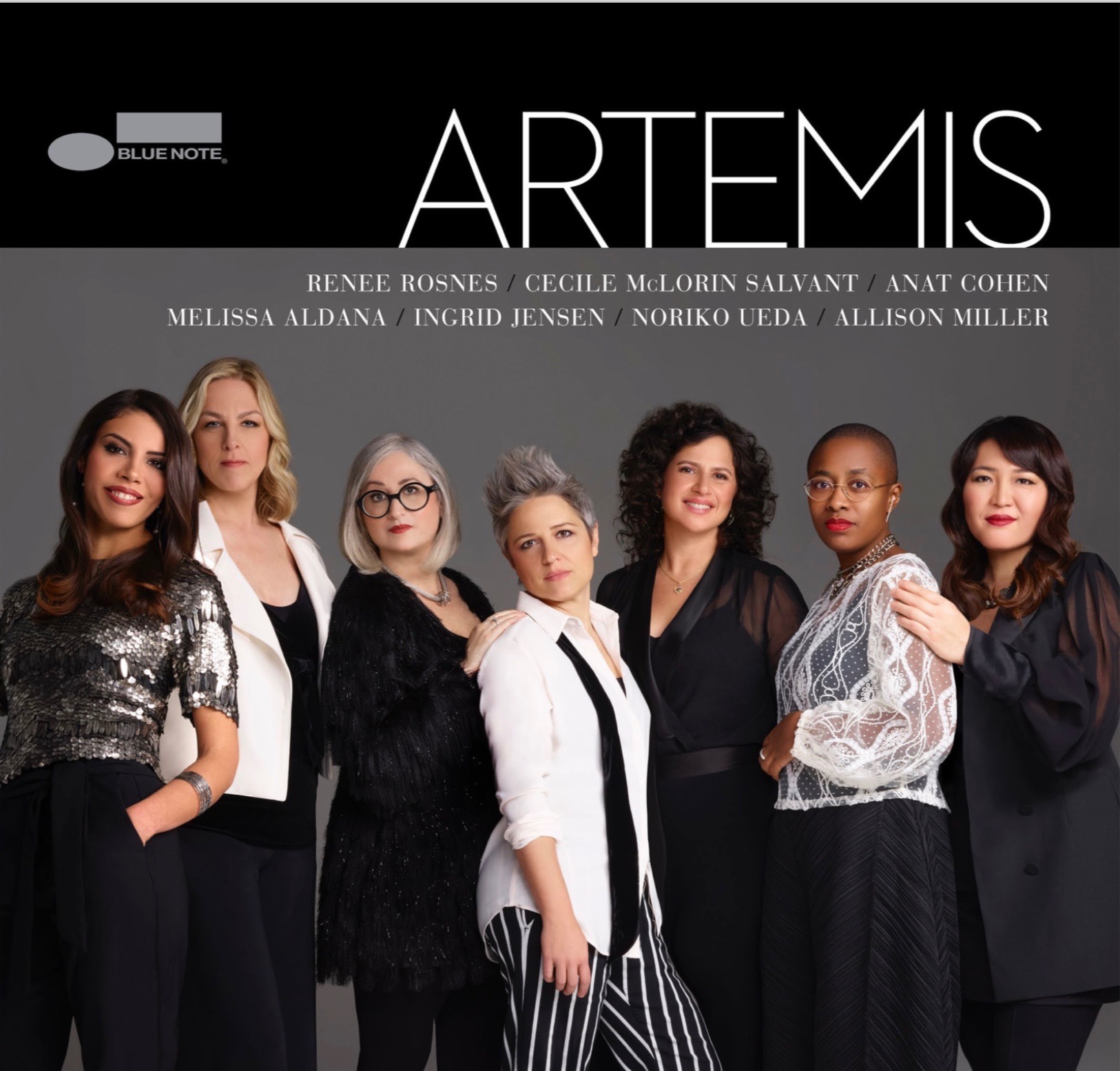
At the same time, the genre is reinforcing its internal legacy through powerful, community-driven initiatives. WBGO’s recent premiere of Her Rhythm: Women in Jazz stands as a defining example of how live performance continues to serve as both celebration and statement. Featuring artists like Sherrie Maricle and Brianna Thomas, the event highlights the depth, diversity, and leadership of women within the jazz community, emphasizing that the evolution of the genre is inseparable from the voices shaping it today. The performance format—live, immediate, and unfiltered—ensures that these contributions are not simply acknowledged, but experienced in real time.

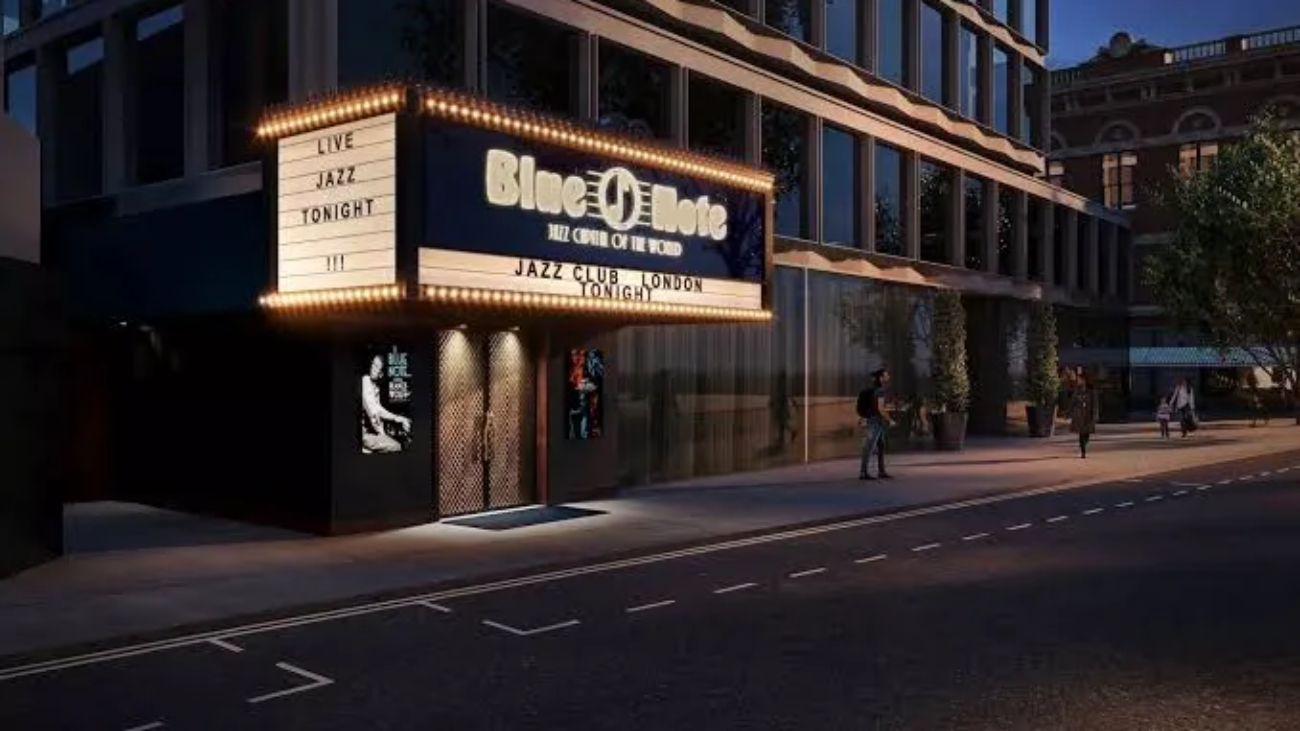
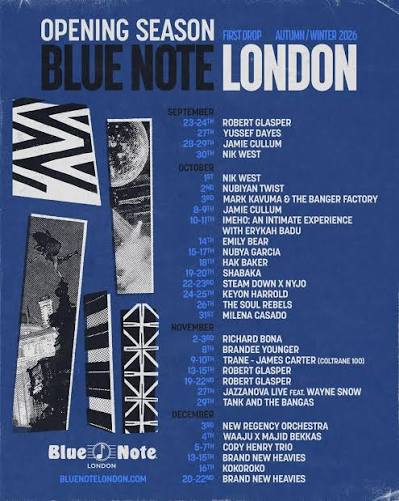
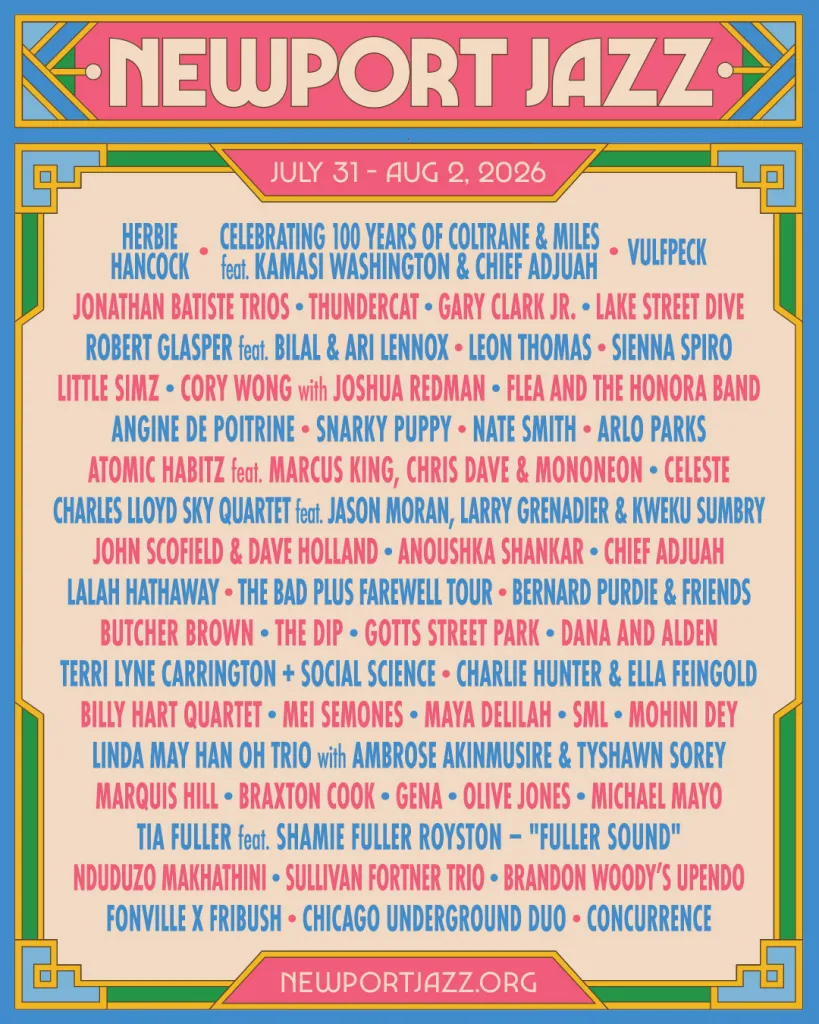
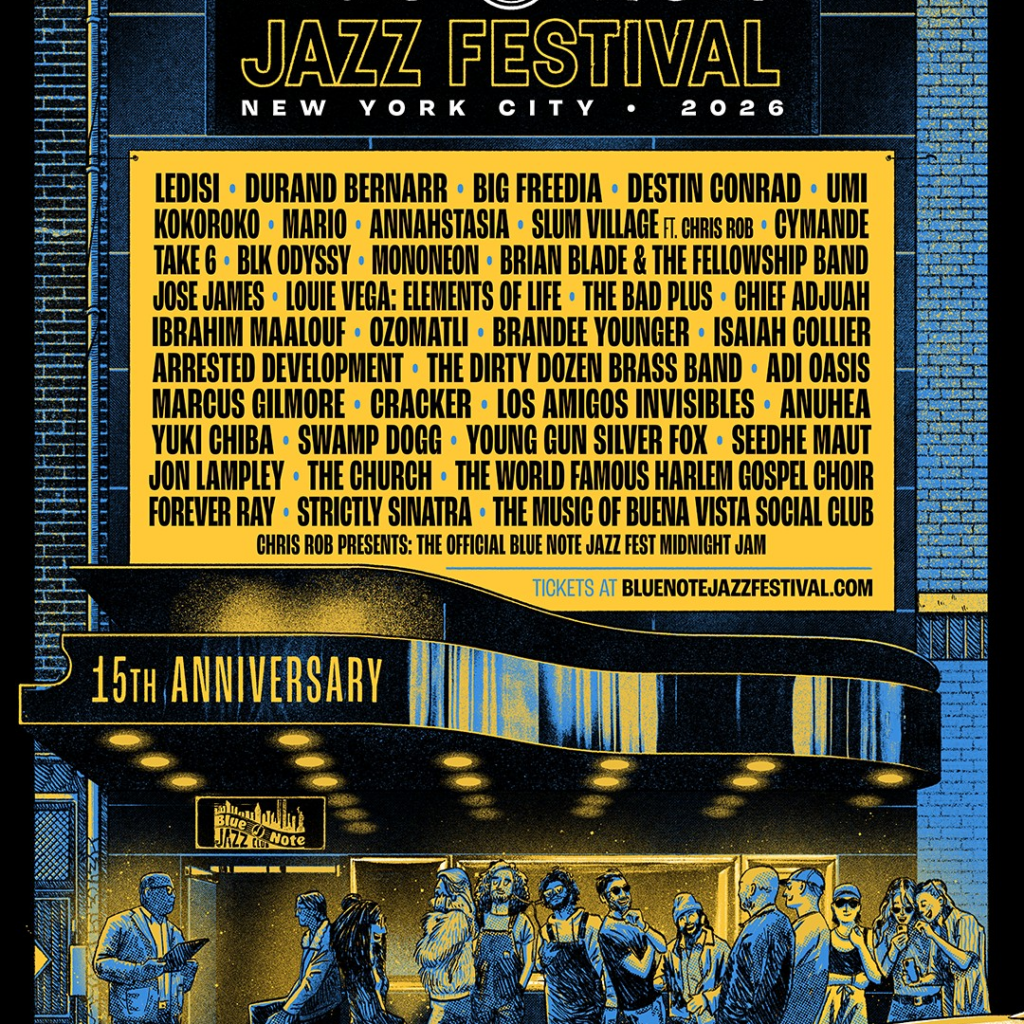
Looking ahead, the announcement of the Blue Note Jazz Festival 2026 lineup further underscores the scale of jazz’s current momentum. Running from June 1 through July 1 across New York, the festival brings together a dynamic range of artists including Ledisi, Jose James, and the Dirty Dozen Brass Band. Each of these acts represents a different facet of jazz’s modern identity, from soul-infused vocal performance to genre-blending experimentation and brass-driven tradition. What unites them is a commitment to live performance as the primary medium through which jazz continues to evolve.

Equally significant is the expansion of physical spaces dedicated to the art form. The upcoming opening of the Mary Lou Williams Jazz Center in Decatur, Georgia, represents more than a new venue—it signals an investment in the future of live jazz as a communal experience. Anchored by a flagship performance space connected to the legacy of Churchill Grounds, the center is poised to become a critical hub for artists and audiences alike, reinforcing the idea that jazz thrives where people gather to experience it together.

Perhaps the most compelling evidence of jazz’s current vitality, however, lies in the recordings themselves. As Record Store Day 2026 approaches on April 18, a wave of new and archival live releases is set to redefine how listeners engage with the genre. These are not studio reconstructions or retrospective compilations—they are direct transmissions from the stage, capturing artists at the exact moment of creation.

The Immanuel Wilkins Quartet’s Live At The Village Vanguard series, released in three volumes, offers a comprehensive look at one of the most compelling saxophonists of his generation within one of jazz’s most revered spaces. Each volume reveals a different dimension of the residency, emphasizing the role of continuity and development in live performance.

Resonance Records’ upcoming archival releases further deepen this narrative, bringing previously unheard recordings from Chicago’s Jazz Showcase into circulation. Performances by Joe Henderson, Ahmad Jamal, Mal Waldron, and Yusef Lateef—captured between the mid-1970s and late-1970s—provide invaluable insight into a period of extraordinary creativity. These recordings do not simply document history; they extend it, allowing contemporary listeners to engage with performances that remain as immediate and relevant as when they were first played.

Additional releases, including Sylvie Courvoisier Trio’s Éclats – Live in Europe and Alexander Claffy’s Alive in Philadelphia, Vol. 1, reinforce the global nature of this resurgence, while the rediscovery of the Cecil Taylor Unit’s Fragments, recorded at the 1969 Paris Jazz Festival, serves as a reminder that jazz’s past continues to yield new revelations when approached through the lens of live performance.

This is precisely where The Improv Cafe’ asserts its authority. In a media landscape saturated with edited, compressed, and often fragmented musical experiences, the station remains singular in its dedication to live recordings exclusively. Every broadcast is a commitment to authenticity. Every program is an opportunity to engage with jazz as it was meant to be heard—unfiltered, dynamic, and fully alive.

Signature programming such as Live At The Village Vanguard, airing every Tuesday from 9PM to 2AM, exemplifies this approach. By presenting performances from one of the most iconic venues in jazz history, the show creates a continuous thread between past and present, allowing listeners to experience the evolution of the genre within a single, uninterrupted broadcast environment. It is not simply programming; it is curation at the highest level.

Upcoming live events, including the ACA Jazz Festival on April 11 and the Charleston Jazz Festival finale on April 19 featuring the Herlin Riley Quartet and the Gullah Collective, further reinforce the immediacy of the current moment. These are not isolated performances—they are part of a broader ecosystem in which live jazz continues to define itself through interaction, improvisation, and shared experience.

What becomes clear through all of this is that jazz is not experiencing a revival. It is operating within a state of continuous reinvention, driven by artists who understand that the essence of the genre lies in its ability to respond, adapt, and evolve in real time. Live performance is not an accessory to that process—it is the process.

The Improv Cafe’ stands at the center of this movement, not by following trends, but by reinforcing the foundational truth that has always defined jazz: it lives in the moment it is played. By committing exclusively to live Jazz, live Big Band, live Swing, and live Vocal Jazz, the station ensures that every broadcast carries the energy, spontaneity, and authenticity that make the genre indispensable.

As Record Store Day 2026 approaches and the global jazz community continues to expand, The Improv Cafe’ remains not just a participant, but a leader—an essential platform where the full spectrum of live performance is preserved, presented, and elevated.

In a world increasingly defined by convenience, The Improv Cafe’ offers something far more valuable: reality. The sound of musicians interacting in real time. The unpredictability of improvisation. The undeniable presence of performance as it unfolds.

This is not just where jazz is played. This is where jazz lives.

Kevin-Blancq-Big-Band-2024-OCT16CROPPED_IMG_6753

The Final Curtain Call and the Next Great Revival: How Swing’s Global Resurgence Is Redefining Live Big Band Music in 2026

The story of swing has always been one of resilience, reinvention, and an unbreakable connection between musicians and audiences who refuse to let the music fade. At The Improv Cafe’, where every broadcast is built exclusively on live performance—live jazz, live big band, live swing—this isn’t a retrospective format. It is a living, breathing ecosystem of sound, captured in its most authentic form and delivered exactly as it was meant to be heard: on stage, in the moment, and alive with energy.

That reality makes what is happening across the swing landscape in 2026 not just noteworthy, but essential. We are witnessing a genuine resurgence—one that is not driven by nostalgia alone, but by a renewed cultural demand for musicianship, improvisation, and the unmistakable power of a full ensemble locked into a groove.

Few stories capture this moment more vividly than the dramatic closing—and immediate rebirth—of one of swing’s most important modern institutions. For nearly three decades, Swing 46 Jazz & Supper Club in Manhattan’s Theater District stood as a global hub for the neo-swing revival. It wasn’t just a venue; it was a proving ground, a dance hall, and a cultural anchor where big band music wasn’t preserved—it evolved. Night after night, world-class orchestras delivered high-voltage performances while dancers packed the floor, turning every set into a fully immersive experience.

So when the announcement came that Swing 46 would close its doors, the reaction across the jazz world was immediate and emotional. The final New Year’s Eve celebration in 2025 became more than a farewell—it was a historic sendoff, a last stand for a venue that had carried the swing tradition forward into the modern era. The room was filled not just with music, but with legacy—decades of performances echoing through one final night.

But in true swing fashion, the story didn’t end there.

In a move that underscores just how vital this music remains, the space was acquired by a new ownership group deeply rooted in the New York jazz scene. Rather than allowing the location to fade into memory, plans were immediately set in motion for a full-scale transformation. A multi-month renovation is now underway, with the venue scheduled to reopen in Spring 2026 as a reimagined destination for live jazz and swing—one that honors its past while positioning itself firmly in the future.

This is not a reopening built on sentiment. It is a strategic revival—an acknowledgment that audiences are returning to live music in search of authenticity, and that swing, with its emphasis on real-time interaction and musical precision, is uniquely positioned to meet that demand.

And this resurgence is not confined to New York.

Across the country and around the world, big band and swing programming is expanding in both scale and ambition. Festivals are reintroducing large ensemble formats with renewed focus, community-based performances are drawing multi-generational audiences, and touring orchestras are proving that there is still a global appetite for this sound.

In California, one of the most respected jazz gatherings continues to evolve by blending traditional big band repertoire with Western swing influences, creating a hybrid experience that reflects both history and innovation. On the East Coast, educational institutions and regional ensembles are stepping into the spotlight, hosting major benefit performances that showcase the next generation of musicians while reinforcing the enduring appeal of the genre.

Meanwhile, internationally, the swing revival is gaining serious momentum. Large-scale festivals are dedicating entire programs to the golden era of big band music, with orchestras performing original charts from legends of the 1930s and 1940s. These are not reinterpretations—they are meticulous, high-level recreations that bring the original arrangements roaring back to life with precision and intensity.

At the highest professional level, touring orchestras continue to set the standard. With demanding schedules and performances in major markets, these ensembles are demonstrating that big band music is not only viable—it is thriving. Audiences are showing up, venues are filling, and the energy is undeniable.

And that brings everything back to what we do here at The Improv Cafe’.

Because while venues may close and reopen, and festivals may come and go, the core of this music has always been the performance itself. The immediacy. The risk. The interplay between musicians who are reacting to each other in real time, creating something that can never be replicated.

That is why The Improv Cafe’ is built the way it is. Every track you hear is a live recording. No studio recreations. No artificial polish. Just the raw, unfiltered sound of jazz, big band, swing, and vocal jazz as it was meant to exist—on stage, in the moment, and captured forever.

And there is no better example of that philosophy in action than tonight’s featured broadcast.

Looking for something that actually feels alive on a Friday night? This is it. Swing with the Big Bands is not just a radio show—it is a full-scale immersion into the golden age and modern resurgence of swing. You will hear legendary live performances from the greatest big band artists in history, alongside recordings that capture the genre at its absolute peak. These are the moments where the horns hit harder, the rhythm section locks in deeper, and the crowd becomes part of the performance.

This is music you don’t just listen to—you move to it. You feel it. You live inside it.

So whether you are tuning in from home, driving through the night, or turning your living room into a dance floor, the invitation is simple: step into the rhythm, let the band lead, and experience swing the way it was always meant to be experienced.

Because the truth is, swing never really left.

It just waited for the right moment to come roaring back.

And right now, that moment is here.

SOSstageshot

The Improv Cafe’ Presents The Global Resurgence of Live Jazz, Big Band, and Swing in 2026

There is a distinct shift happening across the global music landscape—and it is unmistakably live, unfiltered, and rooted in the raw electricity of performance. From the world’s most prestigious concert halls to underground jazz collectives and international festival circuits, live jazz, live big band, and live swing are not only surviving—they are expanding, evolving, and commanding global attention in 2026.

For listeners of The Improv Cafe’, this is more than a trend. It is a validation of the format: a station dedicated exclusively to live recordings, real-time improvisation, and the authentic sound of musicians interacting in the moment. What is unfolding worldwide reinforces a singular truth—the future of jazz is being built in real time, on stage, in the room, and captured live.


The Global Stage Is Reclaiming Live Jazz

Across continents, live jazz performance has become the primary driver of the genre’s growth. Traditional touring models are giving way to curated festival circuits, extended residencies, and venue-based programming designed specifically for large ensembles.

In the United States, New York City continues to function as the operational nucleus of big band performance. At Jazz at Lincoln Center, the calendar remains dense with full-scale orchestras, vocalist-led big band arrangements, and recurring live performance series that prioritize ensemble interplay over studio perfection. Events like the Essentially Ellington Festival are not simply showcases—they are talent pipelines feeding the next generation of arrangers, bandleaders, and improvisers into the global ecosystem.

Just across the Hudson, the New Jersey corridor has quietly become one of the most consistent incubators of serious ensemble work. Series like Jazz in the Loft in South Orange and university-driven programs such as the Princeton Creative Large Ensemble are producing performances that blur the line between academic rigor and professional-level execution. These are not isolated shows—they are part of a broader infrastructure supporting live composition, rehearsal-based development, and performance-first artistry.


Europe: The New Power Center of Big Band Innovation

While the United States maintains its historical foundation, Europe has emerged as a dominant force in modern big band evolution. The shift is structural. Government-supported arts funding, radio orchestras, and conservatory pipelines have created an environment where large ensemble jazz can thrive consistently.

Festivals such as Jazz Baltica represent the scale of this movement. With dozens of performances spanning multiple days, these events are not merely concerts—they are global convenings of composers, arrangers, and large ensemble innovators. Central to this ecosystem is the NDR Bigband, a flagship ensemble that continues to redefine orchestration through contemporary textures, cross-genre integration, and forward-thinking programming.

Across Germany, Scandinavia, and the Netherlands, the modern big band is no longer defined by swing-era nostalgia. Instead, it incorporates:

  • Cinematic scoring techniques
  • Electronic layering and ambient textures
  • Classical compositional frameworks
  • Improvisational structures that extend beyond traditional forms

This is where big band is being reimagined—not as a preservation project, but as a living, evolving format.


The Rise of Global Jazz Ecosystems

Beyond Europe and the United States, jazz has fully established itself as a global network rather than a regionally concentrated genre.

Massive international events like the Java Jazz Festival demonstrate the scale of audience demand, drawing tens of thousands of attendees and presenting artists from across continents. Meanwhile, industry-facing platforms such as Jazzahead! function as the business engine of the genre, connecting artists, labels, promoters, and festivals into a continuous touring pipeline.

In Australia, the Melbourne International Jazz Festival continues to expand its programming, emphasizing large ensembles and cross-disciplinary collaborations that merge jazz with visual art, film scoring, and contemporary composition.

These global nodes are interconnected. Artists move between them fluidly, building international careers that rely less on traditional touring routes and more on strategic festival appearances and collaborative projects.


Big Band Goes Mainstream Again—But Not As You Remember It

One of the most significant developments in 2026 is the re-entry of big band instrumentation into mainstream cultural visibility—but in transformed form.

Groups like Snarky Puppy are leading this shift. With orchestral-scale projects and collaborations with ensembles such as the Metropole Orkest, they are effectively operating as modern big bands, blending jazz improvisation with funk, world music, and cinematic arrangement.

Simultaneously, acts like The Roots are bringing large ensemble performance into major festival environments, while Jeff Goldblum & The Mildred Snitzer Orchestra continues to attract global audiences with a traditional jazz presentation wrapped in contemporary appeal.

The implication is clear:
Big band is no longer confined to jazz audiences—it is being reintroduced to broader markets through hybrid formats.


The Live Album Renaissance

Parallel to the surge in live performance is a global resurgence in live jazz recordings. Labels, artists, and institutions are increasingly prioritizing releases captured in real environments—concert halls, radio sessions, and festival stages.

Recent projects such as:

  • In My Dreams
  • Live at KNKX
  • Future Past Present

reflect a broader industry pivot toward documenting the immediacy of performance rather than constructing perfection in studio isolation.

This aligns directly with the programming philosophy of The Improv Cafe’:
what matters most is not the take—it is the moment.


A Parallel Revival: Vintage Swing and Early Jazz

While innovation drives one side of the spectrum, another movement is unfolding simultaneously—a return to early jazz traditions.

In Spain, ensembles like the 12-piece group Hot Chocolates are reinterpreting 1920s-era jazz with period accuracy and modern energy. Across the UK and international showcase circuits, artists are revisiting swing-era frameworks, not as nostalgia, but as foundational language for contemporary improvisation.

This dual-track evolution—forward-looking experimentation alongside historical revival—creates a uniquely rich global landscape.


The Structural Shift: Why Live Matters More Than Ever

Several key forces are driving the dominance of live jazz in 2026:

Residency-Based Performance Models
Large ensembles are increasingly anchored in specific venues, allowing for deeper musical development and consistent audience engagement.

Festival-Centric Touring
Artists are prioritizing high-impact appearances across international festivals rather than traditional city-to-city tours.

Institutional Support
European radio orchestras, conservatories, and arts funding are sustaining big band infrastructure at a level not seen in decades.

Audience Demand for Authenticity
Listeners are gravitating toward recordings that capture the unpredictability and energy of live performance.


What This Means for The Improv Cafe’

Everything happening globally points directly to the core identity of The Improv Cafe’.

This is no longer a niche concept. A station dedicated exclusively to:

  • Live jazz recordings
  • Live big band performances
  • Live swing sessions

is now aligned with the dominant direction of the genre itself.

As live recordings become the preferred format, and as global audiences seek out the authenticity of real-time improvisation, The Improv Cafe’ is positioned not just as a participant in the jazz ecosystem—but as a curator of its most vital form.


The Global Outlook

Step back and the pattern becomes unmistakable:

  • Europe is leading innovation in big band composition and orchestration
  • Asia is scaling jazz through massive festival platforms
  • The United States remains the cultural and historical anchor
  • Hybrid ensembles are redefining what a big band can be
  • Live recordings are becoming the definitive format of modern jazz

This is not a revival. It is a recalibration.

And at the center of it all is the same principle that has defined jazz since its origin:

Music created in the moment, shared in real time, and captured live.

That is the sound of 2026.
And that is exactly what The Improv Cafe’ delivers.

641596553_1529080745316639_1674317287722167983_n

The Improv Café: Rediscovering the Live Genius of Art Pepper — Inside the Newly Unearthed 1959 Recordings from The Cellar

Few moments in jazz history are as electrifying as the rediscovery of lost performances from artists whose live improvisations helped shape the language of modern music. In the world of live jazz, where spontaneity and emotional expression define the art form, previously unheard recordings offer more than nostalgia—they reveal how a musician truly thought, felt, and created in real time.

That is exactly what listeners are experiencing with the remarkable new archival release Everything Happens To Me: 1959 – Live At The Cellar, a four-disc set documenting more than four hours of newly discovered live recordings from legendary alto saxophonist Art Pepper.

For listeners of The Improv Café, the radio station dedicated exclusively to live jazz, live big band, and live swing, this extraordinary collection represents exactly the kind of musical discovery that keeps the spirit of improvisation alive. Captured during performances at the legendary Vancouver venue The Cellar in 1959, the recordings provide a rare window into one of the most emotionally expressive voices in modern jazz.

More than sixty years after the music was first played, these performances have finally surfaced, offering a vivid portrait of Art Pepper at a pivotal moment in his artistic journey.

A Hidden Chapter in Jazz History

Released in February 2026 through a partnership between Omnivore Recordings and Widow’s Taste Music, the four-disc collection gathers 32 performances drawn from Pepper’s extended engagement at The Cellar.

The recordings were never originally intended for commercial release. Instead, they were captured by the club’s manager as informal documentation of performances taking place inside one of Canada’s most respected jazz venues.

Because the tapes were made in a casual recording environment rather than a professional studio, the resulting sound offers something uniquely intimate. Listeners hear the atmosphere of the club, the subtle interactions between musicians, and the raw immediacy that defines live jazz.

The result feels less like a traditional album and more like sitting inside the room as the music unfolds.

For fans of The Improv Café, this kind of authenticity is the essence of jazz radio: performances that breathe, evolve, and exist only in the moment.

Art Pepper in a Transformational Era

The year 1959 occupies a fascinating place in Art Pepper’s career. By that point, he had already established himself as one of the most distinctive alto saxophonists on the West Coast jazz scene.

Just two years earlier he had recorded the now-classic Art Pepper Meets The Rhythm Section, a session that paired him with members of the Miles Davis rhythm section and helped solidify his reputation among jazz’s elite improvisers.

Shortly after the Cellar recordings, he would release another important album, Gettin’ Together, which continued to expand his reputation as a deeply expressive and technically formidable player.

The Cellar performances fall squarely between those milestones.

They capture Pepper in an environment free from studio constraints, allowing his improvisational voice to stretch, wander, and occasionally erupt with startling intensity.

According to critics and historians who have studied the newly released recordings, these performances reveal Pepper playing with unusual emotional clarity—direct, honest, and fully immersed in the moment.

The Canadian Rhythm Section Behind the Music

While Pepper’s alto saxophone commands the spotlight, the recordings also showcase a talented Canadian rhythm section that provided the foundation for the performances.

The trio accompanying Pepper during the Cellar engagement included:

  • Chris Gage on piano
  • Tony Clitheroe on bass
  • George Ursan on drums

Together, the group created an ideal environment for improvisation.

Gage’s piano playing provides harmonic sophistication while leaving ample space for Pepper’s melodic explorations. Clitheroe anchors the ensemble with steady bass lines that glide between swing and bebop rhythms, while Ursan’s drumming adds both propulsion and subtle color.

The interplay between the musicians demonstrates one of jazz’s most powerful qualities: the ability for artists who may not have spent years touring together to instantly find a shared musical language.

The Sound of a Night in the Club

One of the most intriguing aspects of the new release is its documentary quality.

Because the recordings were captured informally, microphone placement occasionally shifted between sets, creating subtle changes in sonic perspective. In some moments the saxophone sits prominently in the mix; in others the rhythm section becomes more pronounced.

To preserve the integrity of the performances while improving listenability, the tapes were restored by Grammy-winning engineer Michael Graves. His work carefully balances the audio from different nights and microphone configurations without removing the live atmosphere that makes the recordings so compelling.

The result is an audio experience that feels authentic rather than overly polished.

Listeners hear the club environment, the immediacy of improvisation, and the dynamic energy that can only exist during live jazz performance.

The Music: Bebop, Standards, and Improvisational Fire

Across the four discs, the collection presents a wide range of repertoire centered on jazz standards and bebop classics.

Many songs appear multiple times across the set, recorded during different nights of Pepper’s residency. This repetition becomes one of the album’s greatest strengths.

Each performance reveals how Pepper approached the same composition in new ways.

Melodies stretch in unexpected directions. Rhythmic phrasing shifts. Solos evolve into entirely different emotional landscapes.

Among the standout pieces are several interpretations that highlight Pepper’s expressive range.

His reading of Over the Rainbow unfolds with remarkable emotional depth, transforming the familiar melody into a reflective meditation on tone and phrasing.

Meanwhile, the energetic bebop staple Bernie’s Tune explodes with rapid-fire improvisation, demonstrating Pepper’s technical brilliance and melodic imagination.

Other highlights include multiple renditions of Holiday Flight, Yardbird Suite, and Allen’s Alley, each revealing new improvisational ideas that emerge from night to night.

The presence of repeated tunes is not redundancy—it is a masterclass in the art of jazz variation.

The Emotional Impact of the Performances

Perhaps the most remarkable aspect of the Cellar recordings is the emotional authenticity that permeates the music.

Art Pepper’s life was marked by significant personal struggles, including battles with addiction and periods of incarceration. Yet in moments like these performances, listeners hear an artist fully connected to the music that defined his life.

Family members and historians have noted that the Cellar engagement reportedly had a profound effect on Pepper. The positive reception from audiences and the joy of performing live jazz in such an intimate setting helped reaffirm his commitment to the music.

In that sense, the recordings are not simply archival artifacts.

They document a moment when the healing power of music was actively shaping an artist’s life.

Why Discoveries Like This Matter

For jazz fans and historians, newly discovered recordings offer rare opportunities to expand the understanding of an artist’s legacy.

Unlike studio albums, which are often meticulously planned and edited, live recordings capture musicians thinking in real time. They reveal the creative decisions made moment by moment as performers interact with each other and the audience.

For listeners of The Improv Café, these recordings embody everything the station celebrates.

Live music.

Improvisation.

Authenticity.

From the roar of big band horn sections to the delicate interplay of small jazz ensembles, the station’s commitment to live performance connects listeners directly with the essence of jazz history.

The Improv Café: Where Live Jazz Lives On

In an era when digital streaming often prioritizes polished studio recordings, The Improv Café stands apart by dedicating its programming entirely to live music.

Every broadcast reflects the belief that the most powerful moments in jazz occur on stage—where musicians take risks, audiences respond instantly, and improvisation transforms familiar songs into something entirely new.

The rediscovery of Everything Happens To Me: 1959 – Live At The Cellar perfectly embodies that philosophy.

It reminds us that somewhere, in clubs and concert halls around the world, extraordinary performances are happening every night—moments that may someday resurface as treasured chapters in the history of jazz.

For now, listeners can immerse themselves in the newly revealed brilliance of Art Pepper’s 1959 Vancouver performances and experience the timeless magic of live jazz exactly as it was meant to be heard.

On The Improv Café, where the music never stands still and every note carries the thrill of improvisation, discoveries like this ensure that the spirit of jazz continues to evolve—one unforgettable performance at a time.

LOS ANGELES, CALIFORNIA - FEBRUARY 02: Samara Joy
accepts award for Best Jazz Performance for "Twinkle Twinkle Little Me" onstage during the 67th Annual GRAMMY Awards Premiere Ceremony at Peacock Theater on February 02, 2025 in Los Angeles, California.  (Photo by Leon Bennett/Getty Images for The Recording Academy)

Singing with Swing: The Golden Revival of Jazz Vocals and the Soundtrack of Sunday Nights on The Improv Cafe’

On Sunday evenings, when the pace of the weekend begins to soften and the world settles into a quieter rhythm, the sound of a warm vocal line drifting over a swinging rhythm section can feel like the perfect companion. That spirit is exactly what defines “Singing with Swing,” the signature Sunday night program on The Improv Cafe’, the radio station dedicated entirely to the timeless electricity of live jazz, live big band, and live swing performances.

Each broadcast celebrates the living tradition of jazz vocals—an art form that blends storytelling, improvisation, and orchestral energy into one unforgettable musical experience. Tonight’s edition of Singing with Swing arrives at a remarkable moment for vocal jazz, as the genre continues to surge with renewed global excitement, new stars, historic achievements, and a wave of festivals and performances that prove the tradition is not just surviving—it’s thriving.

For listeners tuning into The Improv Cafe’, tonight’s program is more than a radio show. It’s an immersion into the evolving world of jazz vocals and the artists shaping the sound of modern swing.

The Renaissance of Jazz Vocals

Across the jazz landscape, vocalists are enjoying one of the most vibrant periods the genre has seen in decades. A new generation of singers has embraced the classic vocabulary of swing, bebop phrasing, and big band orchestration while introducing fresh approaches to arrangement, songwriting, and stage performance.

From intimate club performances to major international festivals, vocal jazz has become a centerpiece of contemporary jazz culture. The combination of timeless repertoire, fearless improvisation, and expressive storytelling has made vocalists some of the most compelling artists on today’s jazz stages.

Listeners of Singing with Swing experience this resurgence firsthand every Sunday night. The program curates a mix of iconic performances and contemporary live recordings that capture the immediacy and spontaneity that only live jazz can deliver.

And this year, few voices have commanded more attention than one extraordinary artist.

Samara Joy’s Historic Moment in Jazz

Few musicians in any genre are experiencing a run as remarkable as Samara Joy, the young jazz vocalist whose meteoric rise has captured the attention of critics, musicians, and audiences around the world.

Her momentum reached new heights earlier this year when she achieved an unprecedented milestone at the 68th Grammy Awards, earning her third consecutive Grammy Award for Best Jazz Vocal Album for her stunning 2025 release Portrait. The record has been praised for its emotional depth, impeccable phrasing, and the way it channels the spirit of classic jazz vocalists while sounding unmistakably modern.

Joy’s success didn’t stop there.

She also took home Best Jazz Performance for her original composition Peace of Mind / Dreams Come True, marking a significant step in her evolution from interpreter of standards to songwriter and creative force within the genre.

The impact of her artistry continues to ripple outward. Joy is currently touring internationally and will soon perform with the Atlanta Symphony Orchestra on March 25–26, 2026, bringing her voice into the orchestral jazz tradition that once defined the golden era of big band vocalists.

Her growing influence also reached television audiences when a special concert presentation, Samara Joy at Royal Albert Hall, premiered on PBS, introducing her electrifying stage presence to an even wider audience.

For fans tuning into Singing with Swing, artists like Samara Joy represent the bridge between jazz’s historic roots and its future.

The 2026 Jazz FM Awards Spotlight Vocal Excellence

While Samara Joy dominates headlines, she is far from the only voice shaping the contemporary jazz vocal scene. The 2026 Jazz FM Awards nominations highlight a diverse group of singers who continue to push the genre forward.

Among the nominees for Vocalist of the Year are:

• Brigitte Beraha
• Marvin Muoneké
• Yazmin Lacey

Each artist brings a distinct stylistic approach—from adventurous improvisational phrasing to soul-inflected interpretations that expand jazz’s boundaries.

Meanwhile, the Album of the Year category includes a widely celebrated project from Cécile McLorin Salvant, whose album Oh Snap continues her reputation as one of the most inventive and theatrical jazz vocalists of her generation.

These artists embody the very qualities celebrated on The Improv Cafe’: authenticity, musicianship, and the electrifying chemistry of live performance.

A Global Festival Season Celebrating Jazz Voices

Beyond awards and recordings, the global jazz calendar for 2026 is packed with festivals that place vocalists at the center of the stage.

One of the most anticipated events of the summer is the Twin Cities Jazz Festival, where rising star Michael Mayo will headline on June 20. Known for his remarkable vocal range and fearless improvisational style, Mayo represents a bold new direction for jazz singing.

Across the Atlantic, the Love Supreme Jazz Festival, scheduled for July 3–5, has announced a lineup rich with vocal talent. Performers include Alex Isley, the genre-blending singer known for her smooth fusion of jazz and R&B, as well as the charismatic vocalist Durand Bernarr. Legendary soul group Sister Sledge will also appear, bringing their iconic catalog to the festival stage.

Spring also brings a series of exciting events closer to home. The Swing Into Spring Festival, running March 17–21, will feature vocalist Allison Rumley performing alongside the acclaimed Dan Pugach Big Band, a combination that promises the sweeping arrangements and high-energy swing that define classic jazz concerts.

At the same time, UW-Parkside Jazz Week will spotlight a diverse lineup of artists including Damon Locks and Leala Cyr, while the March programming at SFJAZZ highlights the genre-crossing artistry of vocalist José James, known for blending jazz, soul, and contemporary influences.

Together, these festivals illustrate how vibrant the vocal jazz ecosystem has become.

Spotlight Performers Bringing Swing to the Stage

Beyond the major festival circuit, a number of artists are creating memorable live performances across concert halls and jazz clubs.

Billboard-charting vocalist and pianist Spencer Day returns to the stage on March 12 with his program California Golden, a performance that blends classic crooner traditions with contemporary songwriting and storytelling.

Meanwhile, New York-based vocalist Katie Oberholtzer recently delivered a standout performance at the Barnes Foundation in Philadelphia, reminding audiences how powerful a live jazz vocal performance can be in an intimate setting.

These artists, along with many others, are helping ensure that jazz vocals remain not only relevant but central to the live jazz experience.

Why Live Jazz Vocals Matter

At its heart, jazz vocals represent one of the most human forms of musical expression. Unlike heavily produced studio recordings, live vocal jazz thrives on spontaneity. Every performance carries the possibility of a new interpretation, a daring improvisation, or a subtle emotional nuance that makes the moment unique.

This philosophy lies at the core of The Improv Cafe’.

The station’s programming focuses exclusively on live recordings, preserving the energy of real-time musical conversation between vocalist and band. From intimate trio performances to sweeping big band arrangements, every broadcast captures the feeling of being present in the room as the music unfolds.

For listeners, that authenticity creates a powerful connection to the music.

Tonight on The Improv Cafe’: Singing with Swing

Tonight’s broadcast of Singing with Swing continues that tradition.

As the evening unfolds, listeners will hear a carefully curated selection of live vocal jazz performances that celebrate both legendary artistry and the modern voices redefining the genre today. The show creates the perfect Sunday atmosphere—warm, sophisticated, and deeply musical.

Whether you’re relaxing at home, finishing the weekend with a quiet evening, or simply looking for the soundtrack to a perfect Sunday night, Singing with Swing delivers an experience that captures the timeless magic of jazz vocals.

From rising stars dominating award seasons to celebrated performers filling festival stages across the world, the jazz vocal tradition is enjoying a remarkable moment of renewal.

And every Sunday night, The Improv Cafe’ brings that world directly to your speakers.

Tune in tonight, let the band swing, let the singers soar, and let the spirit of live jazz carry you into the night.