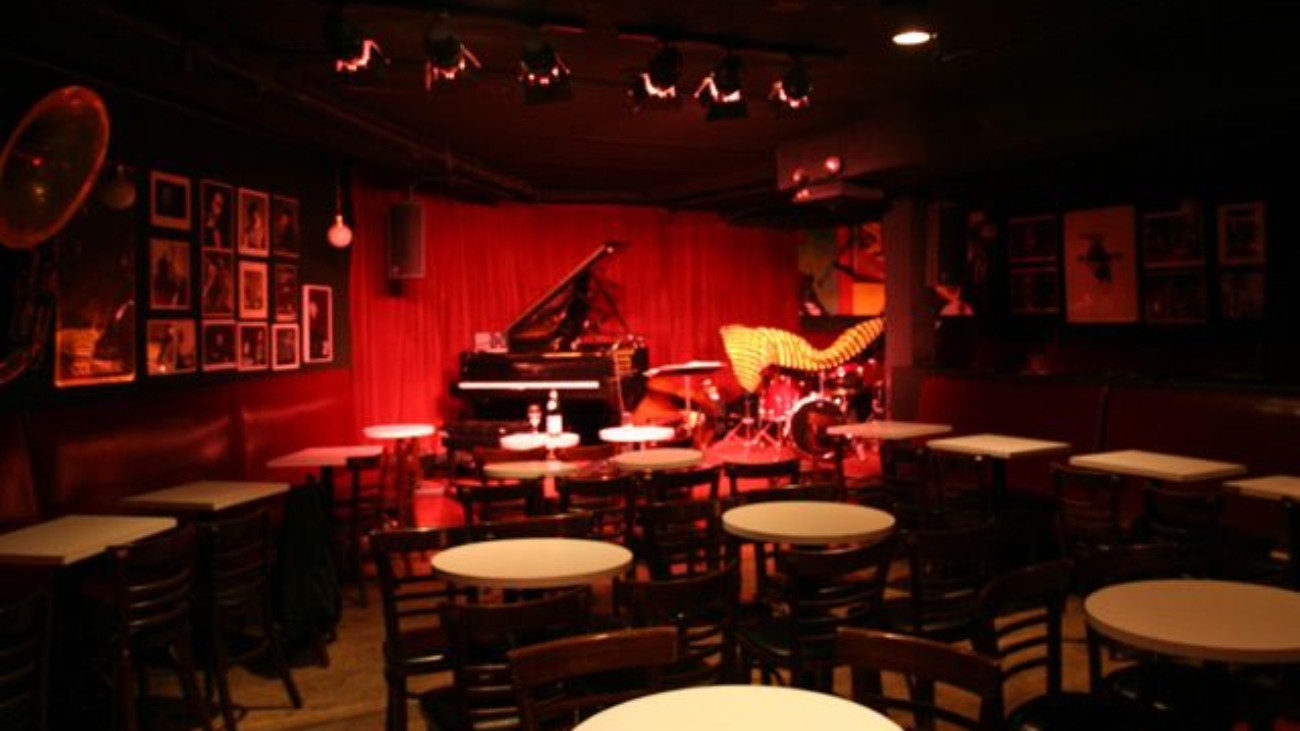
The Improv Café brought listeners into a universe where every drum hit, every horn blast, every piano flourish arrived alive and unrepeatable. This radio station lived and breathed live performance, dedicated exclusively to the vibrant worlds of Live Jazz, Big Band, Swing, and Vocal Jazz. Every song aired had to be a living moment captured in time. Nothing studio. Nothing stale. Pure musical electricity.
One venue defined the gold standard for that magic more than any other: The Village Vanguard. Nestled below street level in Greenwich Village, the Vanguard stood as the heartbeat of jazz history. It opened in 1935 and shifted to an exclusively jazz identity by 1957. That small triangular basement became a sonic cathedral, a place where artists and audiences inhaled creativity together in close quarters.
Only 123 listeners could pack into its dimly lit room. The lights stayed low, the acoustics soared high, and the silence during solos felt sacred. Talking over a performance was a fast way to summon glares sharp enough to slice through brass tubing. That hush made the Vanguard the preferred location for monumental live recordings. More than one hundred albums had been born under its low ceiling, each capturing a bit of that mysterious alchemy between audience and musician.
The Bill Evans Trio carved emotional history there in 1961, recording Sunday at the Village Vanguard just days before bassist Scott LaFaro’s tragic passing. Sonny Rollins rolled in with only bass and drums in 1957, proving that a saxophone could fill all the air in the room by itself. John Coltrane shook foundations during his 1961 residency, pushing jazz into its next evolution through radical, spiritual exploration.
Art Pepper rekindled his flame there in 1977. The Thad Jones/Mel Lewis Orchestra built a Monday-night tradition in 1966 that evolved into the Vanguard Jazz Orchestra, still gracing that tiny stage every week for over fifty years. Then came new generations: Brad Mehldau and others continuing the club’s legacy as a laboratory of modern innovation.
The Village Vanguard embodied why The Improv Café existed. Live music didn’t simply entertain. It communicated. It demanded attention. It left fingerprints on the soul.
Every Tuesday, The Improv Café honored that legacy with a marathon tribute: Live at the Village Vanguard Radio Show. Five continuous hours of classic performances recorded at the Vanguard, each one bursting with solos that could only have happened in that specific moment, in that specific room.
It was a weekly pilgrimage for listeners who loved their jazz with warmth, breath, and spontaneous combustion.
Bill Evans whispers. Elvin Jones thunders. Coltrane soars. LaFaro dances on the bass strings. Big bands ignite the air with blazing harmonies. And the crowd remains locked into every second, fully present, stitched into jazz history as it happened.
The Improv Café celebrated the performers who turned improvisation into architecture and the audiences who understood that they were part of the art.
Jazz legends might now travel the globe, but that tiny Greenwich Village basement still set the benchmark. Every time we tuned into The Improv Café, we stepped back into that world. Live music only. Passion as the rule. Silence as reverence.
The beat always continued, and the Vanguard always beckoned.