736373969223_1024x1024

The Improv Cafe’ Celebrates the Historic Unearthing of Thelonious Monk’s Legendary 1967 Paris Performances as a Monumental Live Jazz Archive Finally Emerges From the Shadows

There are rare moments in jazz history when an archival discovery transcends the excitement of a standard reissue and instead becomes a genuine cultural event. The unveiling of previously unheard live recordings from a legendary improviser does not simply add another title to the catalog. It expands the historical record itself. It reshapes understanding. It allows listeners to step directly into vanished rooms and experience the unpredictable electricity of artists operating in real time at the height of their creative powers.

That is precisely why the release of Monk Live in Paris, 1967: Volume One has immediately become one of the most important live jazz developments of the year.

For The Improv Cafe’ — the station devoted entirely to broadcasting live Jazz, live Big Band, and live Swing performances — few discoveries could align more perfectly with the station’s mission than the recovery of a pristine 1967 concert featuring Thelonious Monk and his legendary working quartet in full improvisational flight. This is not merely another archival release designed to capitalize on nostalgia. It is a deeply significant restoration of living jazz history captured during one of the most creatively important periods in modern improvisational music.

The impact of the discovery reverberates far beyond collectors and historians.

In many ways, the release represents everything that makes live jazz recordings irreplaceable. Studio sessions can document composition, structure, and arrangement with extraordinary clarity, but live recordings reveal something entirely different. They expose risk. They capture communication between musicians in real time. They preserve audience energy, spontaneous detours, emotional tension, and the evolving architecture of improvisation itself.

That is where jazz truly lives.

And nowhere is that truth more apparent than in the newly recovered Paris recordings from Monk’s extraordinary late-1960s quartet featuring Charlie Rouse, Larry Gales, and Ben Riley.

By 1967, this ensemble had evolved into one of the most deeply synchronized working groups in modern jazz. The musicians understood Monk’s famously angular harmonic language instinctively. They navigated his sudden rhythmic pivots, unexpected pauses, percussive chord attacks, and asymmetrical melodic structures with remarkable fluidity. Years of performance experience had transformed the quartet into a living conversational organism capable of moving between elegance, abstraction, humor, tension, and explosive swing momentum without warning.

That chemistry now becomes fully audible again through the recovered recordings from the historic concert at Salle Pleyel.

The venue itself carries enormous symbolic weight within jazz history. Salle Pleyel stood for decades as one of Europe’s most prestigious concert halls, hosting classical giants alongside groundbreaking jazz performers who increasingly found deeply appreciative audiences across the continent during the postwar years. By the late 1960s, Paris had become one of jazz’s most important international centers, offering American improvisers an environment where experimental artistry was often embraced with greater seriousness than it sometimes received back home.

Monk’s performances in Europe during this period therefore occupy a uniquely important place in jazz history.

He was no longer merely an influential innovator fighting for recognition. By 1967, Monk had become a towering cultural figure whose compositions had permanently altered the harmonic vocabulary of modern jazz. Yet even at the height of that acclaim, his live performances retained a sense of unpredictability and danger. Monk never approached the piano conventionally. His improvisations could feel simultaneously mathematical and chaotic, delicate and aggressive, playful and deeply philosophical.

That complexity explains why these recovered recordings feel so significant.

Critics and historians are already describing the release as one of the most valuable live jazz archival discoveries in recent memory, praising both the restored sound quality and the astonishing immediacy of the performances themselves. More importantly, the release offers listeners a remarkably vivid portrait of late-1960s post-bop evolution captured in real time by one of the genre’s defining architects.

The release also carries profound emotional significance because of the story behind its recovery.

The project marks the first official estate-authorized release drawn from a massive archive reportedly containing hundreds of hours of recovered Thelonious Monk recordings. The archive was assembled through the determined efforts of Monk’s son, T.S. Monk, who engaged directly with collectors preserving long-circulating bootleg tapes and private recordings hidden within jazz collector circles for decades.

That detail matters enormously.

Jazz history has often survived through fragile preservation networks operating outside traditional institutional systems. Enthusiasts, collectors, engineers, broadcasters, and fans quietly protected live recordings long before the industry fully recognized their historical value. Many legendary performances survived only because someone carried a tape recorder into a club, stored a radio broadcast, or preserved an unofficial pressing that otherwise might have disappeared forever.

The recovery of Monk’s Paris recordings reflects that larger preservation tradition.

For live jazz radio stations like The Improv Cafe’, the significance runs even deeper because the station’s entire identity is built around the preservation and celebration of live performance culture. Every broadcast reinforces the idea that jazz reaches its highest form through improvisation unfolding spontaneously in front of audiences. Live recordings preserve the emotional unpredictability that defines the genre itself.

That philosophy is increasingly important in the modern streaming era.

Today’s digital music landscape often encourages compressed attention spans, shortened song structures, and playlist-friendly uniformity. Jazz, particularly live jazz, resists those limitations entirely. A Monk performance may stretch unexpectedly into silence before erupting into rhythmic complexity. A solo may wander deliberately away from the melody before resolving into brilliance several minutes later. The pleasure comes not from predictability but from discovery.

The newly unearthed Paris recordings embody exactly that spirit.

Listeners can hear the quartet operating with fearless confidence, moving through Monk’s compositions with extraordinary elasticity and intuition. Charlie Rouse’s tenor saxophone work remains especially vital to the group’s chemistry. Unlike many saxophonists who struggled adapting to Monk’s unusual harmonic structures, Rouse developed an almost conversational relationship with Monk’s phrasing. His solos flow naturally through the pianist’s fragmented rhythmic architecture while maintaining warmth, sophistication, and melodic clarity.

Meanwhile, Larry Gales and Ben Riley provide the rhythmic foundation that allows Monk’s angular ideas to breathe without collapsing into abstraction. Their interplay demonstrates why great jazz rhythm sections are not passive accompaniment but active collaborators shaping the emotional direction of every performance.

That level of interaction can only truly emerge through live performance.

It is one reason archival discoveries like Monk Live in Paris, 1967: Volume One resonate so deeply with jazz audiences. They allow listeners to experience improvisation as living dialogue rather than fixed composition. Every moment feels unstable in the best possible sense. The musicians are listening, reacting, challenging one another, and collectively constructing something ephemeral that exists only inside that performance.

That ephemerality has always been central to jazz’s emotional power.

Unlike classical composition, where the score represents permanence, jazz thrives on variation. The same standard can evolve completely differently from night to night. Tempos shift. Rhythms stretch. Solos mutate. Entire emotional atmospheres transform depending on the room, the audience, the acoustics, and the musicians’ instincts at that exact moment in time.

The Improv Cafe’ continues building its identity around that exact principle.

By exclusively programming live Jazz, live Big Band, and live Swing recordings, the station preserves the unpredictability that makes improvised music so culturally essential. The listener is not simply consuming polished product. They are entering historical moments. They are hearing musicians think in real time. They are experiencing the emotional architecture of live performance itself.

The release of Monk Live in Paris, 1967: Volume One therefore feels like a perfect reflection of everything The Improv Cafe’ represents.

It reconnects modern audiences with one of jazz’s most fearless innovators at a moment when his quartet had reached astonishing creative maturity. It reinforces the enduring importance of archival preservation. It demonstrates the emotional immediacy of live improvisation decades after the original performance occurred. And perhaps most importantly, it reminds listeners that jazz history is still alive, still evolving, and still capable of revealing entirely new treasures hidden inside forgotten tapes, distant archives, and recovered performances.

For longtime jazz devotees, the release offers a priceless opportunity to revisit Monk’s brilliance through newly restored clarity. For younger audiences discovering him for the first time, it serves as a powerful entry point into the boundless possibilities of live improvisational music.

And for The Improv Cafe’, it represents yet another reminder that the greatest moments in jazz were never static museum pieces. They were living conversations unfolding onstage in real time, filled with risk, surprise, humor, tension, elegance, and invention.

Thanks to this remarkable archival recovery, one of those conversations is finally being heard again.

INTREPID+2026++graphic

The Improv Cafe’ Celebrates the Return of America’s Great Swing Tradition as Massive Big Band Spectacles Bring Live Jazz Culture Roaring Back to Life at the Legendary Intrepid Museum’s “Battle of the Big Bands” Event

There is something unmistakably electric about the sound of a live big band swinging at full velocity. The brass punches through the room like a celebration. The rhythm section drives forward with unstoppable momentum. Saxophones swirl around the melody while dancers glide across crowded floors beneath glowing lights. Long before digital playlists, algorithmic radio, or streaming culture existed, big band music created communal experiences that transformed entire cities into dance halls and turned live performance into one of America’s defining cultural exports.

Now, that spirit is roaring back with remarkable force.

Across major cities, historic venues, jazz festivals, and immersive swing events, audiences are rediscovering the excitement of live Jazz, live Big Band, and live Swing in ways that feel larger, more ambitious, and more culturally relevant than they have in years. For The Improv Cafe’ — the station dedicated entirely to broadcasting live Jazz, live Big Band, and live Swing performances — this renewed energy represents far more than a passing revival. It signals the continued expansion of an audience hungry for authenticity, musicianship, history, elegance, rhythm, and the irreplaceable electricity that only live performance can create.

At the center of this growing movement stands one of the most ambitious swing-era celebrations anywhere in America this year: the spectacular “Battle of the Big Bands” aboard the legendary Intrepid Museum in New York City. Set against sweeping nighttime views of the Manhattan skyline and the Hudson River, this extraordinary Memorial Day weekend event transforms the historic aircraft carrier into a giant open-air ballroom dedicated entirely to the golden age of swing.

The scale of the production alone is staggering.

More than 75 performers are scheduled to participate in a massive immersive celebration of 1940s big band culture, complete with a gigantic wooden dance floor stretching across the ship’s steel flight deck. Production crews install an enormous 3,200-to-4,000 square-foot dance surface directly onto the carrier itself, creating one of the most visually unique live swing environments in the country. Beneath the lights of New York Harbor, thousands of dancers, jazz fans, musicians, vintage enthusiasts, and first-time attendees gather not merely for a concert, but for a complete transportation into the sound and style of another era.

This is precisely the kind of event that demonstrates why live swing music continues gaining momentum in the modern entertainment landscape.

People increasingly crave experiences that feel immersive, physical, emotional, and genuinely human. Big band swing culture delivers all of that simultaneously. Unlike passive entertainment formats built around scrolling and fragmented attention spans, swing demands participation. It encourages movement. It invites interaction. It transforms listeners into dancers and audiences into communities.

The Intrepid celebration captures that philosophy perfectly.

The core of the evening revolves around a genuine musical showdown between two elite New York swing orchestras: the Eyal Vilner Big Band and the Danny Jonokuchi Big Band. Each ensemble performs its own explosive standalone set from a massive 45-foot stage positioned directly on the flight deck. The arrangements are designed to capture the full dynamic range of classic swing orchestration, from soaring brass sections and elegant vocal moments to hard-driving rhythm passages engineered for Lindy Hop dancers and vintage swing enthusiasts alike.

Then comes the climax.

For the final performance of the evening, both orchestras crowd onto the same stage simultaneously, creating an enormous combined ensemble performing specially commissioned arrangements written specifically for the event. The concept revives the classic “battle of the bands” tradition that once defined major swing-era ballrooms throughout the United States, when legendary orchestras would challenge one another through musicianship, improvisation, energy, and audience response.

It is impossible to overstate how important events like this are for preserving and advancing live jazz culture.

Big band music was never meant to exist solely as archival history. It was designed for rooms filled with people. Designed for movement. Designed for energy. Designed for shared experiences unfolding in real time. The modern resurgence of large-scale swing programming proves that audiences still deeply connect with that atmosphere when given the opportunity to experience it authentically.

For The Improv Cafe’, these developments align perfectly with the station’s core identity.

In an increasingly homogenized audio landscape dominated by compressed playlists and repetitive algorithm-driven programming, The Improv Cafe’ continues standing apart by focusing entirely on live performance recordings. That distinction matters enormously. Live Jazz, live Big Band, and live Swing recordings preserve the spontaneity, imperfections, audience reactions, extended improvisations, and dynamic interplay that studio recordings often smooth away.

Every live performance tells a different story.

One night a trumpet solo stretches unexpectedly into emotional brilliance. Another night the rhythm section catches fire and pushes an arrangement into entirely new territory. Sometimes the crowd itself becomes part of the recording, reacting in real time as the music builds. Those are the moments that define jazz history, and they are exactly the moments stations like The Improv Cafe’ preserve and celebrate daily.

The Intrepid event embraces that same spirit of living musical history.

Beyond the headline performances, the evening functions as a full-scale festival celebrating the broader ecosystem of swing culture itself. Guests are encouraged to arrive dressed in elaborate 1940s-inspired fashion or vintage military attire, transforming the aircraft carrier into a moving visual tribute to wartime-era American nightlife. A formal vintage fashion parade and contest judged by fashion historians adds another immersive layer to the experience, while barbershop quartets, pinup performers, and secondary live stages positioned throughout the ship ensure that music continues nonstop across the entire venue.

Meanwhile, swing dance culture remains central to the evening’s identity.

Free beginner swing dance lessons allow newcomers to immediately participate rather than observe from a distance. Elite Lindy Hop showcases demonstrate the athleticism, precision, and joy that made swing dancing a worldwide phenomenon. Dance competitions offering cash prizes encourage both casual and advanced dancers to fully embrace the atmosphere. Every detail of the event is constructed to create total immersion into the live swing experience.

That immersive philosophy reflects why swing continues finding new audiences decades after its commercial peak.

At its core, swing music remains profoundly joyful. The rhythms are built for movement. The arrangements pulse with optimism and momentum. Even during difficult historical periods, big band music represented celebration, escape, elegance, and connection. Modern audiences continue responding to those emotional qualities, especially during periods when people increasingly seek real-world experiences capable of cutting through digital isolation.

That growing appetite for authentic live culture is becoming increasingly visible throughout the jazz world.

Large-scale jazz festivals continue expanding internationally. Younger musicians are rediscovering classic orchestration techniques while blending them with contemporary influences. Vintage dance communities are growing again in major metropolitan areas. Jazz clubs are attracting younger demographics eager for live improvisation and sophisticated musical environments. Swing culture itself is no longer being viewed simply as retro nostalgia. Instead, it is being reintroduced as timeless entertainment capable of thriving within modern cultural life.

The Improv Cafe’ occupies a uniquely important position within that movement.

By dedicating itself exclusively to live recordings, the station acts as both a preservation archive and a discovery platform. Longtime jazz listeners can reconnect with legendary performances from the swing era while newer audiences encounter the raw excitement of live orchestral jazz for the first time. The station bridges generations through performance rather than trend-chasing, allowing the music itself to remain central.

That mission becomes especially important on nights like tonight.

Listeners tuning into The Improv Cafe’s beloved “Swing with the Big Bands” radio show are stepping directly into the living heartbeat of swing culture. Friday nights become celebrations of rhythm, movement, brass, elegance, and live performance history as legendary big band recordings fill the airwaves with timeless energy. The show captures everything that makes live swing music endure across generations: explosive horn sections, infectious grooves, unforgettable vocal performances, improvisational firepower, and the irresistible momentum that transforms any room into a dance floor.

For listeners searching for a true musical escape, “Swing with the Big Bands” delivers exactly that experience.

The program serves as both entertainment and cultural transportation, pulling audiences into an era when orchestras ruled dance halls and live musicianship stood at the center of nightlife itself. Yet despite the historical roots, the energy never feels trapped in the past. Great swing remains startlingly alive. The recordings breathe. The solos sparkle. The arrangements surge with movement and excitement.

That vitality explains why big band music continues thriving nearly a century after its original rise.

The greatest swing orchestras were never simply background music. They were engines of social connection. Entire generations learned how to dance, socialize, celebrate, and fall in love while surrounded by live big band music. That emotional imprint never disappeared from American culture. It merely waited for audiences to rediscover it.

Now, between major immersive events like the Intrepid’s “Battle of the Big Bands,” expanding live jazz festivals, growing dance communities, and stations like The Improv Cafe’ dedicating themselves fully to authentic live performance broadcasting, the resurgence of swing culture feels stronger and more substantial than it has in decades.

And perhaps most importantly, it feels genuine.

This is not manufactured nostalgia packaged for temporary trends. It is the rediscovery of a uniquely American musical tradition that still possesses enormous emotional power when experienced live. The sound of brass sections echoing beneath city skylines. The rhythm of dancers moving across wooden floors. The thrill of improvisation unfolding in real time. The elegance of orchestras commanding massive stages with precision and joy.

That world is alive again.

And every night on The Improv Cafe’, listeners are invited directly into it.

maxresdefault (6)

The Improv Cafe’ Expands the Modern Live Jazz Conversation as Centennial Celebrations, Global Festivals, and Landmark Performances Reignite the Future of Live Music

There are moments in the history of jazz when the music seems to collectively inhale before launching into another creative era. The current global explosion surrounding live jazz performance feels exactly like one of those moments. Across international festivals, historic centennial celebrations, major artist collaborations, and rapidly expanding crossover audiences, jazz is once again positioning itself at the center of live cultural conversation. For a station like The Improv Cafe’ — built entirely around the energy, spontaneity, and electricity of live Jazz, live Big Band, and live Swing — the timing could not be more significant.

What is unfolding right now is larger than nostalgia. Larger than a genre revival. Larger than festival season itself. Jazz is experiencing a full-scale live performance renaissance powered by generational rediscovery, new audiences, adventurous programming, and a renewed hunger for authentic musicianship in an era increasingly dominated by artificiality and disposable digital culture. The world is rediscovering what jazz audiences have always understood: nothing replaces the feeling of live improvisation unfolding in real time.

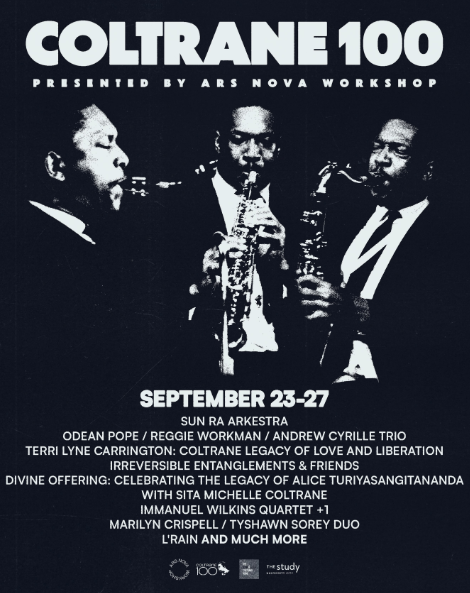
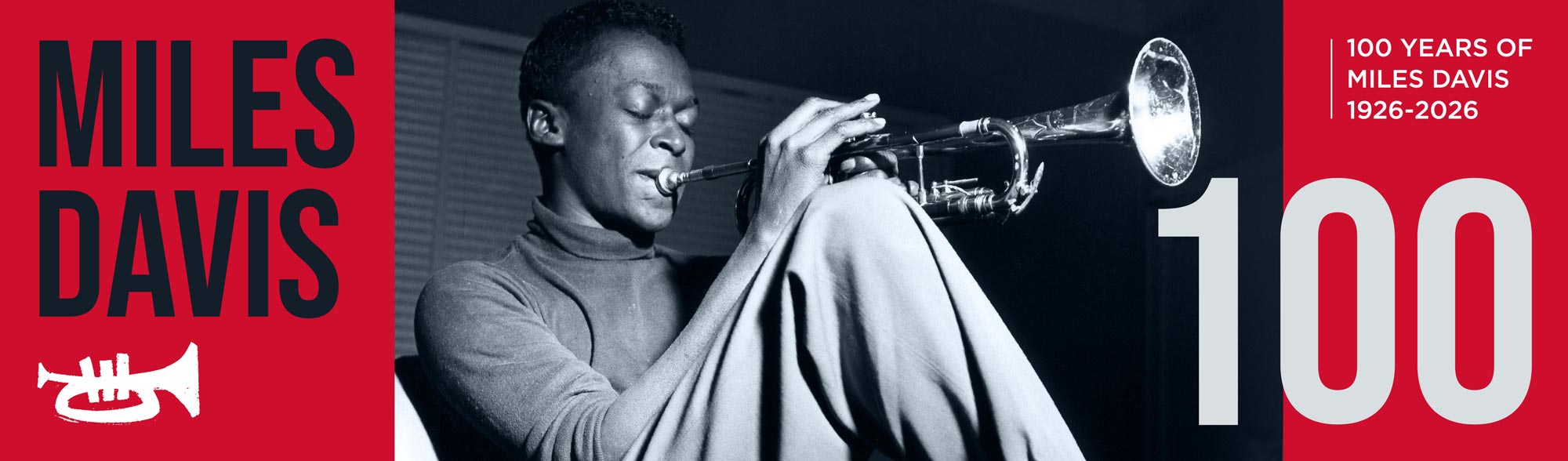
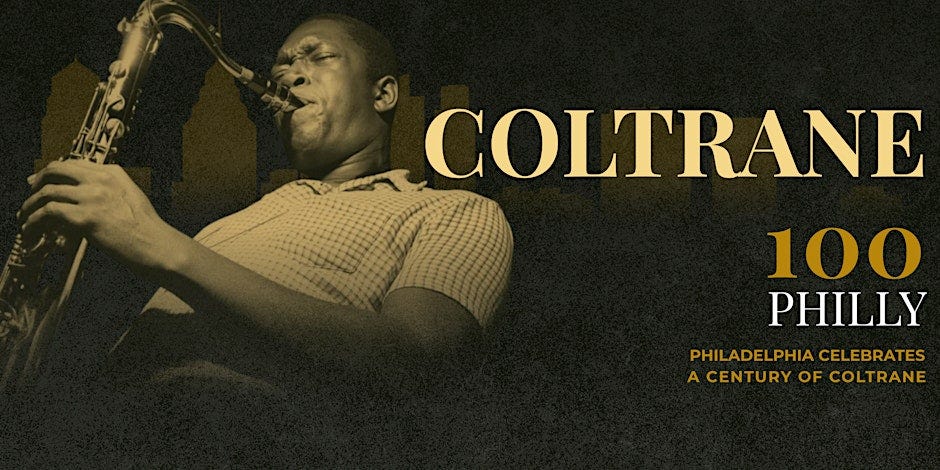
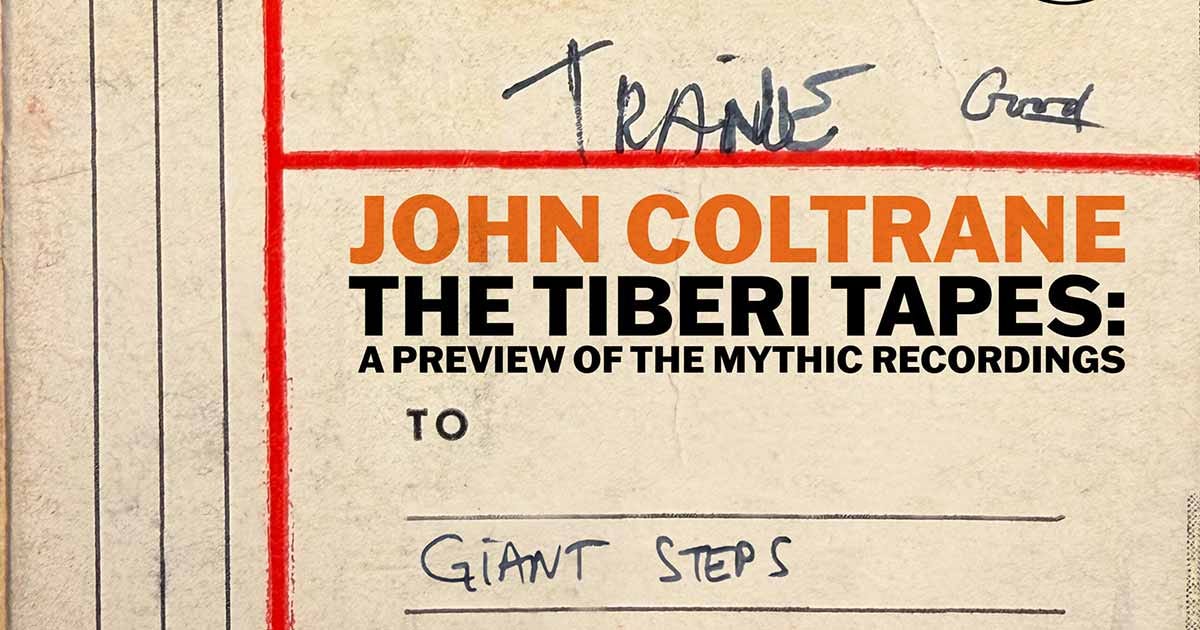
That momentum is accelerating into a historic period driven heavily by the upcoming centennial celebrations honoring two of the most transformative figures in music history: Miles Davis and John Coltrane. Their approaching 100th birthdays are not simply commemorative milestones. They are becoming global cultural anchors for festivals, tributes, educational programming, archival projects, and live reinterpretations that are helping redefine jazz for an entirely new generation of listeners.

For The Improv Cafe’, this is precisely the kind of moment the station was built to amplify.

The station’s commitment to exclusively broadcasting live Jazz, live Big Band, and live Swing recordings positions it uniquely within a modern media landscape where authenticity has become increasingly rare. While algorithmic playlists continue flattening music discovery into interchangeable mood-based consumption, live jazz remains defiantly human. It thrives on imperfection, risk, spontaneity, and communication between musicians and audiences. Every solo evolves differently. Every arrangement shifts with the room. Every performance becomes a singular historical document that can never be replicated.

That philosophy now aligns directly with what major international festivals are embracing in 2026.

One of the most important developments in live jazz programming this year has been the launch of the inaugural Santa Monica International Jazz Festival, an ambitious new multi-venue event curated by legendary four-time Grammy-winning bassist Stanley Clarke. The arrival of a new large-scale jazz festival in Southern California signals more than expansion. It represents institutional confidence that live jazz audiences are growing substantially enough to support entirely new destination events.

The Santa Monica festival immediately distinguished itself through ambitious artistic programming rather than safe nostalgia booking. Instead of treating jazz history as a museum exhibit, the event embraced jazz as a living, evolving art form capable of stretching across generations and styles. That balance between legacy and innovation culminated in a historic open-air finale headlined by double 2026 Grammy winner Kamasi Washington alongside a major tribute project honoring Miles Davis led by Davis’ nephew, Vince Wilburn Jr..

The symbolism surrounding that performance mattered enormously. Kamasi Washington has become one of the defining bridge figures between traditional jazz audiences and younger listeners raised on hip-hop, soul, cinematic composition, and experimental improvisation. His rise represents one of the clearest indicators that jazz is once again entering mainstream cultural relevance without sacrificing artistic complexity. Pairing Washington with a Miles Davis tribute led by a direct family and creative connection to Davis himself created a rare fusion of lineage and future-facing experimentation.

That combination reflects exactly why live jazz remains endlessly renewable.

Miles Davis spent his career refusing creative stagnation. Every major period of his catalog represented reinvention: bebop, cool jazz, modal jazz, electric fusion, orchestral experimentation, funk hybrids, and abstract improvisational structures. The current festival circuit appears to be embracing that same restless spirit. Instead of limiting jazz programming to preservation alone, organizers are increasingly encouraging reinterpretation, crossover collaboration, and boundary expansion.

The implications for live radio programming are massive.

For stations like The Improv Cafe’, the modern jazz resurgence opens extraordinary opportunities to reconnect audiences with the depth and scale of live performance archives while simultaneously introducing newer live artists who are reshaping the genre in real time. The appeal of live jazz radio lies in its unpredictability. A station devoted entirely to live recordings transforms listening into discovery rather than passive consumption. A 14-minute improvisational detour becomes part of the attraction. Extended solos become storytelling devices. Audience reactions become part of the composition itself.

That authenticity is becoming increasingly valuable to listeners exhausted by hyper-processed modern production.

The growing momentum surrounding international jazz festivals reinforces that shift. Few events illustrate jazz’s enduring global power more effectively than the legendary Montreal International Jazz Festival, widely recognized as the largest jazz festival in the world. The festival’s 46th anniversary programming demonstrates how jazz institutions are modernizing without abandoning their roots.

Veteran jazz journalist Justin Cober-Lake recently confirmed details surrounding SiriusXM’s live remote broadcasts from the Montreal event, further highlighting how major broadcast platforms are reinvesting in live jazz coverage. This matters because radio and live jazz have always shared a deeply intertwined history. From the swing era through bebop and beyond, radio once served as the primary engine for jazz discovery and cultural expansion.

In many ways, stations like The Improv Cafe’ are helping restore that tradition for the streaming generation.

The Montreal programming slate itself reflects jazz’s growing stylistic breadth. Live audience interviews featuring the Joshua Redman Group sit alongside major main-stage performances from internationally celebrated artists like Diana Krall and Marcus Miller. The diversity of those bookings demonstrates the increasingly expansive definition of contemporary jazz audiences. Traditional acoustic improvisation, vocal jazz sophistication, fusion experimentation, cinematic composition, and crossover orchestration now coexist comfortably inside the same festival ecosystem.
This broader inclusivity is helping jazz attract younger audiences without diluting its artistic integrity.

Meanwhile, another significant development arrived with the unveiling of the inaugural L.A. Jazz Festival lineup. The new Los Angeles-based event immediately generated attention by locking in crossover superstars including John Legend and Janelle Monáe alongside established jazz artists.

Traditionalists may debate crossover booking strategies, but the broader implications are difficult to ignore. Festivals increasingly recognize that jazz’s survival depends not on isolation but expansion. Bringing mainstream audiences into jazz-centered environments creates opportunities for discovery. A fan arriving for John Legend may encounter avant-garde improvisation for the first time. A Janelle Monáe listener may unexpectedly connect with big band arrangements, modal structures, or live swing orchestration.

This is how musical ecosystems evolve.

The crossover strategy also reflects jazz’s historical reality. Jazz has never truly existed in isolation. It has always absorbed, reshaped, and influenced surrounding genres. Swing transformed pop culture. Bebop revolutionized harmonic thinking. Fusion collided with rock and funk. Modern jazz continues intersecting with hip-hop, electronic composition, orchestral scoring, spoken word performance, and cinematic production.

The Improv Cafe’ sits directly inside that living continuum.

By centering live recordings rather than polished studio perfection, the station preserves the raw connective tissue that links every era of jazz history together. Whether listeners encounter a blistering big band performance from the swing era, a smoky late-night club recording from the hard bop years, or a modern spiritual jazz improvisation stretching beyond traditional structure, the common denominator remains human spontaneity.

That human element may ultimately explain why live jazz is resurging so forcefully right now.

Audiences increasingly crave experiences that feel irreplaceable. Live jazz delivers exactly that. No two performances unfold identically. No solo can be fully recreated. No room responds the same way twice. In an age dominated by cloned content and repetitive digital formatting, improvisation itself becomes radical.

The upcoming Miles Davis and John Coltrane centennials only intensify that relevance. Both artists spent their careers dismantling limitations. Both challenged audiences to move beyond comfort. Both transformed improvisation into philosophical expression. Their influence now stretches far beyond jazz itself into rock, hip-hop, classical composition, film scoring, and experimental sound design.

Modern festivals understand this. Younger artists understand this. And increasingly, audiences understand this.

That is why the global live jazz ecosystem feels so energized entering this new era. The music is no longer being framed simply as heritage programming. It is being positioned once again as progressive art capable of shaping future cultural conversations. Major festivals are investing accordingly. Broadcasters are adapting accordingly. Artists are experimenting accordingly.

For The Improv Cafe’, the mission becomes even more essential within that environment.

A station dedicated exclusively to live Jazz, live Big Band, and live Swing is not simply preserving musical history. It is preserving the living architecture of improvisation itself. Every broadcast becomes part performance archive, part educational experience, and part emotional time machine connecting generations of listeners through shared sonic discovery.

As international festivals expand, centennial celebrations intensify, and younger audiences continue gravitating toward authentic live performance culture, The Improv Cafe’ stands positioned at the center of one of the most exciting live jazz eras in decades.

And if the current momentum is any indication, the next century of jazz may be just beginning.

fb-NJF26-1

Newport Jazz Festival 2026 Opens a New Chapter at Fort Adams as The Improv Cafe’ Celebrates One of Live Jazz’s Most Important Weekends

The 2026 Newport Jazz Festival is no longer simply another major summer music event on the calendar. This year’s announcement signals something much larger for the modern jazz world: a generational transition happening in real time at one of the most historically significant festivals ever created. Set for July 31 through August 2 at Fort Adams State Park in Newport, Rhode Island, the legendary gathering returns with a lineup that bridges classic jazz artistry, progressive improvisation, modern soul, funk experimentation, global fusion, and boundary-pushing contemporary performance in a way that feels entirely aligned with where live music is heading next.

For The Improv Cafe’, a station dedicated exclusively to live jazz, live big band, and live swing performances, the 2026 Newport Jazz Festival represents the exact type of artistic evolution that continues keeping improvisational music culturally relevant across generations. This year’s festival does not rely solely on nostalgia or historical prestige. Instead, it actively positions jazz as a living, expanding form capable of connecting legacy artists, emerging innovators, cross-genre collaborators, and younger audiences inside one of the most respected performance environments in modern music history.

The 2026 edition also introduces a major artistic shift behind the scenes. Grammy-winning drummer, producer, composer, and bandleader Nate Smith officially steps into a defining leadership role as the festival enters a new era under his artistic direction. That change alone carries enormous significance throughout the jazz world. Smith has spent years building credibility not only among traditional jazz audiences, but also across funk, fusion, hip-hop, R&B, modern improvisation, and experimental performance communities. His influence reflects the exact kind of fluid musical language increasingly shaping contemporary jazz culture worldwide.

Rather than programming the festival strictly around genre purity, the 2026 Newport Jazz Festival embraces musical conversation itself. The lineup reflects a philosophy built around rhythm, improvisation, spontaneity, groove, collaboration, storytelling, and live performance chemistry. That approach feels deeply connected to Newport’s original identity while also acknowledging how modern audiences experience jazz today — not as an isolated style, but as a constantly evolving musical ecosystem.

The headline roster alone immediately establishes the scale of the weekend. Herbie Hancock returns as one of the defining figures of modern jazz piano and one of the last remaining living architects of multiple jazz revolutions spanning acoustic post-bop, electric fusion, funk experimentation, and advanced contemporary improvisation. Hancock’s presence at Newport immediately elevates the entire festival because his performances are never merely retrospective celebrations. Every live appearance continues demonstrating how jazz innovation remains active rather than archival.

Jon Batiste arrives at Newport carrying one of the broadest creative profiles in modern music. His ability to merge jazz, gospel, soul, improvisation, rhythm and blues, classical influences, New Orleans traditions, and contemporary performance art has transformed him into one of the most recognizable ambassadors for live musicianship in mainstream culture. His trio format at Newport could become one of the weekend’s defining performances because stripped-down live settings often reveal the deepest improvisational instincts behind major artists.

Thundercat’s inclusion further confirms Newport’s commitment to modern musical evolution. As both a virtuoso bassist and an unpredictable live performer, Thundercat exists in a space where jazz harmony, funk grooves, fusion textures, electronic experimentation, and psychedelic performance aesthetics coexist naturally. His audience also represents an entirely different generation discovering improvisational music through contemporary cultural pathways rather than traditional jazz institutions.

Then comes Vulfpeck, whose arrival at Newport may initially surprise some traditionalists, but actually makes perfect sense within the broader trajectory of modern live performance culture. Few contemporary bands understand groove dynamics, live musicianship, audience interaction, rhythmic precision, and improvisational energy quite like Vulfpeck. Their stripped-down funk minimalism and performance spontaneity embody many of the same principles that have always driven jazz itself.

Still, one of the most important artistic centerpieces of the entire 2026 festival may be the major centennial tribute honoring the 100th birthdays of Miles Davis and John Coltrane. Few names carry greater historical weight in jazz history, and Newport’s decision to build a large-scale performance celebration around their legacy gives the weekend a deeper emotional and cultural gravity beyond standard festival programming.

The tribute featuring Kamasi Washington and Chief Adjuah immediately signals that this will not simply be a museum-style retrospective. Instead, it appears positioned as a living reinterpretation of revolutionary jazz ideals through contemporary voices still actively reshaping the genre. Kamasi Washington has become one of the most influential large-scale jazz composers and saxophonists of the modern era, helping reintroduce expansive spiritual jazz concepts to younger audiences worldwide. Chief Adjuah, formerly known as Christian Scott, continues pushing jazz into radically modern territory through rhythmic experimentation, cultural fusion, and advanced compositional structures that challenge traditional genre limitations.

The symbolic importance of celebrating Miles Davis and John Coltrane in 2026 cannot be overstated. Their innovations permanently altered not only jazz, but the broader direction of modern music itself. Davis continuously reinvented the possibilities of jazz performance throughout multiple decades, while Coltrane transformed improvisation into something spiritual, philosophical, emotional, and transcendent. Newport placing their centennial celebration at the center of the weekend reinforces the festival’s ongoing role as both a historical institution and a platform for future artistic expansion.

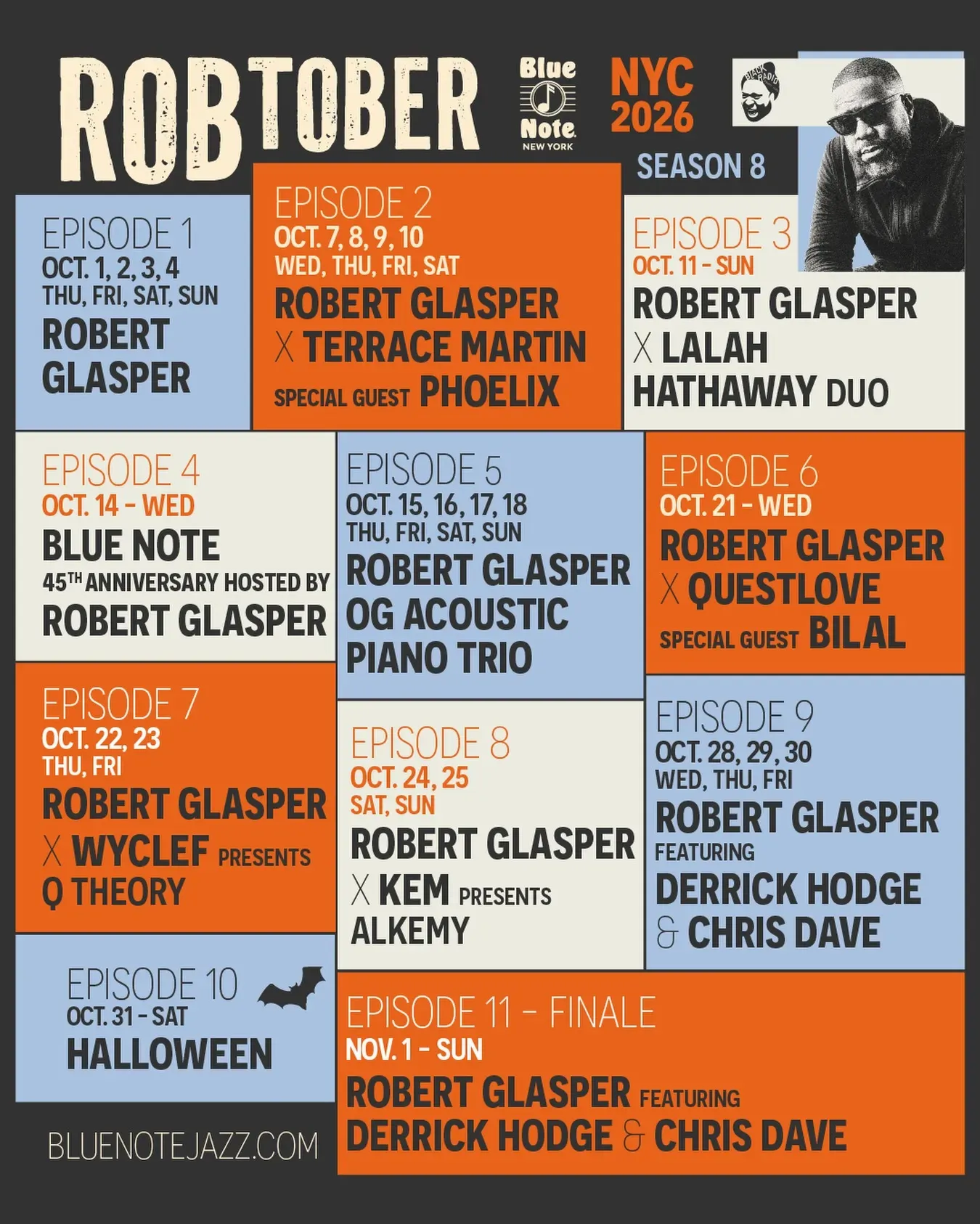
Beyond the major headliners, the depth of the 2026 lineup may ultimately become the festival’s greatest strength. Robert Glasper featuring Bilal and Ari Lennox creates one of the weekend’s most anticipated intersections between jazz, neo-soul, improvisation, and contemporary R&B. Glasper has spent years dismantling the barriers separating jazz from mainstream Black music traditions, and his collaborations consistently produce performances that feel both technically sophisticated and emotionally immediate.

Gary Clark Jr.’s appearance introduces another layer of stylistic diversity while still remaining connected to the improvisational DNA at the heart of blues and jazz traditions. His guitar work often merges blues structure, rock intensity, soul phrasing, and extended live improvisation in ways that naturally complement Newport’s broader musical identity.

Little Simz represents another fascinating inclusion because her artistry reflects how modern jazz influence increasingly extends into hip-hop production, spoken-word rhythm, orchestral arrangement, and conceptual live performance. Arlo Parks brings a quieter but equally compelling emotional intimacy through songwriting that frequently draws from jazz textures, atmospheric arrangements, and poetic storytelling traditions.

Meanwhile, longtime jazz stalwarts continue grounding the festival in deep musical lineage. Charles Lloyd remains one of the most spiritually resonant saxophonists in modern jazz history. John Scofield continues blending advanced harmonic improvisation with blues, funk, and fusion vocabulary that has influenced generations of guitarists. Terri Lyne Carrington’s Social Science project represents one of the most intellectually ambitious contemporary jazz ensembles currently touring, combining social commentary, rhythmic innovation, and collaborative experimentation into a uniquely modern artistic statement.

The daily festival structure also reveals careful programming balance across the entire weekend. Friday immediately establishes an adventurous tone with Vulfpeck, Robert Glasper, Little Simz, Charles Lloyd, Chief Adjuah, and Anoushka Shankar all appearing on the same day. That combination alone captures Newport’s expanding identity — global influences, improvisation, groove-based performance, jazz lineage, and experimental modern artistry coexisting inside one schedule.

Saturday may ultimately emerge as the festival’s most explosive day musically. Kamasi Washington, Jon Batiste, Gary Clark Jr., Snarky Puppy, Cory Wong, and Terri Lyne Carrington create an extraordinarily dynamic lineup built around rhythmic energy, improvisational freedom, technical precision, and live audience connection. Snarky Puppy alone has become one of the most important live ensemble acts of the past decade because of its ability to merge jazz complexity with crowd-driven excitement.

Sunday closes the festival with a combination of iconic prestige and stylistic unpredictability. Herbie Hancock’s appearance naturally serves as a centerpiece, while Thundercat, Lake Street Dive, Flea with the Honora Band, Arlo Parks, and The Bad Plus collectively ensure the weekend concludes with both musical sophistication and broad audience accessibility.

What makes the 2026 Newport Jazz Festival especially compelling is how intentionally it reflects the current state of live jazz culture itself. Modern jazz audiences are no longer confined to one demographic, one listening habit, one streaming category, or one stylistic expectation. Today’s listeners move fluidly between jazz, funk, soul, hip-hop, electronic music, experimental composition, global fusion, and improvisational performance traditions. Newport’s programming recognizes that reality without abandoning its historical roots.

That balance matters because many legacy festivals struggle to evolve without alienating longtime audiences. Newport instead appears to understand that jazz history itself was always built on innovation, disruption, experimentation, and cultural expansion. The genre has never remained static for long periods. Every major jazz movement initially challenged existing definitions before eventually becoming accepted tradition.

The atmosphere surrounding Fort Adams State Park only amplifies the experience further. Few festival settings in America offer the same combination of waterfront scenery, historical significance, outdoor acoustics, and communal live music culture. Newport has always carried an energy that feels larger than a typical festival weekend because audiences understand they are participating in an ongoing musical legacy stretching back decades.

For The Improv Cafe’, the 2026 Newport Jazz Festival serves as a reminder of why live performance remains the center of jazz culture regardless of technological change. Recorded music can preserve brilliance, but improvisation only fully exists in the moment it is created. That unpredictability — the risk, spontaneity, interaction, and emotional immediacy between musicians and audiences — continues defining the power of jazz more than any streaming platform, playlist algorithm, or commercial trend ever could.

The sold-out status of all official three-day and single-day passes further reinforces the growing demand for authentic live musical experiences. Even in an era dominated by digital access and endless content saturation, audiences continue gravitating toward festivals capable of delivering genuine artistic connection. The continued activity on fan exchange platforms and secondary ticket markets only demonstrates how strong the demand remains for Newport’s unique cultural position.

More importantly, the 2026 festival lineup suggests that jazz is not retreating into preservation mode. It is expanding outward again. Younger audiences are discovering improvisational music through artists like Thundercat, Kamasi Washington, Robert Glasper, Cory Wong, and Snarky Puppy. Longtime listeners continue following masters like Herbie Hancock, Charles Lloyd, and John Scofield. Newport successfully places those worlds together without forcing either side to compromise its identity.

That may ultimately become the defining achievement of the 2026 Newport Jazz Festival. It does not present jazz as a closed historical institution. It presents jazz as a living language still capable of adapting, collaborating, evolving, and leading contemporary music culture forward.

And for a station like The Improv Cafe’, which exists entirely to celebrate the enduring energy of live jazz, live big band, and live swing performance, that vision could not feel more relevant heading into one of the most anticipated weekends of the 2026 live music calendar.

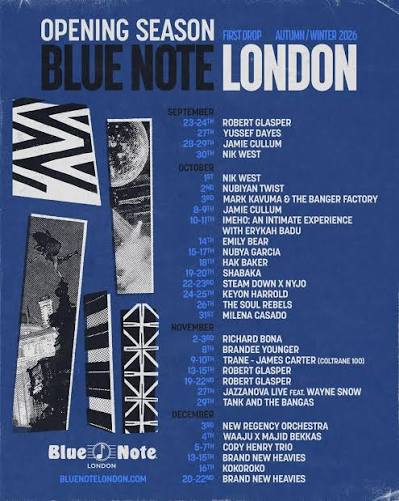
20260325-174814-641315

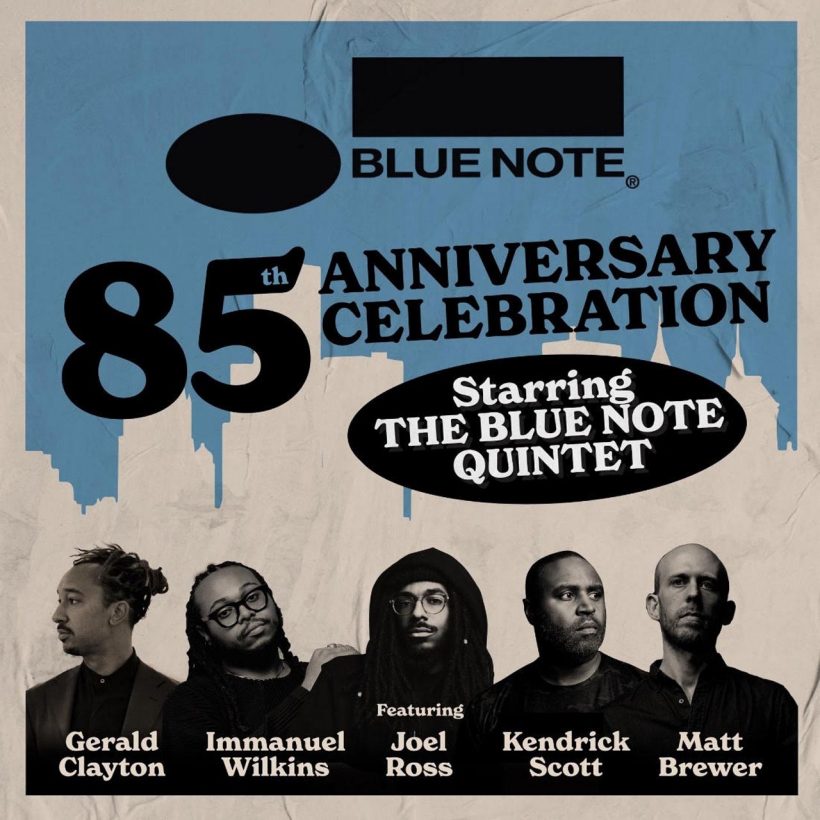
The Blue Note Jazz Festival 2026 Expands the Global Reach of Live Jazz as The Improv Cafe’ Keeps the Tradition Moving One Performance at a Time

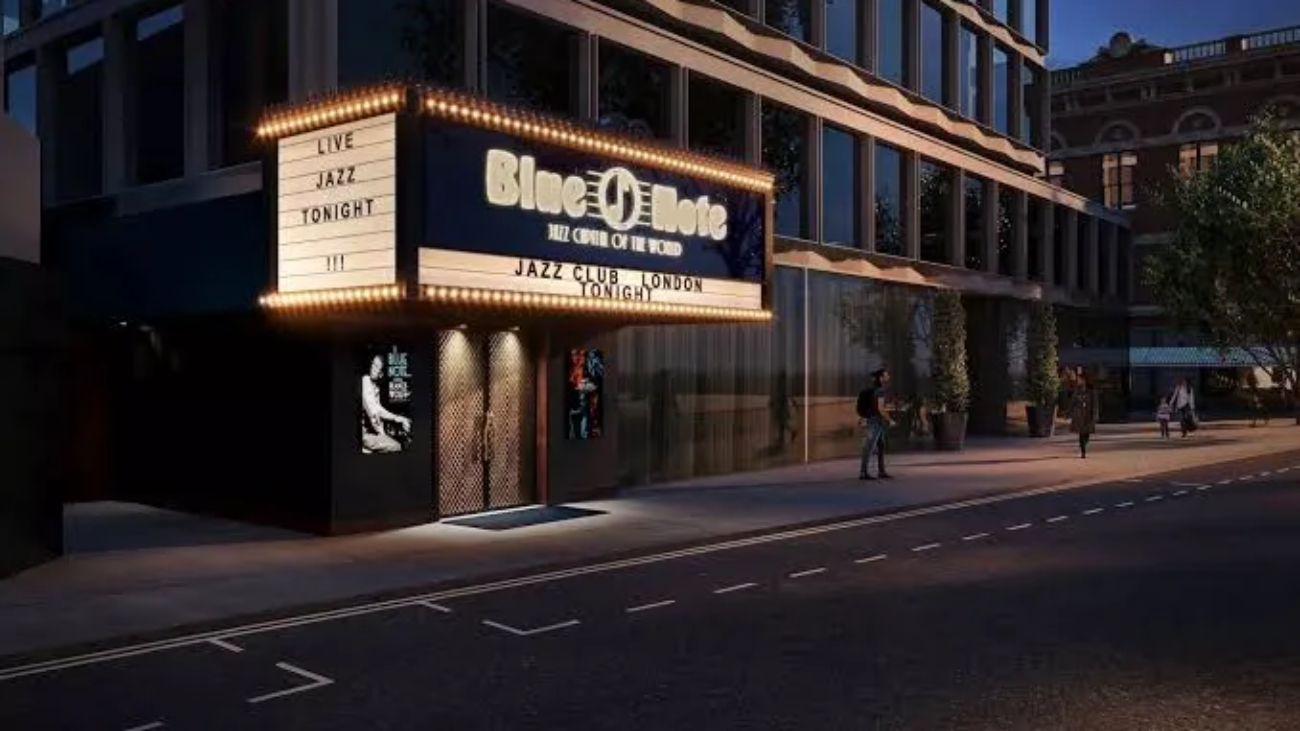
There are certain names in jazz that immediately carry weight before a single note is played. The Blue Note is one of them. For decades, it has represented more than a venue or a brand—it has stood as a living institution tied directly to the evolution of modern jazz performance, artist development, improvisation, and live musical storytelling. As the 15th annual Blue Note Jazz Festival prepares to unfold across New York and Los Angeles this June, the festival arrives at a moment when live jazz continues to reclaim visibility, relevance, and cultural urgency on an international scale. For The Improv Cafe’, the radio station devoted entirely to live jazz, live big band, and live swing recordings, the significance of this year’s festival reaches far beyond a seasonal concert announcement. It represents another major chapter in the ongoing expansion of live performance culture itself.

Beginning June 1 and extending through July 1 in New York, the Blue Note Jazz Festival once again transforms the city into a month-long network of performances centered around the legendary Greenwich Village club and Sony Hall. The scope of the programming reflects the increasingly broad definition of contemporary jazz presentation, embracing traditional musicianship while acknowledging the genre’s continued fusion with soul, funk, hip-hop, rhythm and blues, Afro-futurism, and modern improvisational forms. This year’s lineup captures that intersection perfectly, bringing together artists who approach jazz not as a fixed historical artifact but as an active and evolving language.

Among the featured performers are powerhouse vocalist Ledisi, New Orleans cultural innovator Big Freedia, genre-defying vocalist Durand Bernarr, and the groundbreaking British funk collective Cymande. Individually, each artist occupies a distinct space in contemporary music. Together, they represent the widening orbit of modern jazz festivals, where improvisation and groove continue to influence virtually every corner of contemporary live performance.

The festival’s expansion beyond New York remains equally important. On June 13 and 14, the Blue Note Jazz Festival returns to the iconic Hollywood Bowl for a major weekend showcase that blends jazz, soul, and cross-generational collaboration on one of America’s most historic outdoor stages. The lineup reflects both legacy and forward momentum, featuring enduring icons like Patti LaBelle alongside globally recognized artist Wyclef Jean and acclaimed jazz vocalist Gregory Porter.

One of the defining centerpieces of the Hollywood Bowl programming is the return of Robert Glasper’s R+R=NOW collective, a project that has become one of the most influential examples of jazz fusion in the modern era. Featuring contributions from musicians including Terrace Martin and Chief Adjuah, the ensemble represents a new generation of artists refusing to isolate jazz from the rest of contemporary Black music traditions. Their work pulls equally from improvisation, hip-hop production, electronic textures, and deeply rooted rhythmic structures while maintaining the spontaneity that defines great live performance.

That connection between improvisation and immediacy remains central to why festivals like Blue Note continue to matter. In an era increasingly dominated by algorithmic listening, compressed streaming playlists, and isolated digital consumption, live jazz restores unpredictability to the center of the musical experience. Every performance becomes singular. Every solo evolves in real time. Every audience changes the shape of the room. It is one of the few genres where the act of listening remains inseparable from the act of witnessing.

That philosophy sits at the core of The Improv Cafe’ itself. The station’s commitment to exclusively broadcasting live recordings is not nostalgia-driven programming—it is preservation through performance. Whether the music originates from a legendary jazz club, a major concert hall, a ballroom packed with swing dancers, or a late-night small ensemble session captured directly to tape, the focus remains fixed on authenticity and atmosphere. The audience hears the crowd reaction, the room acoustics, the spontaneous interplay between musicians, and the imperfections that make live jazz human in the first place.

That same spirit defines tonight’s “Live at The Blue Note” radio show on The Improv Cafe’. Built entirely around music recorded live in clubs or captured directly during album and concert performances, the program functions as both celebration and documentation of jazz in its most natural environment. These are not sterilized studio reconstructions. They are living performances filled with the tension, momentum, and communication that only occur when musicians are responding directly to one another in real time.

For jazz audiences, the club environment has always mattered. Rooms like the original Blue Note became legendary because they created conditions where experimentation could happen nightly in front of listeners who understood that the music was never meant to remain static. The applause between solos, the extended improvisations that stretched beyond studio limitations, the moments where musicians took risks without certainty of where the performance might land—those experiences shaped the identity of jazz itself.

The modern Blue Note Jazz Festival continues that lineage while simultaneously redefining what jazz presentation can look like in 2026. It understands that jazz history and innovation are not opposing forces. Artists like Gregory Porter carry vocal traditions tied directly to classic jazz phrasing while speaking to modern audiences. Robert Glasper’s projects openly blend electronic production and hip-hop influences without abandoning improvisational depth. Cymande’s long-standing influence on funk and soul culture continues to resonate through younger generations of musicians rediscovering groove-centered live performance.

This broader expansion of jazz culture is one reason festivals like Blue Note have become increasingly important globally. They are no longer confined to narrow genre audiences. They function as cultural crossroads where multiple generations, traditions, and musical languages intersect under the umbrella of live improvisational music. And importantly, they reaffirm that audiences are still actively searching for real performance experiences that cannot be replicated through short-form digital consumption.

For The Improv Cafe’, that mission remains constant every hour of the day. The station’s identity is rooted entirely in live music because live music creates permanence through impermanence. No two performances are identical. No audience hears the exact same version twice. Whether it is a roaring live big band arrangement, an intimate vocal jazz recording, a late-night trumpet solo echoing through a crowded club, or a swinging ballroom orchestra driving dancers across the floor, the power comes from the fact that the moment existed once and was captured honestly.

As the Blue Note Jazz Festival prepares to launch another major summer season across New York and Los Angeles, its broader impact becomes increasingly clear. Live jazz is not retreating into history. It is adapting, expanding, and finding new audiences without abandoning the core principles that built it. The musicians continue evolving. The audiences continue growing. The clubs remain vital. The festivals continue scaling internationally. And stations like The Improv Cafe’ continue serving as one of the few remaining spaces where live jazz, live swing, and live big band music remain the entire focus rather than a side category buried inside a larger format.

Tonight’s “Live at The Blue Note” radio show carries that tradition forward in the purest way possible: real performances, real rooms, real audiences, and the unmistakable energy that only live jazz can create.

Live Club Highlights: May 2026. If you are traveling, here is what’s on the stage this month:

LocationKey Performances (May 2026)Unique Features
TokyoCandy Dulfer (May 10–13), Arturo Sandoval (May 25–27), Dee Dee Bridgewater (May 30–31)Often features “Premium Live” sets with specialized menus.
MilanSarah Jane Morris (May 8–9), Veronica Swift (May 13), Joshua Redman (May 15)One of the largest outposts, known for its extensive Italian-fusion dinner menu.
New YorkThe Terrace Martin Residency (May 12–17 & 26–31), Kenny Garrett (May 22–24)The original “intimate” basement setting in Greenwich Village.

683775576_1514098056745740_5075267389618629187_n

Munich Swings Into the Spotlight as Rock That Swing Festival 2026 Reinforces the Global Power of Live Big Band and Dance Culture

There are moments in the global jazz and swing calendar that don’t just celebrate the music—they validate its ongoing relevance, its physicality, and its deep cultural endurance. The 2026 edition of the Rock That Swing Festival in Munich stands firmly in that category, delivering a fully immersive experience where live big band performance, social dance, and historical authenticity converge into something unmistakably alive. For a platform like The Improv Cafe’, where every note broadcast is rooted in live jazz, live big band, and live swing, this festival isn’t just an international highlight—it is a real-time affirmation of everything the station represents.

Held from February 12 through February 16, the 19th installment of the Rock That Swing Festival once again transformed Munich into a global epicenter for swing-era revival, drawing dancers, musicians, and enthusiasts from across continents. What distinguishes this event is not just its scale, but its precision: an intentional recreation and recontextualization of the 1920s through the 1950s, executed with modern energy but without sacrificing stylistic integrity. The result is a rare environment where the music is not passive—it dictates movement, shapes interaction, and becomes the central force driving every room it fills.

At the heart of this year’s program was a series of gala evenings staged in Munich’s most distinguished venues, including the Deutsches Theater and the Künstlerhaus. These were not casual performances; they were curated showcases of elite international bands operating at the highest level of swing execution. Across multiple nights, the festival delivered a continuous rotation of live orchestras, each one pushing the boundaries of what vintage jazz can feel like in a contemporary setting.

Among the standout performers anchoring the 2026 edition was Naomi & Her Handsome Devils, a seven-piece ensemble that has become synonymous with the modern swing revival done right. Led by vocalist and internationally recognized Lindy Hop champion Naomi Uyama, the group embodies a rare dual authority: musical authenticity paired with a dancer’s instinct for rhythm, pacing, and momentum. That distinction matters. In swing, the band doesn’t just play—the band leads the floor.

Formed in 2013 with a very specific mission, Naomi & Her Handsome Devils were built to capture the feel of late-Count Basie-era swing while maintaining the intimacy and responsiveness required for live dance environments. Their arrangements are not museum recreations; they are living frameworks designed to keep bodies moving. Every tempo choice, every horn accent, every vocal phrasing is engineered with dancers in mind, and that philosophy was on full display throughout their multi-night presence at the festival.

Their schedule alone illustrates the scale and demand surrounding their performances. On February 13, they delivered two high-energy sets during Hep Cats Night in the Künstlerhaus Ballroom, setting a tone that immediately bridged traditional swing aesthetics with contemporary crowd engagement. The following evening, February 14, placed them on one of the festival’s most prestigious stages at the Rock That Swing Ball inside the Deutsches Theater, sharing the spotlight with a select group of the world’s top swing orchestras. By February 15, they returned for the Jamboree Ball, commanding both the Main Ballroom and the Silbersaal with performances that reinforced their role as one of the defining bands of the current swing movement.

What makes their impact particularly significant is how it reflects a broader shift in the global jazz ecosystem. Swing is no longer being preserved—it is being actively lived. Festivals like this are not nostalgia-driven gatherings; they are functional communities where music, dance, and culture operate in real time. The presence of over 300 workshops led by more than 70 international instructors during the festival’s Dance Camp component underscores that point. This is a training ground, a cultural exchange, and a performance circuit all at once, where the next generation of dancers and musicians are shaped directly within the tradition they are preserving.

And that is precisely where The Improv Cafe’ aligns seamlessly with this global movement. The station’s commitment to exclusively broadcasting live recordings—whether it’s a roaring big band set, a tight swing combo, or a vocal jazz performance captured in front of an audience—mirrors the same ethos driving events like Rock That Swing. There is an immediacy to live music that cannot be replicated, and in the swing world, that immediacy is inseparable from the dance floor. It’s not just about hearing the music; it’s about feeling its propulsion, its elasticity, and its unpredictability.

That energy carries directly into tonight’s programming, where The Improv Cafe’ continues that tradition with its “Swing with the Big Bands” radio show. Designed as a Friday night destination, the show is built around legendary live performances from the most influential big band leaders and orchestras in history. This isn’t a passive listening experience—it’s an invitation to move. Whether it’s the precision of a horn section locked into a driving rhythm or the spontaneous interplay between soloists, the broadcast captures the same spirit that defines a packed ballroom in Munich or a late-night dance floor anywhere in the world.

The connection between a global festival stage and a radio broadcast may seem abstract at first glance, but in reality, they operate on the same principle: preservation through performance. Every time a live swing recording is played, it extends the life of that moment. Every time a listener gets up and moves to the music, it reinforces the purpose behind it. And every time a band like Naomi & Her Handsome Devils takes the stage in front of a room full of dancers, it proves that swing is not a closed chapter in music history—it is an ongoing, evolving conversation.

Munich’s Rock That Swing Festival 2026 didn’t just showcase that reality—it amplified it. It demonstrated that the infrastructure supporting swing culture is not only intact, but thriving at an international level. It confirmed that audiences are still seeking out authentic live experiences. And it reinforced that the relationship between musicians and dancers remains one of the most dynamic and interactive forms of artistic expression in the modern era.

For listeners tuning into The Improv Cafe’, that same world is only a click away. The sounds coming through the speakers are not distant echoes of the past—they are living documents of a tradition that continues to fill rooms, move crowds, and define nights. And on a Friday evening, as “Swing with the Big Bands” takes over the airwaves, that connection becomes immediate, tangible, and impossible to ignore.

slomp_2018_750x500

Chicago’s All-Star Global Concert Brings Live Jazz to a Worldwide Audience Tonight

International Jazz Day 2026 Reaches Its Defining Moment in Chicago as The Improv Cafe’ Elevates the Global Stage of Live Jazz. There are nights in music when everything converges—history, artistry, culture, and the undeniable electricity of live performance—and tonight, April 30, 2026, stands as one of those rare inflection points. Chicago becomes the epicenter of the jazz universe as the International Jazz Day All-Star Global Concert unfolds inside the Lyric Opera of Chicago, a three-hour masterclass in live improvisation, cultural dialogue, and musical legacy that aligns seamlessly with the core identity of The Improv Cafe’: a station built entirely on the power and authenticity of live jazz, live big band, and live swing.

While the headline acts were mentioned, the All-Star Global Concert features a record-breaking roster of over 40 artists.

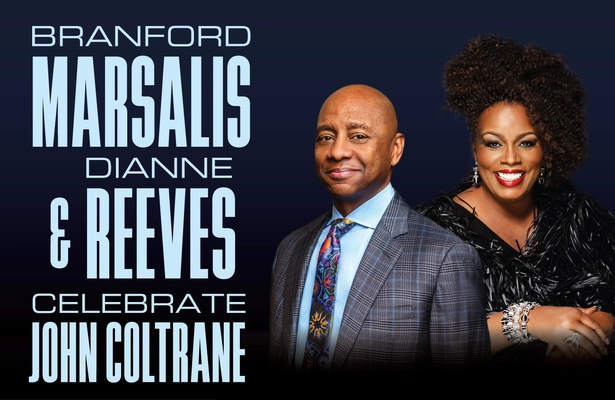
  • Complete Performer Highlights: Additional confirmed stars include Renée Fleming, Béla Fleck, Dianne Reeves, Lizz Wright, Gonzalo Rubalcaba, and Terri Lyne Carrington.
  • Chicago’s Finest: Local artists performing include Bobby Broom, Ernest Dawkins, Marquis Hill, Joel Ross, Jahari Stampley, and Dee Alexander.
  • Special Appearances: The broadcast will feature guest appearances by actors Michael Douglas, Hellen Mirren, Will Smith, Morgan Freeman, and Jeremy Irons.

Today’s Education & Community Schedule (CT)

Chicago is hosting free public educational events leading up to the main performance:

  • 10:00 AM: Official Opening Ceremony at Pritzker Pavilion, Millennium Park.
  • 11:00 AM – 3:00 PM: Sidewalk Sessions—free pop-up jazz performances across Millennium Park featuring the South Side Jazz Coalition  and Windy City Ramblers.
  • 11:15 AM: Jazz, Film, and Storytelling panel featuring Herbie Hancock, Marcus Miller, and Kris Bowers.
  • 3:15 PM: Jazz Masterclass with Paul Cornish and Michael Mayo.
  • 5:45 PM: Special Tribute to Herbie Hancock at Hyde Park Academy High School.

From 7:00 PM to 10:00 PM Central Time, the world is not just watching a concert—it is witnessing a living archive of jazz being created in real time. Broadcast globally in pristine 4K across digital platforms, the event delivers something increasingly rare in modern media: a fully realized, unfiltered, live musical experience where spontaneity defines the outcome and no two moments can ever be repeated. That principle is the foundation of The Improv Cafe’ and the reason this night resonates far beyond Chicago.

Curated by the visionary leadership of Herbie Hancock and the refined vocal artistry of Kurt Elling, the All-Star Global Concert assembles one of the most ambitious lineups ever presented under the International Jazz Day banner. This is not simply a roster—it is a cross-generational summit of artists who have defined, reshaped, and expanded the language of jazz across continents and decades. Voices like Dee Dee Bridgewater and Gregory Porter bring depth and storytelling, while innovators such as Robert Glasper and Jacob Collier push harmonic boundaries into new territory. Instrumental brilliance flows through the presence of Marcus Miller and Terence Blanchard, each embodying the modern evolution of the jazz tradition.

The scale expands even further with additional performances from Renée Fleming, Béla Fleck, Dianne Reeves, Lizz Wright, Gonzalo Rubalcaba, and Terri Lyne Carrington—a lineup that underscores the genre’s boundless reach and its ability to absorb and reinterpret musical influences from around the world. Chicago’s own deep jazz lineage is equally represented, with artists like Bobby Broom, Ernest Dawkins, Marquis Hill, Joel Ross, Jahari Stampley, and Dee Alexander delivering performances rooted in the city’s storied musical DNA.

What elevates this event into something even more culturally significant is its broader context. The 2026 celebration aligns with the 250th anniversary of the United States, a milestone that reframes jazz not just as an art form, but as one of the country’s most influential global exports—a living, breathing expression of American creativity and resilience. It also honors what would have been the 100th birthday of Miles Davis, whose revolutionary approach to sound, structure, and improvisation continues to echo through every modern jazz performance. His spirit is embedded in tonight’s concert, not through replication, but through the fearless exploration that defined his career.

Beyond the stage at the Lyric Opera, Chicago itself has transformed into a citywide canvas for jazz. From the morning’s opening ceremony at Millennium Park’s Pritzker Pavilion to afternoon sidewalk performances featuring local collectives, the day has been a continuous flow of live music, education, and community engagement. Panels exploring jazz’s intersection with film and storytelling, masterclasses led by emerging and established artists, and tributes to living legends reinforce the idea that jazz is not static—it is a constantly evolving dialogue.

That philosophy extends into the evening across venues throughout the city. Spaces like Winter’s Jazz Club host deeply rooted celebrations of Chicago’s jazz heritage, while innovative environments like The Salt Shed and Reva and David Logan Center for the Arts create access points for new audiences through live performances and communal viewing experiences. Every room, every stage, and every note contributes to a single unified statement: jazz is alive, global, and more relevant than ever.

For The Improv Cafe’, this moment is not just coverage—it is validation. A station devoted exclusively to live jazz, live big band, live swing, and vocal jazz thrives on nights like this because they reinforce the irreplaceable value of performance in its purest form. Studio recordings have their place, but it is in the live setting—where tempo can stretch, solos can evolve mid-phrase, and musicians respond instinctively to one another—that jazz reveals its true identity. That is what The Improv Cafe’ delivers around the clock, and that is exactly what the world is experiencing tonight.

The presence of cultural figures such as Morgan Freeman, Helen Mirren, Will Smith, Michael Douglas, and Jeremy Irons within the broadcast further underscores the event’s reach beyond music into broader artistic and cultural territory. Jazz has always existed at the intersection of disciplines—film, literature, theater—and tonight’s production reflects that multidimensional influence.

As the final performances unfold and the global audience leans into every improvisational turn, one truth becomes undeniable: this is not just a concert, it is a defining cultural moment. It captures the essence of what jazz has always represented—freedom, collaboration, and the courage to create something entirely new in the moment it is needed most.

For listeners tuned into The Improv Cafe’, this is the standard. This is the benchmark. This is the reason live jazz matters.

And tonight, Chicago reminds the world exactly why.

maxresdefault (2)

The Improv Cafe’ Presents: International Jazz Day 2026 Ignites a Global Live Music Surge—From Chicago’s All-Star Stage to New Jersey’s Local Pulse

There are moments in the lifecycle of an art form when its global presence, cultural urgency, and live performance tradition align with unmistakable clarity. As April 30 approaches, the jazz world is not simply preparing for another annual celebration—it is converging around a milestone. The 15th anniversary of International Jazz Day is unfolding with Chicago at its epicenter, reaffirming jazz not as a genre confined to history, but as a living, breathing, evolving language rooted in performance. For a platform like The Improv Cafe’, where every note broadcast is drawn from live recordings, this moment represents something deeper than a headline—it is validation of a philosophy: jazz is meant to be experienced in real time, in real space, and in direct connection with the audience.

Chicago’s designation as the 2026 Global Host City is not symbolic—it is structural. The city’s lineage in jazz history, from South Side clubs to its role in shaping modern improvisational forms, makes it a natural focal point for a global gathering of artists. The centerpiece event at the Lyric Opera of Chicago will bring together a cross-generational lineup of musicians under the musical direction of Herbie Hancock, whose influence extends far beyond performance into cultural stewardship. The All-Star Global Concert is not designed as a retrospective—it is an active statement about where jazz exists today: borderless, collaborative, and grounded in live interpretation.

That emphasis on live performance is precisely where The Improv Cafe’ operates with authority. While streaming platforms continue to prioritize studio recordings and algorithmic discovery, this station’s commitment to exclusively live jazz, live big band, live swing, and live vocal jazz places it in direct alignment with the core of what International Jazz Day represents. The difference is not subtle. Live recordings capture the elasticity of tempo, the spontaneity of improvisation, the risk inherent in performance, and the chemistry between musicians that cannot be replicated in controlled environments. In many ways, what Chicago will present on April 30 is exactly what The Improv Cafe’ delivers every day—unfiltered, unscripted, and fully alive.

International Jazz Day is officially celebrated on April 30, and in 2026, Chicago is the Global Host City. While the main “All-Star Global Concert” is the centerpiece, cities across the world—including New Jersey and Philadelphia—host their own performances during the surrounding week. 

Global Centerpiece (Chicago, IL)
As the host city, Chicago is running a citywide program called “Neighborhood Nights”

  • All-Star Global Concert (Apr 30): Held at the Lyric Opera of Chicago, this flagship event is led by Herbie Hancock and Music Director John Beasley. It will be livestreamed globally. 
  • Jazz Day Club Tour (Apr 27): Reggies Chicago is hosting a three-room “Club Tour Experience” featuring Neal Alger and others. 
  • Neighborhood Jazz Night (Apr 30): A tribute to Ramsey Lewis and Herbie Hancock featuring the Theodis Rodgers Jr. Quartet at the Little Black Pearl Art Academy. 

New Jersey Shows

  • NJPAC (Newark) – Tomorrow, Apr 26: A free performance spotlighting the “next generation” of jazz artists, co-presented by JAZZ HOUSE KiDS. 
  • Metuchen Public Library – Apr 30: The Cornerstone Jazz Series will feature the Leonieke Scheuble Trio with jazz legend Bill Crow on bass. 
  • Rutherfurd Hall (Hackettstown) – Tomorrow, Apr 26: The Giacomo Gates Trio is performing a fundraiser set as part of their 2026 Jazz Series. 

Philadelphia & Regional Highlights
Sassafras (Old City) – Apr 30
This venue will host an official International Jazz Day celebration  to wrap up Philly Jazz Month.

A special Michael Brecker Jazz Showcase and Benefit featuring talented musicians paying tribute to the late saxophonist.

Online & Broadcast
If you can’t make it to a live venue, PBS just premiered a special called “International Jazz Day from Abu Dhabi,” featuring a 2025 All-Star concert hosted by Jeremy Irons. 

Beyond Chicago, the global circuit is equally active, reinforcing the scale and diversity of jazz as a worldwide movement. In London, the Brick Lane Jazz Festival is in its final stretch, offering a contemporary counterpoint to traditional forms, with emerging artists redefining genre boundaries through fusion and experimentation. Simultaneously, the Saint Lucia Jazz & Arts Festival begins its extended run, blending jazz with broader artistic disciplines and regional cultural expression. These festivals are not isolated events—they are nodes in a larger network that underscores jazz’s adaptability across geographies and audiences.

At the industry level, innovation continues to reshape how jazz is discussed, documented, and disseminated. The launch of the “Jazz Language” podcast by Chill Tone Records introduces a new layer of intellectual engagement, with Noah Preminger leading in-depth conversations with contemporary voices shaping the genre. This is not surface-level commentary—it is a technical and philosophical exploration of improvisation, composition, and the evolving vocabulary of jazz. For listeners who engage with The Improv Cafe’, this type of discourse complements the listening experience, offering context to the performances they hear.

Equally notable is the continued crossover between genres, exemplified by Flea and his debut jazz album Honora. His return to the trumpet and entry into the jazz space is more than a side project—it reflects a broader trend of artists revisiting foundational influences and engaging with jazz as a discipline rather than a novelty. This cross-pollination reinforces jazz’s role as both a foundation and a frontier within the music ecosystem.

Closer to home, the regional landscape across New Jersey and Philadelphia is not merely participating in this global moment—it is actively contributing to it. The Germantown Jazz Festival is currently in full swing, with a programming structure that blends performance and education. Today’s focus on Terell Stafford exemplifies that dual approach, pairing a master class with a live quintet performance at the Settlement Music School. This format is critical. Jazz has always been transmitted through mentorship and live demonstration, and festivals that prioritize both are essential to sustaining the art form.

In Newark, New Jersey Performing Arts Center is preparing to host a community-driven International Jazz Day celebration, emphasizing accessibility and youth engagement. The inclusion of emerging artists and student ensembles ensures that the next generation is not positioned as future participants, but as active contributors in the present. This aligns directly with the ethos of live jazz as a continuum rather than a fixed canon.

The regional calendar continues with performances that reflect the breadth of the jazz spectrum. At Rutherfurd Hall, the Giacomo Gates Trio will deliver a performance rooted in vocal jazz tradition, while the Monroe Quinn Trio brings a “Swing into Spring” program to the Mahwah Public Library, reinforcing the accessibility of live jazz in community spaces. Meanwhile, the Sunhouse Singers will perform in Wayne, extending the reach of vocal harmony traditions into local concert settings.

Taken together, these events illustrate a critical point: jazz is not centralized. It operates simultaneously at the highest levels of global production and within intimate local environments, each reinforcing the other. The same improvisational principles guiding an All-Star ensemble in Chicago are present in a trio performance in New Jersey or a festival set in Philadelphia. That continuity is what sustains the genre.

For The Improv Cafe’, this convergence is not just news—it is a moment of amplification. As International Jazz Day approaches, the station stands uniquely positioned to connect listeners with the essence of what is being celebrated worldwide. Every broadcast becomes part of a larger narrative, one that prioritizes authenticity, musicianship, and the irreplaceable energy of live performance. In an era where music consumption is increasingly fragmented and digitized, the commitment to live recordings is not nostalgic—it is forward-thinking.

April 30 will serve as a global focal point, but the reality is that jazz does not begin or end on a single date. It is ongoing, adaptive, and perpetually in motion. From Chicago’s grand stage to the clubs, halls, and community spaces of New Jersey and beyond, the message is consistent: jazz is alive, it is evolving, and it is meant to be heard as it happens.

zu-gast-bei-village-vanguard-03

Live at The Village Vanguard Tonight on The Improv Café: Where Jazz History Lives, Breathes, and Broadcasts in Real Time

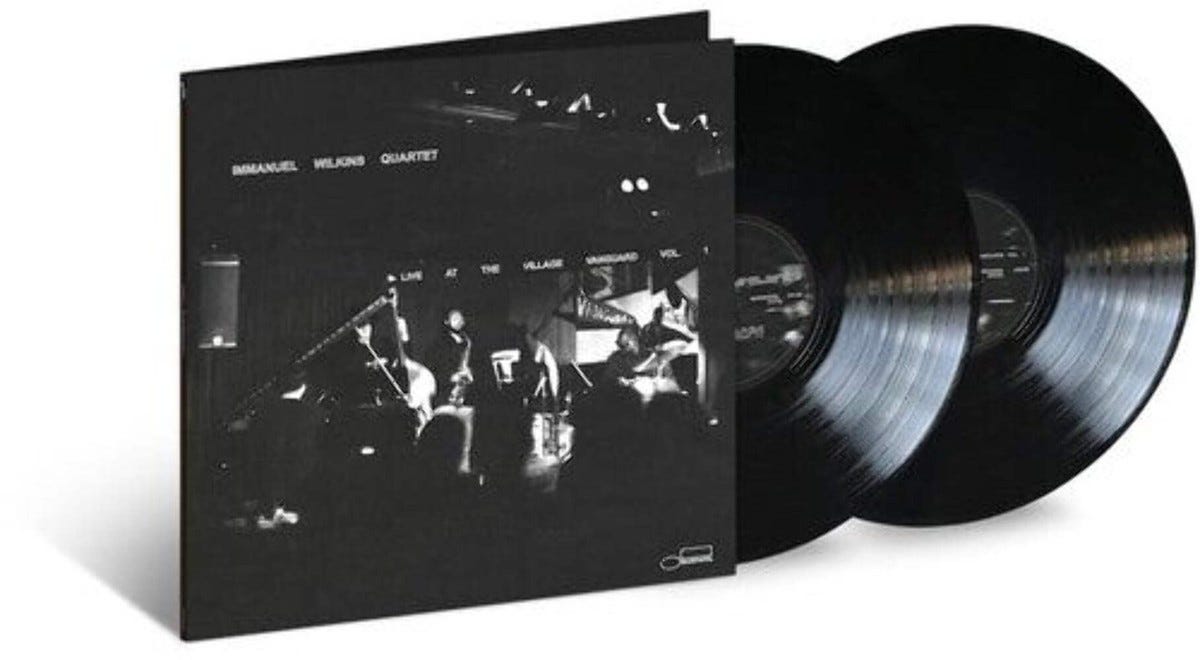
There are very few phrases in music that carry the weight, credibility, and cultural permanence of Live at the Village Vanguard. It is not just a recording credit. It is a benchmark, a rite of passage, and in many cases, a defining moment in an artist’s career. On The Improv Café—your dedicated destination for live Jazz, live Big Band, live Swing, and live Vocal Jazz only—that phrase is not treated as nostalgia. It is presented as a living, ongoing experience, unfolding in real time every week.

Tonight, The Improv Café once again delivers one of its most powerful programming pillars: “Live at The Village Vanguard”, a five-hour continuous broadcast that captures the essence of jazz in its most authentic and unfiltered form. This is not a curated approximation of the genre. This is the real thing—live recordings from one of the most revered jazz rooms in the world, presented without compromise.

At the center of it all is Village Vanguard, a venue that has defined the sound, spirit, and trajectory of modern jazz for decades. Located in the heart of Greenwich Village, the Vanguard is unlike any other performance space. Its triangular layout, low ceilings, and dimly lit interior create an environment where proximity matters—where every note, every breath, and every improvisational decision is felt as much as it is heard.

This intimacy is precisely what makes live recordings from the Vanguard so enduring. When listeners tune into The Improv Café tonight, they are not hearing polished studio edits. They are stepping directly into the room—into a space where the audience is close enough to feel the vibration of a bass string, where the drummer’s brushwork becomes part of the atmosphere, and where the line between performer and listener dissolves entirely.

The history embedded within these recordings is staggering. The Vanguard stage has hosted transformative performances from artists such as John Coltrane and Bill Evans, whose live recordings at the venue are widely regarded as some of the most important documents in jazz history. That lineage continues into the present with modern innovators like Wynton Marsalis and Chris Potter, ensuring that the Vanguard is not frozen in time—it is evolving, adapting, and continuing to shape the future of the genre.

This week’s programming across the Vanguard ecosystem reinforces that ongoing relevance. Immanuel Wilkins, one of the most forward-thinking voices in contemporary jazz, has just released Live at the Village Vanguard, Vol. 2, the second installment in an ambitious multi-volume series documenting his work within the space. This release is not simply another live album—it is a continuation of the Vanguard tradition, where artists use the room itself as an instrument, responding to its acoustics, its energy, and its history.

At the same time, the venue remains as active as ever. The Brad Mehldau Trio is currently in residence, bringing its deeply introspective and harmonically rich approach to the Vanguard stage. The Vanguard Jazz Orchestra continues its legendary Monday night run, a tradition that has become one of the most enduring fixtures in live big band performance anywhere in the world. And soon, Joe Lovano will begin his own engagement, adding another chapter to a career already deeply intertwined with the venue.

What The Improv Café accomplishes with its Live at The Village Vanguard broadcast is something that goes beyond programming—it creates access. It bridges geography, allowing listeners who may never set foot in Greenwich Village to experience the Vanguard as it was meant to be experienced: live, immediate, and emotionally direct. This is particularly significant in a media environment where so much of music consumption has become compressed, algorithm-driven, and disconnected from the original performance context.

The Improv Café operates in direct opposition to that trend. By committing exclusively to live recordings—no studio tracks, no artificial enhancements, no compromises—it restores the integrity of the listening experience. Every performance aired is a moment in time, preserved and presented exactly as it happened. This approach is not only rare; it is essential for preserving the true character of jazz, a genre built on spontaneity, risk, and real-time interaction.

The five-hour continuous format of tonight’s broadcast is equally intentional. Jazz, particularly in its live form, is not designed to be consumed in fragments. It unfolds gradually, building tension, releasing it, and then rebuilding in new and unexpected ways. By extending the program across an uninterrupted block, The Improv Café allows listeners to fully immerse themselves in that process, to follow the arc of performances as they develop organically.

Beyond New York, the “Vanguard” name continues to resonate across multiple artistic disciplines, reinforcing its broader cultural significance. In Montclair, the Vanguard Theater is preparing its 2026 Illuminating New Voices Festival, showcasing original works and expanding the boundaries of contemporary performance. On the West Coast, the Santa Clara Vanguard is advancing both educational initiatives and major performance ambitions, demonstrating how the Vanguard identity continues to evolve across generations and geographies.

Yet it all traces back to that singular room in Greenwich Village—the one that continues to define what it means to perform, record, and experience jazz at the highest level.

For The Improv Café, aligning its programming with this legacy is not a branding decision. It is a statement of purpose. The station exists to deliver live music in its purest form, and there is no better embodiment of that mission than the recordings born within the Village Vanguard.

Tonight’s Live at The Village Vanguard broadcast is not just another radio show. It is a direct line into one of the most important cultural spaces in modern music history. It is an opportunity to hear jazz as it was intended to be heard—unfiltered, unrepeatable, and alive.

And in a world where so much content is manufactured, edited, and optimized for convenience, that kind of authenticity is not just refreshing. It is indispensable.

01jazzessay1-videoSixteenByNineJumbo1600

Swing Is Alive, Loud, and Unstoppable: Inside the Resurgence of Big Band Jazz and the Soundtrack of Friday Nights on The Improv Café Radio

The Return of the Dance Floor: How Live Swing, Big Band Energy, and The Improv Café Are Driving a New Era of Movement and Music. There is a moment—just before the band hits full stride—when the room shifts. The horns rise, the rhythm locks in, and suddenly the floor is no longer a floor. It becomes a living, moving current of bodies in motion, responding in real time to something bigger than themselves. That moment, once synonymous with ballrooms of the 1930s and 40s, is happening again across New Jersey and Philadelphia, and it is being amplified every single week through The Improv Café Radio Station—a broadcast space where live jazz, live big band, and live swing are not curated nostalgia, but a present-tense experience.

At the center of that experience is tonight’s Swing with the Big Bands Radio Show, a Friday night ritual that continues to define what this station does best. This is not passive listening. It is a call to move, to respond, to reconnect with the pulse of live performance. Every track is pulled from real stages, real rooms, real audiences—capturing the immediacy that defines swing at its highest level. When the show begins, it does not simply play music; it recreates the conditions that made swing a cultural force in the first place.

That resurgence is not confined to the airwaves. Across the region, the dance floor is back in motion, and it is being driven by a network of venues, instructors, and communities that are rebuilding swing culture from the ground up. What makes this moment particularly compelling is its accessibility. You do not need years of training, a partner, or even prior experience. You only need the willingness to step into the rhythm.

In Madison, New Jersey, a growing swing community continues to gather for structured evenings that blend instruction with live energy. Events are designed to eliminate barriers, beginning with professional lessons that guide newcomers through the fundamentals before opening the floor to social dancing. The upcoming anniversary celebration featuring a full big band underscores how these gatherings are evolving—no longer niche events, but full-scale experiences that mirror the energy of historic swing nights.

Jersey City has emerged as another focal point, where dance studios are offering consistent programming that bridges traditional and modern swing styles. From foundational East Coast Swing to the more fluid dynamics of West Coast Swing, the city’s schedule reflects a demand for both structure and improvisation. These classes are not isolated sessions; they are entry points into a larger ecosystem where dancers continue to refine their movement through repetition, community, and exposure to live music.

Further south, Princeton’s swing community maintains a strong academic and cultural presence, with open-access lessons that invite participants from across the region. The absence of prerequisites—no partner required, no prior experience expected—creates an environment where the emphasis is placed entirely on participation. It is a model that aligns perfectly with the ethos of swing itself: inclusive, adaptive, and driven by interaction.

New Providence and surrounding areas continue to expand the scope even further, integrating Latin influences and advanced techniques into their programming. This blending of styles reflects a broader evolution within swing culture, where traditional forms are preserved while new interpretations are encouraged. The result is a dance scene that feels both rooted and progressive, capable of attracting a wide range of participants.

Statewide networks dedicated to West Coast Swing have also gained momentum, offering structured calendars that connect dancers across multiple venues. Workshops, weekend intensives, and rotating events ensure that the community remains active and interconnected. This level of organization is critical, as it transforms individual events into a sustained movement.

Philadelphia’s scene adds another dimension, with weekly gatherings that combine instruction, live music, and extended social dancing. In Rittenhouse Square and beyond, Thursday nights have become a cornerstone for Lindy Hop and swing enthusiasts, with lessons leading directly into hours of open dancing. These events capture the essence of swing as a social form—music and movement intertwined in a shared space.

Organizations dedicated to preserving authentic swing-era dance continue to play a vital role, offering progressive series that focus on technique, history, and stylistic accuracy. At the same time, beginner-focused programs ensure that new participants can enter the scene without intimidation. This balance between preservation and accessibility is what allows the culture to grow without losing its identity.

Signature events and outdoor programming further expand the reach of swing. Large-scale dance parties in urban parks bring live music and instruction into public spaces, creating opportunities for spontaneous participation. These gatherings echo the origins of swing as a communal experience, where the boundaries between performer and audience are fluid.

Back in New Jersey, milestone celebrations from long-standing dance organizations highlight the longevity of the scene. Anniversaries are not just commemorations—they are proof that swing has maintained a continuous presence, even as its visibility fluctuated over time. What is happening now is not a reinvention, but a reemergence.

Within this broader landscape, The Improv Café Radio Station serves as both anchor and amplifier. By committing exclusively to live recordings, the station preserves the authenticity that defines swing and big band music. Every broadcast captures the nuances that are often lost in studio production—the slight variations in tempo, the interplay between sections, the audible reaction of a live audience. These elements are not imperfections; they are the essence of the form.

Swing with the Big Bands Radio Show brings all of this into focus. The program is structured to move through eras and styles while maintaining a consistent throughline: the power of live performance. Legendary bandleaders, iconic vocalists, and lesser-known ensembles all share space within the broadcast, creating a listening experience that is both comprehensive and immediate.

What makes tonight’s show particularly relevant is its connection to the physical spaces where this music is once again being danced. The same rhythms driving dancers in Madison, Jersey City, Princeton, and Philadelphia are the rhythms being broadcast in real time. The radio becomes an extension of the dance floor, and the dance floor becomes a reflection of the music.

This convergence is what defines the current moment. Swing is not being preserved in isolation—it is being lived. It exists in studios, in community centers, in outdoor events, and in the curated broadcasts of The Improv Café. Each element reinforces the others, creating a cycle of engagement that continues to expand.

As Friday night arrives, the invitation is immediate and unmistakable. Turn on Swing with the Big Bands Radio Show, let the music take hold, and understand that what you are hearing is not a recreation—it is a continuation. The same energy that once filled ballrooms is present, alive, and accessible.

The dance floor is no longer confined to a single space. It is wherever the music is heard, wherever the rhythm is felt, and wherever someone is willing to move. At The Improv Café, that movement begins the moment the broadcast goes live, carrying forward a tradition that remains as vital and compelling as ever.

For swing and big band dancing, you have several excellent options in the New Jersey and Philadelphia areas. Many of these venues offer dedicated beginner lessons immediately before their social dances, making it easy to jump in even without a partner.

New Jersey Swing Dance Classes & Lessons

  • Let’s Swing NJ (Madison, NJ): This non-profit hosts regular dances at the Madison Community House. Every event begins with a professional lesson, and they have an Anniversary Celebration with the Swingadelic Big Band on May 9, 2026.
  • Jersey City Ballroom (Jersey City, NJ): Offers a variety of group classes including Smooth/Swing Fundamentals on Saturdays at 11:30 AM and West Coast Swing on Wednesdays at 8:30 PM.
  • Princeton University Swing Club (Princeton, NJ): Their lessons are open to the public at the Frist Campus Center. They typically offer All-Levels East Coast Swing lessons on Thursday nights, which are beginner-friendly and do not require a partner.
  • Swing Dance Plus (New Providence, NJ): Specializes in all types of swing and Latin dance, offering expert lessons and regular parties.
  • Jersey Westies (Statewide): A great resource for West Coast Swing, providing a detailed calendar of workshops and programs across the state, such as sessions at Starlight Dance Center and Le Pari.

Philadelphia Swing Dance Scene

  • Jazz Attack (Rittenhouse Square): Holds Lindy Hop & Swing classes every Thursday at the Philadelphia Ethical Society. Lessons run from 8:00–9:00 PM followed by social dancing until 11:00 PM.
  • Ragtag Empire (Philadelphia): A dedicated swing and jazz organization that offers progressive Lindy Hop series and workshops focused on authentic swing-era dancing.
  • Society Hill Dance Academy (Philadelphia): Offers a 6-week Swing for Beginners course that covers the basics of Lindy Hop and East Coast Swing.
  • University City Swing (West Philadelphia): Hosted at St. Mary’s at UPenn, they offer West Coast Swing lessons every Wednesday night, and your first visit is free. 

Free Outdoor & Signature Workshops

  • Bryant Park Dance Party (NYC): The 12th season returns this spring! You can catch a Swing Dance & Rock ‘n’ Roll night with expert instructors on May 7, 2026. Lessons start at 6:00 PM, followed by live music at 7:00 PM.
  • Central Jersey Dance Society (Princeton): Celebrating their 25th Anniversary on April 18, 2026, with a night of varied dancing including swing. 

There is a certain electricity that only live swing can generate—the kind that doesn’t just fill a room, but transforms it. In 2026, that energy is not confined to ballrooms or historic bandstands. It is moving through airwaves, across stages, and into a renewed cultural moment where big band jazz is once again commanding attention. At the center of that revival is The Improv Café Radio Station, a destination built on a singular promise: every note you hear is live, every performance is real, and every broadcast captures the unfiltered essence of jazz, big band, swing, and vocal tradition as it was meant to be experienced.

Friday nights have become the heartbeat of that mission with the station’s signature program, Swing with the Big Bands Radio Show. This is not background music. It is an immersive, high-impact listening experience that draws directly from legendary live recordings—performances that defined eras, shaped movements, and continue to influence musicians today. When the show goes live, it invites listeners to step into the pulse of history, where brass sections explode with precision, rhythm sections drive relentless momentum, and vocalists command the stage with presence and personality that cannot be replicated in a studio environment.

What makes this moment particularly significant is the broader resurgence happening around the genre. Across the New York and New Jersey region, big band and swing are not simply surviving—they are thriving. The current landscape is marked by a dynamic blend of heritage and reinvention, where traditional arrangements coexist with modern interpretations, and where audiences are rediscovering the power of large ensemble jazz in both live and broadcast formats.

Major events are fueling that momentum. One of the most anticipated gatherings of the season, the Battle of the Big Bands, is set to take place aboard the historic Intrepid Museum, transforming a naval flight deck into a high-energy swing arena under the open sky. It is a setting that perfectly captures the scale and spectacle of the genre, where multiple ensembles compete not just in sound, but in showmanship, inviting audiences to engage directly through dance and movement.

That sense of immersion continues with the Gotham Jazz Festival, an all-day experience that brings together some of the most accomplished hot jazz and swing ensembles in the region. Events like this are redefining how audiences interact with jazz, shifting from passive listening to active participation. The emphasis is no longer just on performance—it is on experience, community, and the shared energy that only live music can generate.

Philadelphia’s Germantown Big Band Jazz Battle adds another layer to this regional resurgence, highlighting the competitive and collaborative spirit that has always defined the big band tradition. These events are not isolated—they are part of a broader network of performances and gatherings that collectively signal a renewed cultural appetite for swing.

At the institutional level, Lincoln Center’s summer programming continues to reinforce the genre’s relevance, with large-scale swing dance events and big band showcases that bring together world-class musicians and audiences from across the spectrum. These performances serve as both celebration and validation, confirming that big band jazz remains a vital and evolving art form.

Weekly residencies further anchor this movement. Venues like Birdland Jazz Club in New York maintain a consistent presence, offering audiences the opportunity to experience live big band performances on a regular basis. The Birdland Big Band’s ongoing Friday appearances have become a cornerstone of the scene, while other ensembles continue to push the boundaries of what big band music can be.

Closer to home, New Jersey’s own swing culture remains deeply rooted and actively engaged. Spaces dedicated to dance and live performance continue to host regular events, creating environments where the music is not only heard but physically felt. Educational institutions are also playing a role, with university jazz programs contributing to the next generation of performers who are carrying the tradition forward while introducing new ideas and influences.

On a global scale, the genre’s reach continues to expand. Touring acts like the Mingus Big Band are bringing large ensemble jazz to international audiences, while groups rooted in the swing revival movement continue to blend traditional forms with contemporary elements. Even as the scene evolves, the core remains unchanged—the commitment to live performance, to spontaneity, and to the connection between musician and audience.

Within this broader context, The Improv Café Radio Station occupies a unique and essential position. By focusing exclusively on live recordings, the station preserves the authenticity that defines jazz at its highest level. There are no studio edits to smooth over imperfections, no artificial enhancements to shape the sound. What listeners hear is exactly what happened in the moment—the energy, the interaction, the risk, and the reward.

This commitment becomes especially powerful during Swing with the Big Bands Radio Show. Each broadcast is curated to reflect the depth and diversity of the genre, moving seamlessly between eras, styles, and ensembles. From the explosive precision of classic big band arrangements to the nuanced interplay of smaller swing groups, the show captures the full spectrum of what makes this music enduring.

There is also an element of discovery embedded within the program. While legendary performances remain a cornerstone, the show consistently introduces lesser-known recordings that reveal new dimensions of the genre. This balance ensures that the experience remains both familiar and fresh, appealing to longtime enthusiasts while inviting new listeners into the fold.

The cultural significance of this moment cannot be overstated. In an era dominated by digital production and algorithm-driven playlists, the return to live, unfiltered performance represents a shift in how audiences engage with music. There is a growing appreciation for authenticity, for the imperfections that make a performance human, and for the collective experience that defines live jazz.

For The Improv Café, this is not a trend—it is a foundation. The station’s identity is built on the belief that live music carries a weight and immediacy that cannot be replicated. Every broadcast reinforces that philosophy, creating a space where the past and present of jazz coexist in real time.

As Friday night approaches, the invitation is clear. Tune in to Swing with the Big Bands Radio Show and experience a form of music that continues to evolve while staying true to its roots. Let the horns lead, let the rhythm section drive, and let the music take over in a way that only live performance can deliver.

In 2026, swing is not a revival—it is a continuation. It is a living, breathing force that moves through venues, festivals, and airwaves alike. And at The Improv Café, it is happening live, exactly as it should be heard.