maxresdefault (6)

The Improv Cafe’ Expands the Modern Live Jazz Conversation as Centennial Celebrations, Global Festivals, and Landmark Performances Reignite the Future of Live Music

There are moments in the history of jazz when the music seems to collectively inhale before launching into another creative era. The current global explosion surrounding live jazz performance feels exactly like one of those moments. Across international festivals, historic centennial celebrations, major artist collaborations, and rapidly expanding crossover audiences, jazz is once again positioning itself at the center of live cultural conversation. For a station like The Improv Cafe’ — built entirely around the energy, spontaneity, and electricity of live Jazz, live Big Band, and live Swing — the timing could not be more significant.

What is unfolding right now is larger than nostalgia. Larger than a genre revival. Larger than festival season itself. Jazz is experiencing a full-scale live performance renaissance powered by generational rediscovery, new audiences, adventurous programming, and a renewed hunger for authentic musicianship in an era increasingly dominated by artificiality and disposable digital culture. The world is rediscovering what jazz audiences have always understood: nothing replaces the feeling of live improvisation unfolding in real time.

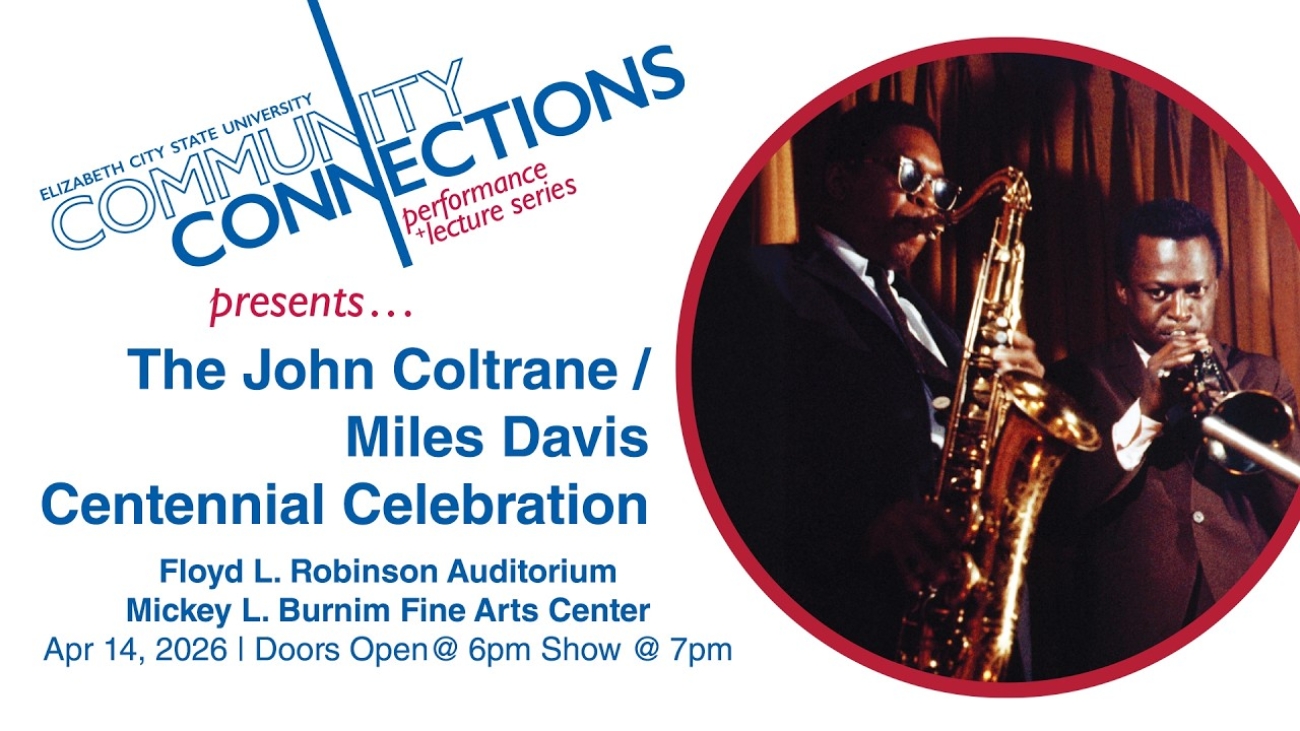
That momentum is accelerating into a historic period driven heavily by the upcoming centennial celebrations honoring two of the most transformative figures in music history: Miles Davis and John Coltrane. Their approaching 100th birthdays are not simply commemorative milestones. They are becoming global cultural anchors for festivals, tributes, educational programming, archival projects, and live reinterpretations that are helping redefine jazz for an entirely new generation of listeners.

For The Improv Cafe’, this is precisely the kind of moment the station was built to amplify.

The station’s commitment to exclusively broadcasting live Jazz, live Big Band, and live Swing recordings positions it uniquely within a modern media landscape where authenticity has become increasingly rare. While algorithmic playlists continue flattening music discovery into interchangeable mood-based consumption, live jazz remains defiantly human. It thrives on imperfection, risk, spontaneity, and communication between musicians and audiences. Every solo evolves differently. Every arrangement shifts with the room. Every performance becomes a singular historical document that can never be replicated.

That philosophy now aligns directly with what major international festivals are embracing in 2026.

One of the most important developments in live jazz programming this year has been the launch of the inaugural Santa Monica International Jazz Festival, an ambitious new multi-venue event curated by legendary four-time Grammy-winning bassist Stanley Clarke. The arrival of a new large-scale jazz festival in Southern California signals more than expansion. It represents institutional confidence that live jazz audiences are growing substantially enough to support entirely new destination events.

The Santa Monica festival immediately distinguished itself through ambitious artistic programming rather than safe nostalgia booking. Instead of treating jazz history as a museum exhibit, the event embraced jazz as a living, evolving art form capable of stretching across generations and styles. That balance between legacy and innovation culminated in a historic open-air finale headlined by double 2026 Grammy winner Kamasi Washington alongside a major tribute project honoring Miles Davis led by Davis’ nephew, Vince Wilburn Jr..

The symbolism surrounding that performance mattered enormously. Kamasi Washington has become one of the defining bridge figures between traditional jazz audiences and younger listeners raised on hip-hop, soul, cinematic composition, and experimental improvisation. His rise represents one of the clearest indicators that jazz is once again entering mainstream cultural relevance without sacrificing artistic complexity. Pairing Washington with a Miles Davis tribute led by a direct family and creative connection to Davis himself created a rare fusion of lineage and future-facing experimentation.

That combination reflects exactly why live jazz remains endlessly renewable.

Miles Davis spent his career refusing creative stagnation. Every major period of his catalog represented reinvention: bebop, cool jazz, modal jazz, electric fusion, orchestral experimentation, funk hybrids, and abstract improvisational structures. The current festival circuit appears to be embracing that same restless spirit. Instead of limiting jazz programming to preservation alone, organizers are increasingly encouraging reinterpretation, crossover collaboration, and boundary expansion.

The implications for live radio programming are massive.

For stations like The Improv Cafe’, the modern jazz resurgence opens extraordinary opportunities to reconnect audiences with the depth and scale of live performance archives while simultaneously introducing newer live artists who are reshaping the genre in real time. The appeal of live jazz radio lies in its unpredictability. A station devoted entirely to live recordings transforms listening into discovery rather than passive consumption. A 14-minute improvisational detour becomes part of the attraction. Extended solos become storytelling devices. Audience reactions become part of the composition itself.

That authenticity is becoming increasingly valuable to listeners exhausted by hyper-processed modern production.

The growing momentum surrounding international jazz festivals reinforces that shift. Few events illustrate jazz’s enduring global power more effectively than the legendary Montreal International Jazz Festival, widely recognized as the largest jazz festival in the world. The festival’s 46th anniversary programming demonstrates how jazz institutions are modernizing without abandoning their roots.

Veteran jazz journalist Justin Cober-Lake recently confirmed details surrounding SiriusXM’s live remote broadcasts from the Montreal event, further highlighting how major broadcast platforms are reinvesting in live jazz coverage. This matters because radio and live jazz have always shared a deeply intertwined history. From the swing era through bebop and beyond, radio once served as the primary engine for jazz discovery and cultural expansion.

In many ways, stations like The Improv Cafe’ are helping restore that tradition for the streaming generation.

The Montreal programming slate itself reflects jazz’s growing stylistic breadth. Live audience interviews featuring the Joshua Redman Group sit alongside major main-stage performances from internationally celebrated artists like Diana Krall and Marcus Miller. The diversity of those bookings demonstrates the increasingly expansive definition of contemporary jazz audiences. Traditional acoustic improvisation, vocal jazz sophistication, fusion experimentation, cinematic composition, and crossover orchestration now coexist comfortably inside the same festival ecosystem.

This broader inclusivity is helping jazz attract younger audiences without diluting its artistic integrity.

Meanwhile, another significant development arrived with the unveiling of the inaugural L.A. Jazz Festival lineup. The new Los Angeles-based event immediately generated attention by locking in crossover superstars including John Legend and Janelle Monáe alongside established jazz artists.

Traditionalists may debate crossover booking strategies, but the broader implications are difficult to ignore. Festivals increasingly recognize that jazz’s survival depends not on isolation but expansion. Bringing mainstream audiences into jazz-centered environments creates opportunities for discovery. A fan arriving for John Legend may encounter avant-garde improvisation for the first time. A Janelle Monáe listener may unexpectedly connect with big band arrangements, modal structures, or live swing orchestration.

This is how musical ecosystems evolve.

The crossover strategy also reflects jazz’s historical reality. Jazz has never truly existed in isolation. It has always absorbed, reshaped, and influenced surrounding genres. Swing transformed pop culture. Bebop revolutionized harmonic thinking. Fusion collided with rock and funk. Modern jazz continues intersecting with hip-hop, electronic composition, orchestral scoring, spoken word performance, and cinematic production.

The Improv Cafe’ sits directly inside that living continuum.

By centering live recordings rather than polished studio perfection, the station preserves the raw connective tissue that links every era of jazz history together. Whether listeners encounter a blistering big band performance from the swing era, a smoky late-night club recording from the hard bop years, or a modern spiritual jazz improvisation stretching beyond traditional structure, the common denominator remains human spontaneity.

That human element may ultimately explain why live jazz is resurging so forcefully right now.

Audiences increasingly crave experiences that feel irreplaceable. Live jazz delivers exactly that. No two performances unfold identically. No solo can be fully recreated. No room responds the same way twice. In an age dominated by cloned content and repetitive digital formatting, improvisation itself becomes radical.

The upcoming Miles Davis and John Coltrane centennials only intensify that relevance. Both artists spent their careers dismantling limitations. Both challenged audiences to move beyond comfort. Both transformed improvisation into philosophical expression. Their influence now stretches far beyond jazz itself into rock, hip-hop, classical composition, film scoring, and experimental sound design.

Modern festivals understand this. Younger artists understand this. And increasingly, audiences understand this.

That is why the global live jazz ecosystem feels so energized entering this new era. The music is no longer being framed simply as heritage programming. It is being positioned once again as progressive art capable of shaping future cultural conversations. Major festivals are investing accordingly. Broadcasters are adapting accordingly. Artists are experimenting accordingly.

For The Improv Cafe’, the mission becomes even more essential within that environment.

A station dedicated exclusively to live Jazz, live Big Band, and live Swing is not simply preserving musical history. It is preserving the living architecture of improvisation itself. Every broadcast becomes part performance archive, part educational experience, and part emotional time machine connecting generations of listeners through shared sonic discovery.

As international festivals expand, centennial celebrations intensify, and younger audiences continue gravitating toward authentic live performance culture, The Improv Cafe’ stands positioned at the center of one of the most exciting live jazz eras in decades.

And if the current momentum is any indication, the next century of jazz may be just beginning.

fb-NJF26-1

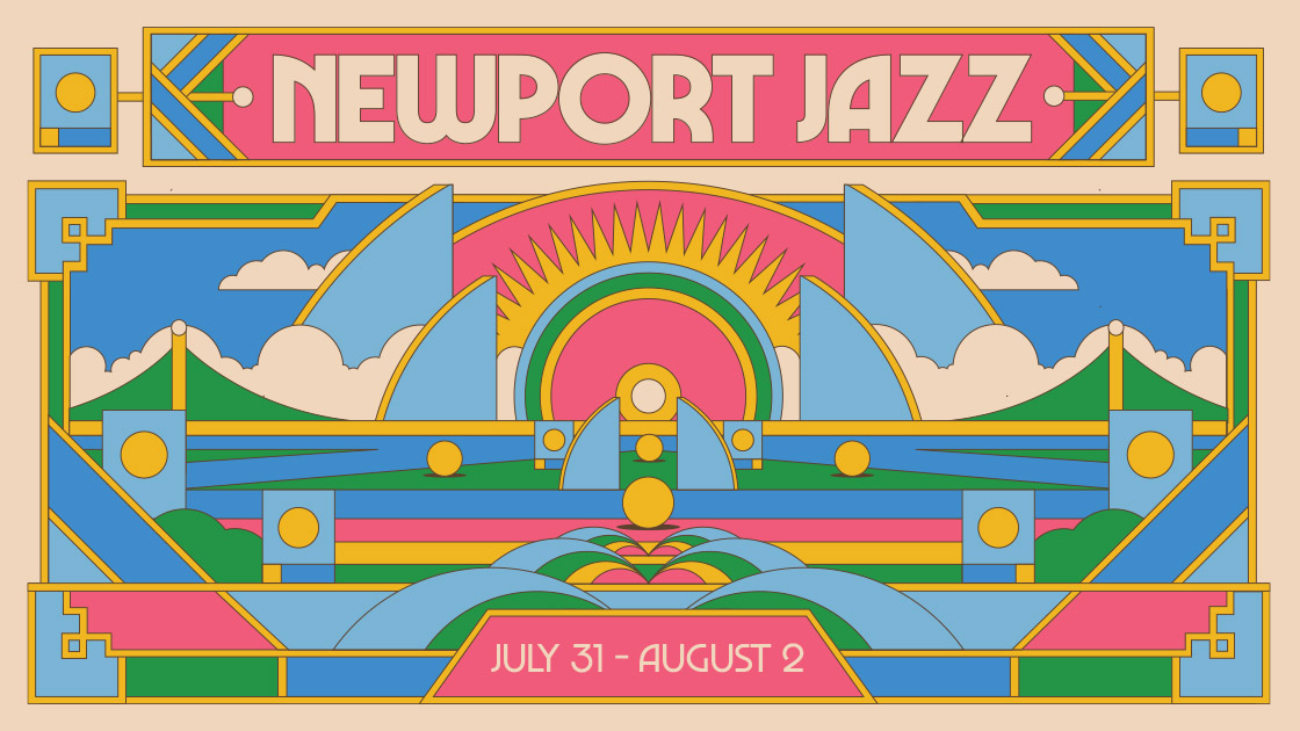
Newport Jazz Festival 2026 Opens a New Chapter at Fort Adams as The Improv Cafe’ Celebrates One of Live Jazz’s Most Important Weekends

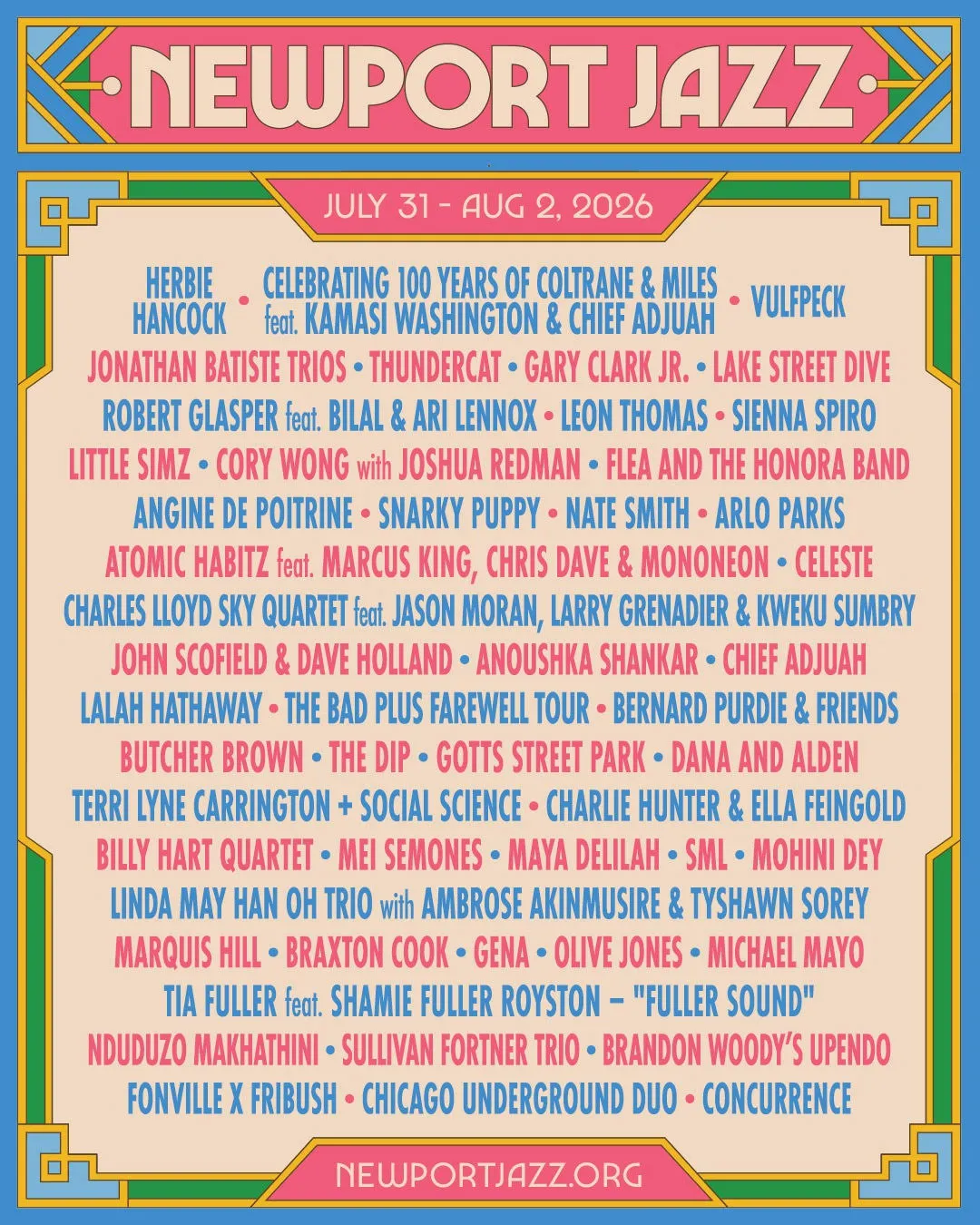
The 2026 Newport Jazz Festival is no longer simply another major summer music event on the calendar. This year’s announcement signals something much larger for the modern jazz world: a generational transition happening in real time at one of the most historically significant festivals ever created. Set for July 31 through August 2 at Fort Adams State Park in Newport, Rhode Island, the legendary gathering returns with a lineup that bridges classic jazz artistry, progressive improvisation, modern soul, funk experimentation, global fusion, and boundary-pushing contemporary performance in a way that feels entirely aligned with where live music is heading next.

For The Improv Cafe’, a station dedicated exclusively to live jazz, live big band, and live swing performances, the 2026 Newport Jazz Festival represents the exact type of artistic evolution that continues keeping improvisational music culturally relevant across generations. This year’s festival does not rely solely on nostalgia or historical prestige. Instead, it actively positions jazz as a living, expanding form capable of connecting legacy artists, emerging innovators, cross-genre collaborators, and younger audiences inside one of the most respected performance environments in modern music history.

The 2026 edition also introduces a major artistic shift behind the scenes. Grammy-winning drummer, producer, composer, and bandleader Nate Smith officially steps into a defining leadership role as the festival enters a new era under his artistic direction. That change alone carries enormous significance throughout the jazz world. Smith has spent years building credibility not only among traditional jazz audiences, but also across funk, fusion, hip-hop, R&B, modern improvisation, and experimental performance communities. His influence reflects the exact kind of fluid musical language increasingly shaping contemporary jazz culture worldwide.

Rather than programming the festival strictly around genre purity, the 2026 Newport Jazz Festival embraces musical conversation itself. The lineup reflects a philosophy built around rhythm, improvisation, spontaneity, groove, collaboration, storytelling, and live performance chemistry. That approach feels deeply connected to Newport’s original identity while also acknowledging how modern audiences experience jazz today — not as an isolated style, but as a constantly evolving musical ecosystem.

The headline roster alone immediately establishes the scale of the weekend. Herbie Hancock returns as one of the defining figures of modern jazz piano and one of the last remaining living architects of multiple jazz revolutions spanning acoustic post-bop, electric fusion, funk experimentation, and advanced contemporary improvisation. Hancock’s presence at Newport immediately elevates the entire festival because his performances are never merely retrospective celebrations. Every live appearance continues demonstrating how jazz innovation remains active rather than archival.

Jon Batiste arrives at Newport carrying one of the broadest creative profiles in modern music. His ability to merge jazz, gospel, soul, improvisation, rhythm and blues, classical influences, New Orleans traditions, and contemporary performance art has transformed him into one of the most recognizable ambassadors for live musicianship in mainstream culture. His trio format at Newport could become one of the weekend’s defining performances because stripped-down live settings often reveal the deepest improvisational instincts behind major artists.

Thundercat’s inclusion further confirms Newport’s commitment to modern musical evolution. As both a virtuoso bassist and an unpredictable live performer, Thundercat exists in a space where jazz harmony, funk grooves, fusion textures, electronic experimentation, and psychedelic performance aesthetics coexist naturally. His audience also represents an entirely different generation discovering improvisational music through contemporary cultural pathways rather than traditional jazz institutions.

Then comes Vulfpeck, whose arrival at Newport may initially surprise some traditionalists, but actually makes perfect sense within the broader trajectory of modern live performance culture. Few contemporary bands understand groove dynamics, live musicianship, audience interaction, rhythmic precision, and improvisational energy quite like Vulfpeck. Their stripped-down funk minimalism and performance spontaneity embody many of the same principles that have always driven jazz itself.

Still, one of the most important artistic centerpieces of the entire 2026 festival may be the major centennial tribute honoring the 100th birthdays of Miles Davis and John Coltrane. Few names carry greater historical weight in jazz history, and Newport’s decision to build a large-scale performance celebration around their legacy gives the weekend a deeper emotional and cultural gravity beyond standard festival programming.

The tribute featuring Kamasi Washington and Chief Adjuah immediately signals that this will not simply be a museum-style retrospective. Instead, it appears positioned as a living reinterpretation of revolutionary jazz ideals through contemporary voices still actively reshaping the genre. Kamasi Washington has become one of the most influential large-scale jazz composers and saxophonists of the modern era, helping reintroduce expansive spiritual jazz concepts to younger audiences worldwide. Chief Adjuah, formerly known as Christian Scott, continues pushing jazz into radically modern territory through rhythmic experimentation, cultural fusion, and advanced compositional structures that challenge traditional genre limitations.

The symbolic importance of celebrating Miles Davis and John Coltrane in 2026 cannot be overstated. Their innovations permanently altered not only jazz, but the broader direction of modern music itself. Davis continuously reinvented the possibilities of jazz performance throughout multiple decades, while Coltrane transformed improvisation into something spiritual, philosophical, emotional, and transcendent. Newport placing their centennial celebration at the center of the weekend reinforces the festival’s ongoing role as both a historical institution and a platform for future artistic expansion.

Beyond the major headliners, the depth of the 2026 lineup may ultimately become the festival’s greatest strength. Robert Glasper featuring Bilal and Ari Lennox creates one of the weekend’s most anticipated intersections between jazz, neo-soul, improvisation, and contemporary R&B. Glasper has spent years dismantling the barriers separating jazz from mainstream Black music traditions, and his collaborations consistently produce performances that feel both technically sophisticated and emotionally immediate.

Gary Clark Jr.’s appearance introduces another layer of stylistic diversity while still remaining connected to the improvisational DNA at the heart of blues and jazz traditions. His guitar work often merges blues structure, rock intensity, soul phrasing, and extended live improvisation in ways that naturally complement Newport’s broader musical identity.

Little Simz represents another fascinating inclusion because her artistry reflects how modern jazz influence increasingly extends into hip-hop production, spoken-word rhythm, orchestral arrangement, and conceptual live performance. Arlo Parks brings a quieter but equally compelling emotional intimacy through songwriting that frequently draws from jazz textures, atmospheric arrangements, and poetic storytelling traditions.

Meanwhile, longtime jazz stalwarts continue grounding the festival in deep musical lineage. Charles Lloyd remains one of the most spiritually resonant saxophonists in modern jazz history. John Scofield continues blending advanced harmonic improvisation with blues, funk, and fusion vocabulary that has influenced generations of guitarists. Terri Lyne Carrington’s Social Science project represents one of the most intellectually ambitious contemporary jazz ensembles currently touring, combining social commentary, rhythmic innovation, and collaborative experimentation into a uniquely modern artistic statement.

The daily festival structure also reveals careful programming balance across the entire weekend. Friday immediately establishes an adventurous tone with Vulfpeck, Robert Glasper, Little Simz, Charles Lloyd, Chief Adjuah, and Anoushka Shankar all appearing on the same day. That combination alone captures Newport’s expanding identity — global influences, improvisation, groove-based performance, jazz lineage, and experimental modern artistry coexisting inside one schedule.

Saturday may ultimately emerge as the festival’s most explosive day musically. Kamasi Washington, Jon Batiste, Gary Clark Jr., Snarky Puppy, Cory Wong, and Terri Lyne Carrington create an extraordinarily dynamic lineup built around rhythmic energy, improvisational freedom, technical precision, and live audience connection. Snarky Puppy alone has become one of the most important live ensemble acts of the past decade because of its ability to merge jazz complexity with crowd-driven excitement.

Sunday closes the festival with a combination of iconic prestige and stylistic unpredictability. Herbie Hancock’s appearance naturally serves as a centerpiece, while Thundercat, Lake Street Dive, Flea with the Honora Band, Arlo Parks, and The Bad Plus collectively ensure the weekend concludes with both musical sophistication and broad audience accessibility.

What makes the 2026 Newport Jazz Festival especially compelling is how intentionally it reflects the current state of live jazz culture itself. Modern jazz audiences are no longer confined to one demographic, one listening habit, one streaming category, or one stylistic expectation. Today’s listeners move fluidly between jazz, funk, soul, hip-hop, electronic music, experimental composition, global fusion, and improvisational performance traditions. Newport’s programming recognizes that reality without abandoning its historical roots.

That balance matters because many legacy festivals struggle to evolve without alienating longtime audiences. Newport instead appears to understand that jazz history itself was always built on innovation, disruption, experimentation, and cultural expansion. The genre has never remained static for long periods. Every major jazz movement initially challenged existing definitions before eventually becoming accepted tradition.

The atmosphere surrounding Fort Adams State Park only amplifies the experience further. Few festival settings in America offer the same combination of waterfront scenery, historical significance, outdoor acoustics, and communal live music culture. Newport has always carried an energy that feels larger than a typical festival weekend because audiences understand they are participating in an ongoing musical legacy stretching back decades.

For The Improv Cafe’, the 2026 Newport Jazz Festival serves as a reminder of why live performance remains the center of jazz culture regardless of technological change. Recorded music can preserve brilliance, but improvisation only fully exists in the moment it is created. That unpredictability — the risk, spontaneity, interaction, and emotional immediacy between musicians and audiences — continues defining the power of jazz more than any streaming platform, playlist algorithm, or commercial trend ever could.

The sold-out status of all official three-day and single-day passes further reinforces the growing demand for authentic live musical experiences. Even in an era dominated by digital access and endless content saturation, audiences continue gravitating toward festivals capable of delivering genuine artistic connection. The continued activity on fan exchange platforms and secondary ticket markets only demonstrates how strong the demand remains for Newport’s unique cultural position.

More importantly, the 2026 festival lineup suggests that jazz is not retreating into preservation mode. It is expanding outward again. Younger audiences are discovering improvisational music through artists like Thundercat, Kamasi Washington, Robert Glasper, Cory Wong, and Snarky Puppy. Longtime listeners continue following masters like Herbie Hancock, Charles Lloyd, and John Scofield. Newport successfully places those worlds together without forcing either side to compromise its identity.

That may ultimately become the defining achievement of the 2026 Newport Jazz Festival. It does not present jazz as a closed historical institution. It presents jazz as a living language still capable of adapting, collaborating, evolving, and leading contemporary music culture forward.

And for a station like The Improv Cafe’, which exists entirely to celebrate the enduring energy of live jazz, live big band, and live swing performance, that vision could not feel more relevant heading into one of the most anticipated weekends of the 2026 live music calendar.

20260325-174814-641315

The Blue Note Jazz Festival 2026 Expands the Global Reach of Live Jazz as The Improv Cafe’ Keeps the Tradition Moving One Performance at a Time

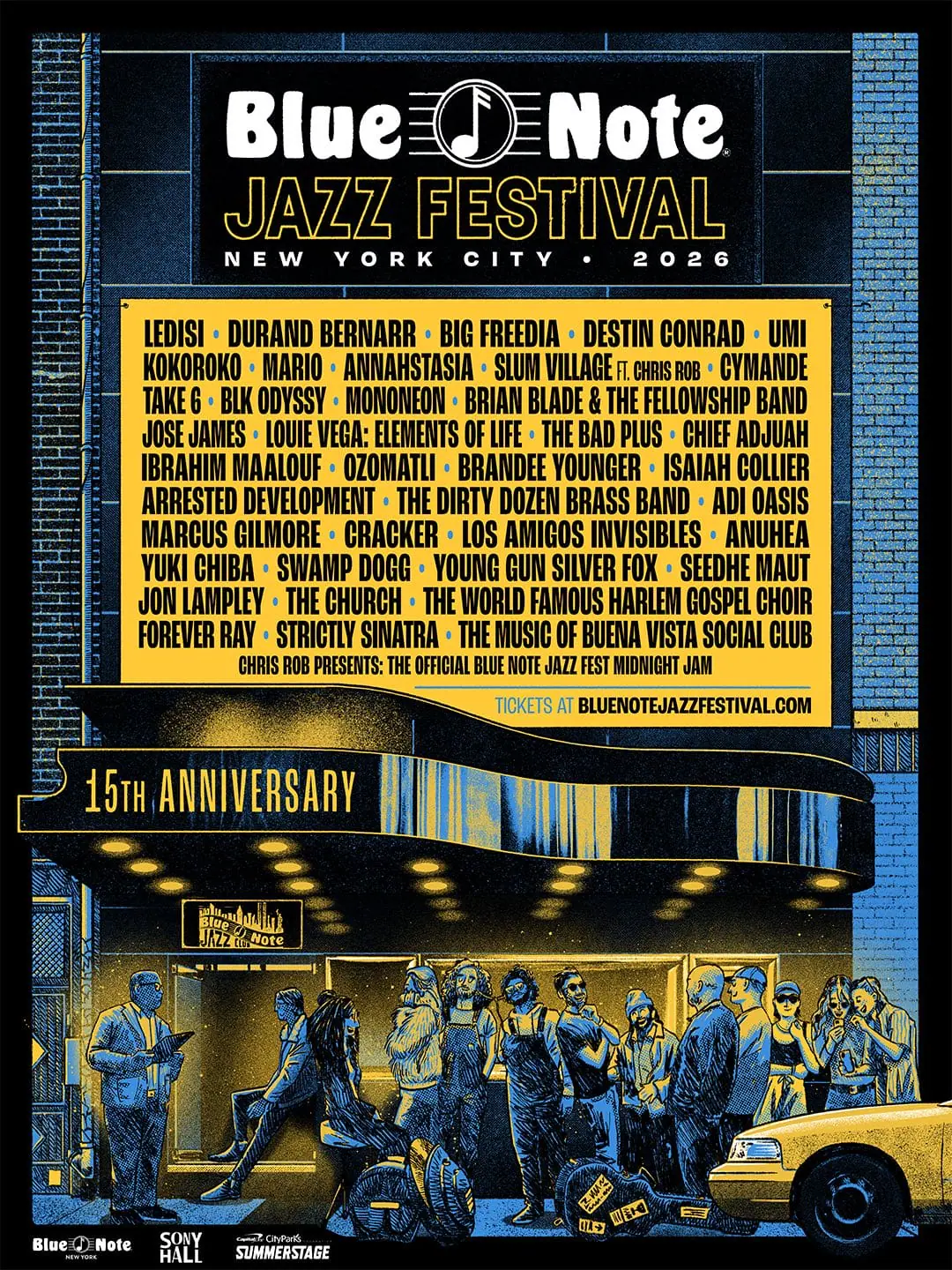
There are certain names in jazz that immediately carry weight before a single note is played. The Blue Note is one of them. For decades, it has represented more than a venue or a brand—it has stood as a living institution tied directly to the evolution of modern jazz performance, artist development, improvisation, and live musical storytelling. As the 15th annual Blue Note Jazz Festival prepares to unfold across New York and Los Angeles this June, the festival arrives at a moment when live jazz continues to reclaim visibility, relevance, and cultural urgency on an international scale. For The Improv Cafe’, the radio station devoted entirely to live jazz, live big band, and live swing recordings, the significance of this year’s festival reaches far beyond a seasonal concert announcement. It represents another major chapter in the ongoing expansion of live performance culture itself.

Beginning June 1 and extending through July 1 in New York, the Blue Note Jazz Festival once again transforms the city into a month-long network of performances centered around the legendary Greenwich Village club and Sony Hall. The scope of the programming reflects the increasingly broad definition of contemporary jazz presentation, embracing traditional musicianship while acknowledging the genre’s continued fusion with soul, funk, hip-hop, rhythm and blues, Afro-futurism, and modern improvisational forms. This year’s lineup captures that intersection perfectly, bringing together artists who approach jazz not as a fixed historical artifact but as an active and evolving language.

Among the featured performers are powerhouse vocalist Ledisi, New Orleans cultural innovator Big Freedia, genre-defying vocalist Durand Bernarr, and the groundbreaking British funk collective Cymande. Individually, each artist occupies a distinct space in contemporary music. Together, they represent the widening orbit of modern jazz festivals, where improvisation and groove continue to influence virtually every corner of contemporary live performance.

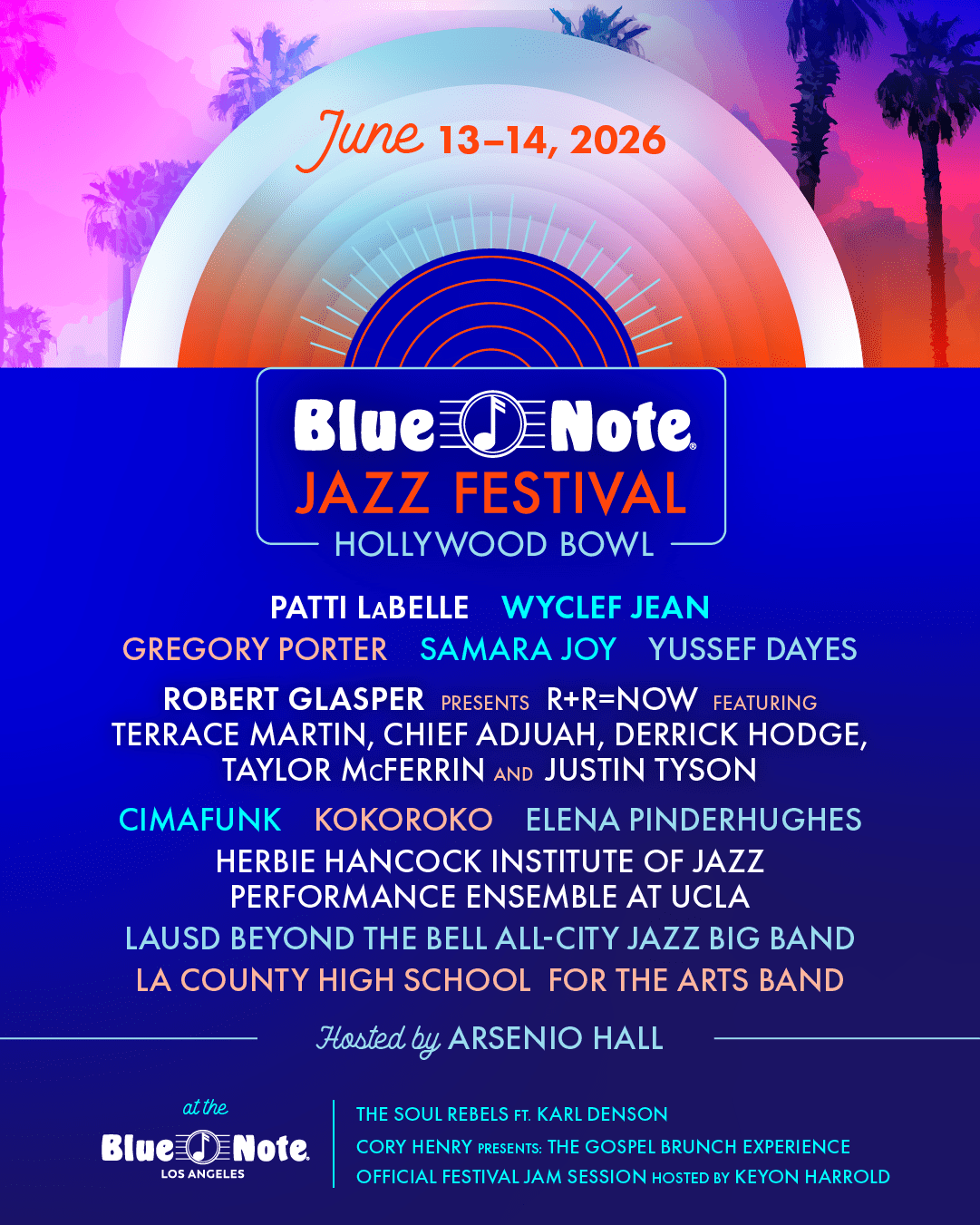
The festival’s expansion beyond New York remains equally important. On June 13 and 14, the Blue Note Jazz Festival returns to the iconic Hollywood Bowl for a major weekend showcase that blends jazz, soul, and cross-generational collaboration on one of America’s most historic outdoor stages. The lineup reflects both legacy and forward momentum, featuring enduring icons like Patti LaBelle alongside globally recognized artist Wyclef Jean and acclaimed jazz vocalist Gregory Porter.

One of the defining centerpieces of the Hollywood Bowl programming is the return of Robert Glasper’s R+R=NOW collective, a project that has become one of the most influential examples of jazz fusion in the modern era. Featuring contributions from musicians including Terrace Martin and Chief Adjuah, the ensemble represents a new generation of artists refusing to isolate jazz from the rest of contemporary Black music traditions. Their work pulls equally from improvisation, hip-hop production, electronic textures, and deeply rooted rhythmic structures while maintaining the spontaneity that defines great live performance.

That connection between improvisation and immediacy remains central to why festivals like Blue Note continue to matter. In an era increasingly dominated by algorithmic listening, compressed streaming playlists, and isolated digital consumption, live jazz restores unpredictability to the center of the musical experience. Every performance becomes singular. Every solo evolves in real time. Every audience changes the shape of the room. It is one of the few genres where the act of listening remains inseparable from the act of witnessing.

That philosophy sits at the core of The Improv Cafe’ itself. The station’s commitment to exclusively broadcasting live recordings is not nostalgia-driven programming—it is preservation through performance. Whether the music originates from a legendary jazz club, a major concert hall, a ballroom packed with swing dancers, or a late-night small ensemble session captured directly to tape, the focus remains fixed on authenticity and atmosphere. The audience hears the crowd reaction, the room acoustics, the spontaneous interplay between musicians, and the imperfections that make live jazz human in the first place.

That same spirit defines tonight’s “Live at The Blue Note” radio show on The Improv Cafe’. Built entirely around music recorded live in clubs or captured directly during album and concert performances, the program functions as both celebration and documentation of jazz in its most natural environment. These are not sterilized studio reconstructions. They are living performances filled with the tension, momentum, and communication that only occur when musicians are responding directly to one another in real time.

For jazz audiences, the club environment has always mattered. Rooms like the original Blue Note became legendary because they created conditions where experimentation could happen nightly in front of listeners who understood that the music was never meant to remain static. The applause between solos, the extended improvisations that stretched beyond studio limitations, the moments where musicians took risks without certainty of where the performance might land—those experiences shaped the identity of jazz itself.

The modern Blue Note Jazz Festival continues that lineage while simultaneously redefining what jazz presentation can look like in 2026. It understands that jazz history and innovation are not opposing forces. Artists like Gregory Porter carry vocal traditions tied directly to classic jazz phrasing while speaking to modern audiences. Robert Glasper’s projects openly blend electronic production and hip-hop influences without abandoning improvisational depth. Cymande’s long-standing influence on funk and soul culture continues to resonate through younger generations of musicians rediscovering groove-centered live performance.

This broader expansion of jazz culture is one reason festivals like Blue Note have become increasingly important globally. They are no longer confined to narrow genre audiences. They function as cultural crossroads where multiple generations, traditions, and musical languages intersect under the umbrella of live improvisational music. And importantly, they reaffirm that audiences are still actively searching for real performance experiences that cannot be replicated through short-form digital consumption.

For The Improv Cafe’, that mission remains constant every hour of the day. The station’s identity is rooted entirely in live music because live music creates permanence through impermanence. No two performances are identical. No audience hears the exact same version twice. Whether it is a roaring live big band arrangement, an intimate vocal jazz recording, a late-night trumpet solo echoing through a crowded club, or a swinging ballroom orchestra driving dancers across the floor, the power comes from the fact that the moment existed once and was captured honestly.

As the Blue Note Jazz Festival prepares to launch another major summer season across New York and Los Angeles, its broader impact becomes increasingly clear. Live jazz is not retreating into history. It is adapting, expanding, and finding new audiences without abandoning the core principles that built it. The musicians continue evolving. The audiences continue growing. The clubs remain vital. The festivals continue scaling internationally. And stations like The Improv Cafe’ continue serving as one of the few remaining spaces where live jazz, live swing, and live big band music remain the entire focus rather than a side category buried inside a larger format.

Tonight’s “Live at The Blue Note” radio show carries that tradition forward in the purest way possible: real performances, real rooms, real audiences, and the unmistakable energy that only live jazz can create.

Live Club Highlights: May 2026. If you are traveling, here is what’s on the stage this month:

LocationKey Performances (May 2026)Unique Features
TokyoCandy Dulfer (May 10–13), Arturo Sandoval (May 25–27), Dee Dee Bridgewater (May 30–31)Often features “Premium Live” sets with specialized menus.
MilanSarah Jane Morris (May 8–9), Veronica Swift (May 13), Joshua Redman (May 15)One of the largest outposts, known for its extensive Italian-fusion dinner menu.
New YorkThe Terrace Martin Residency (May 12–17 & 26–31), Kenny Garrett (May 22–24)The original “intimate” basement setting in Greenwich Village.

683775576_1514098056745740_5075267389618629187_n

Munich Swings Into the Spotlight as Rock That Swing Festival 2026 Reinforces the Global Power of Live Big Band and Dance Culture

There are moments in the global jazz and swing calendar that don’t just celebrate the music—they validate its ongoing relevance, its physicality, and its deep cultural endurance. The 2026 edition of the Rock That Swing Festival in Munich stands firmly in that category, delivering a fully immersive experience where live big band performance, social dance, and historical authenticity converge into something unmistakably alive. For a platform like The Improv Cafe’, where every note broadcast is rooted in live jazz, live big band, and live swing, this festival isn’t just an international highlight—it is a real-time affirmation of everything the station represents.

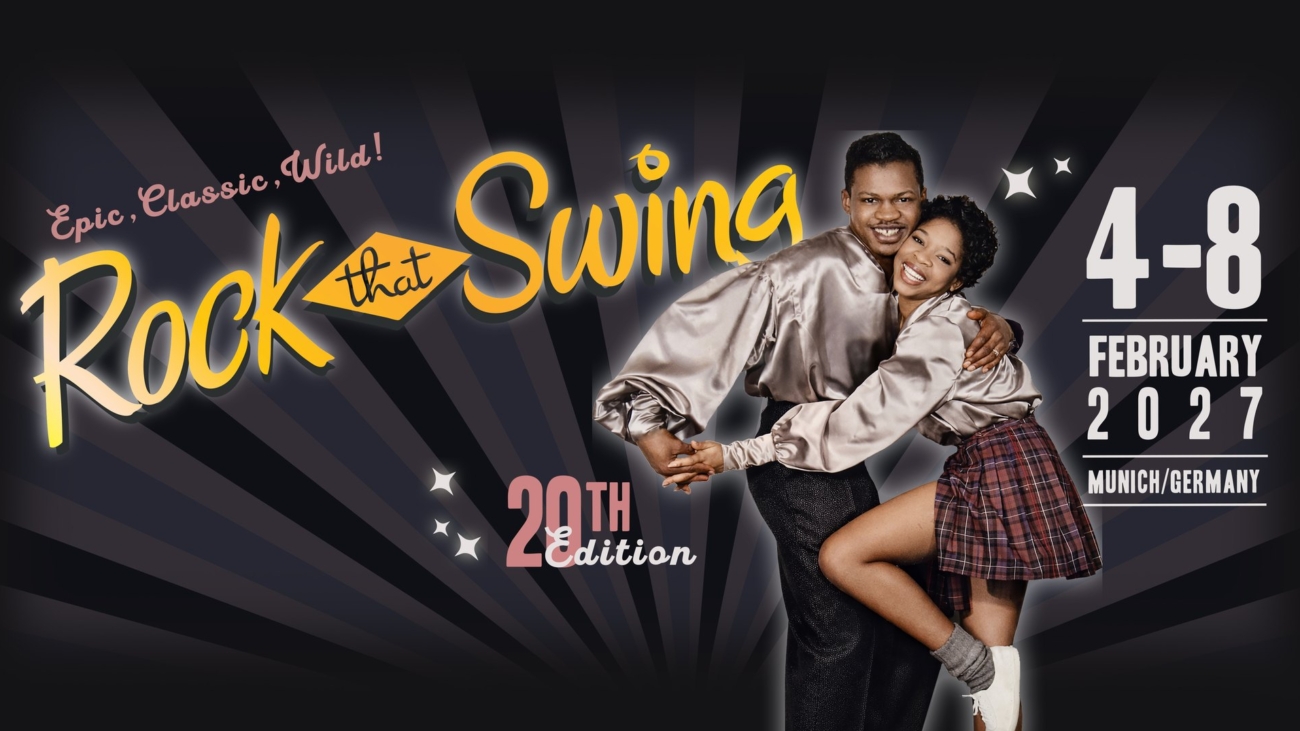
Held from February 12 through February 16, the 19th installment of the Rock That Swing Festival once again transformed Munich into a global epicenter for swing-era revival, drawing dancers, musicians, and enthusiasts from across continents. What distinguishes this event is not just its scale, but its precision: an intentional recreation and recontextualization of the 1920s through the 1950s, executed with modern energy but without sacrificing stylistic integrity. The result is a rare environment where the music is not passive—it dictates movement, shapes interaction, and becomes the central force driving every room it fills.

At the heart of this year’s program was a series of gala evenings staged in Munich’s most distinguished venues, including the Deutsches Theater and the Künstlerhaus. These were not casual performances; they were curated showcases of elite international bands operating at the highest level of swing execution. Across multiple nights, the festival delivered a continuous rotation of live orchestras, each one pushing the boundaries of what vintage jazz can feel like in a contemporary setting.

Among the standout performers anchoring the 2026 edition was Naomi & Her Handsome Devils, a seven-piece ensemble that has become synonymous with the modern swing revival done right. Led by vocalist and internationally recognized Lindy Hop champion Naomi Uyama, the group embodies a rare dual authority: musical authenticity paired with a dancer’s instinct for rhythm, pacing, and momentum. That distinction matters. In swing, the band doesn’t just play—the band leads the floor.

Formed in 2013 with a very specific mission, Naomi & Her Handsome Devils were built to capture the feel of late-Count Basie-era swing while maintaining the intimacy and responsiveness required for live dance environments. Their arrangements are not museum recreations; they are living frameworks designed to keep bodies moving. Every tempo choice, every horn accent, every vocal phrasing is engineered with dancers in mind, and that philosophy was on full display throughout their multi-night presence at the festival.

Their schedule alone illustrates the scale and demand surrounding their performances. On February 13, they delivered two high-energy sets during Hep Cats Night in the Künstlerhaus Ballroom, setting a tone that immediately bridged traditional swing aesthetics with contemporary crowd engagement. The following evening, February 14, placed them on one of the festival’s most prestigious stages at the Rock That Swing Ball inside the Deutsches Theater, sharing the spotlight with a select group of the world’s top swing orchestras. By February 15, they returned for the Jamboree Ball, commanding both the Main Ballroom and the Silbersaal with performances that reinforced their role as one of the defining bands of the current swing movement.

What makes their impact particularly significant is how it reflects a broader shift in the global jazz ecosystem. Swing is no longer being preserved—it is being actively lived. Festivals like this are not nostalgia-driven gatherings; they are functional communities where music, dance, and culture operate in real time. The presence of over 300 workshops led by more than 70 international instructors during the festival’s Dance Camp component underscores that point. This is a training ground, a cultural exchange, and a performance circuit all at once, where the next generation of dancers and musicians are shaped directly within the tradition they are preserving.

And that is precisely where The Improv Cafe’ aligns seamlessly with this global movement. The station’s commitment to exclusively broadcasting live recordings—whether it’s a roaring big band set, a tight swing combo, or a vocal jazz performance captured in front of an audience—mirrors the same ethos driving events like Rock That Swing. There is an immediacy to live music that cannot be replicated, and in the swing world, that immediacy is inseparable from the dance floor. It’s not just about hearing the music; it’s about feeling its propulsion, its elasticity, and its unpredictability.

That energy carries directly into tonight’s programming, where The Improv Cafe’ continues that tradition with its “Swing with the Big Bands” radio show. Designed as a Friday night destination, the show is built around legendary live performances from the most influential big band leaders and orchestras in history. This isn’t a passive listening experience—it’s an invitation to move. Whether it’s the precision of a horn section locked into a driving rhythm or the spontaneous interplay between soloists, the broadcast captures the same spirit that defines a packed ballroom in Munich or a late-night dance floor anywhere in the world.

The connection between a global festival stage and a radio broadcast may seem abstract at first glance, but in reality, they operate on the same principle: preservation through performance. Every time a live swing recording is played, it extends the life of that moment. Every time a listener gets up and moves to the music, it reinforces the purpose behind it. And every time a band like Naomi & Her Handsome Devils takes the stage in front of a room full of dancers, it proves that swing is not a closed chapter in music history—it is an ongoing, evolving conversation.

Munich’s Rock That Swing Festival 2026 didn’t just showcase that reality—it amplified it. It demonstrated that the infrastructure supporting swing culture is not only intact, but thriving at an international level. It confirmed that audiences are still seeking out authentic live experiences. And it reinforced that the relationship between musicians and dancers remains one of the most dynamic and interactive forms of artistic expression in the modern era.

For listeners tuning into The Improv Cafe’, that same world is only a click away. The sounds coming through the speakers are not distant echoes of the past—they are living documents of a tradition that continues to fill rooms, move crowds, and define nights. And on a Friday evening, as “Swing with the Big Bands” takes over the airwaves, that connection becomes immediate, tangible, and impossible to ignore.