Feature · New Releases · Solo Piano
Keith Jarrett’s Roma: The Final Chapter of a Legendary Last Tour Arrives From ECM
Recorded on a July night in 2016 at Rome’s Sala Santa Cecilia, the fifth and final volume of Jarrett’s last European solo tour captures one of jazz’s greatest improvisers inventing an entire concert from silence.
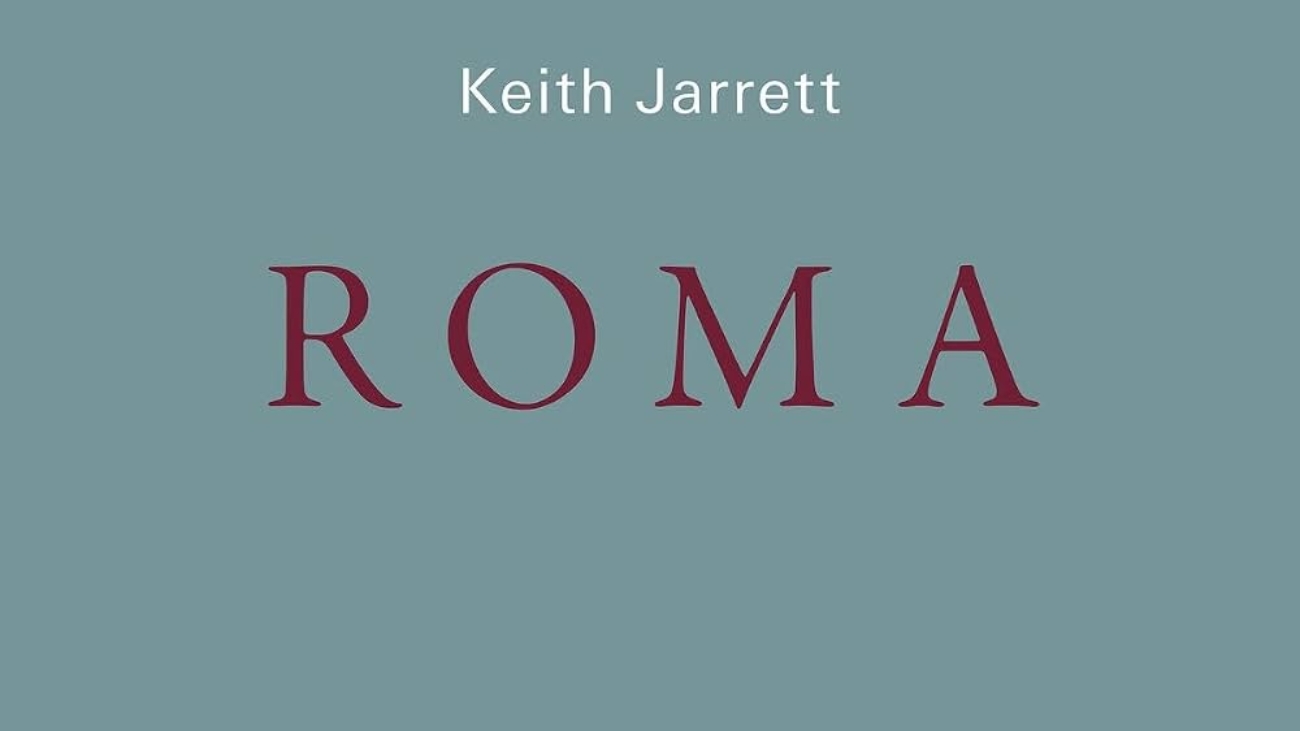
There is no setlist when Keith Jarrett sits down at the piano for a solo concert. There is only the instrument, the hall, the audience, and a silence that he must somehow fill with music no one, including Jarrett himself, has ever heard before. For half a century, that act of radical, spontaneous creation produced some of the most celebrated recordings in jazz history. Now ECM Records has released Roma, catalog number ECM 2880, a document of Jarrett’s solo concert at the Sala Santa Cecilia in Rome on July 12, 2016. Released on November 6, 2026, it is the fifth and final album drawn from his 2016 European solo tour, and it closes one of the most poignant chapters in modern music.
That tour turned out to be Jarrett’s last in Europe. In 2018, he suffered two strokes that left him partially paralyzed and unable to perform, and he has since said that he does not expect to play publicly again. Every recording from those final concerts has therefore taken on the weight of a farewell, and Roma, as the last volume to be released, carries that weight most of all. It is also, simply, an extraordinary piece of music.
The Last European Tour, Complete at Last
Over the past several years, ECM has carefully issued the concerts from Jarrett’s July 2016 tour, each one a self-contained world. Munich 2016 arrived first, followed by Budapest Concert, Bordeaux Concert, and The New Vienna. With Roma, the series is now complete, giving listeners five full evenings from a single summer, each shaped by its own hall, its own audience, and its own mood. Heard together, they form one of the most remarkable late career statements by any improvising musician, a portrait of an artist still searching, still surprising himself, more than four decades after the solo concerts that made him famous.
Jarrett produced the recording himself, as he has long done with his concert albums, with ECM founder Manfred Eicher serving as executive producer. Their partnership stretches back to the early 1970s and stands as one of the most consequential artist and label relationships in jazz, responsible for landmark albums including Facing You, Solo Concerts: Bremen/Lausanne, and The Köln Concert, the 1975 improvised performance that became the best selling solo piano recording in jazz history. Engineer Martin Pearson captured the Rome concert with the clarity and warmth that have become an ECM signature, letting every nuance of Jarrett’s touch come through.
A Hall Built for the Piano
The setting itself was ideal. The Sala Santa Cecilia is the largest of the three concert halls inside Rome’s Auditorium Parco della Musica, the striking complex designed by Italian architect Renzo Piano and opened in the early 2000s. Its three halls, shaped like great wooden scarab shells around an open air amphitheater, have become one of Europe’s premier music venues, and the Sala Santa Cecilia, home to the Accademia Nazionale di Santa Cecilia orchestra, is prized for its rich, enveloping acoustics. For a pianist who has always been acutely sensitive to the sound of a room and the quality of an audience’s attention, it was a fitting stage for what would prove to be one of his final European performances.
Ten Movements From Nothing
The heart of Roma is a suite of ten untitled, spontaneously improvised pieces, presented simply as “Roma, Part I” through “Roma, Part X.” By 2016, Jarrett had long since moved away from the sprawling, continuous half hour improvisations of his 1970s concerts toward a format of shorter, distinct pieces, each one a complete musical idea that emerges, develops, and resolves before he begins again. The approach gives his late solo concerts an extraordinary range, and Roma is no exception.
Across its roughly 69 minutes, the music travels widely. There are passages of dense, searching chromaticism that recall the modernist explorations of twentieth century classical composers, and moments of intricate, Bach-like counterpoint in which independent melodic lines weave around one another with startling logic. Elsewhere Jarrett breaks into buoyant, uptempo marches, rolling gospel figures rooted in the American church, earthy blues, and ballads of crystalline, almost unbearable tenderness. What unites it all is the sense of a mind listening intently to itself, following each idea wherever it leads. It is, as so often with Jarrett, both deeply American and thoroughly universal.
- 01Roma, Part I
- 02Roma, Part II
- 03Roma, Part III
- 04Roma, Part IV
- 05Roma, Part V
- 06Roma, Part VI
- 07Roma, Part VII
- 08Roma, Part VIII
- 09Roma, Part IX
- 10Roma, Part X
- 11Somewhere Over the RainbowEncore
- 12It’s a Lonesome Old TownEncore
Two Standards to Say Goodnight
As he did at so many concerts, Jarrett closed the evening with two encores drawn from the American songbook. The first is Harold Arlen’s “Somewhere Over the Rainbow,” a song he has returned to again and again over the years, often as a final, heart melting gift to audiences. His readings of it are famous for their restraint, the melody stated with such simplicity and care that the song’s longing seems to hang in the air. The second encore, “It’s a Lonesome Old Town,” is a wistful ballad from 1930 that Jarrett, ever a devoted interpreter of standards, invests with quiet melancholy. Coming at the end of the final album from his final European tour, the pairing feels almost unbearably appropriate, a gentle goodbye from one of the great pianists of our time.
Those encores also connect Roma to the other great pillar of Jarrett’s career, his Standards Trio with bassist Gary Peacock and drummer Jack DeJohnette, which for more than thirty years explored the Great American Songbook with unmatched depth. Jarrett’s love for those songs runs as deep as his gift for invention, and hearing him turn from ten wholly spontaneous pieces to two beloved standards offers a perfect summary of his artistry.
A New Jersey Master
For our readers, there is an added connection. Although he was born in Allentown, Pennsylvania, Keith Jarrett has made his home for decades in the rolling countryside of northwest New Jersey, where he built his own recording studio and created a number of his albums. One of the most influential musicians of the past half century has quietly been a Garden State neighbor, and the release of Roma is a reminder of the extraordinary artistry that has flourished in our own backyard.
Jarrett’s career is almost impossible to summarize. A child prodigy who gave his first formal piano recital as a young boy, he came to prominence in the 1960s with Art Blakey’s Jazz Messengers and Charles Lloyd’s groundbreaking quartet, then joined Miles Davis’s electric band in the early 1970s. He went on to lead acclaimed American and European quartets, record classical works by Bach, Handel, Mozart, and Shostakovich, and redefine what a solo piano concert could be. His solo improvisations, more than anything else, made him one of the few jazz musicians whose recordings reached millions of listeners far beyond the jazz world.
Formats and Where to Listen
Roma is available on a single CD, as a Japanese SHM-CD edition prized by audiophiles for its high fidelity polycarbonate, as a 2-LP vinyl set, and across digital streaming platforms. For collectors who have followed the series from Munich 2016 onward, it completes the set, and for newcomers it offers an ideal introduction to Jarrett’s late solo work. More information is available on the ECM Records release page.
It is rare for a farewell to sound so full of life. Roma captures an artist at the height of his powers, unaware that his public career was nearing its end, giving everything to a room full of listeners on a summer night in Rome. Nearly a decade later, that night has finally reached the rest of us, and it is a gift worth savoring. Records like this are exactly why we love live recordings, and why our own Wednesday night program, Live at the Blue Note, is dedicated to music captured in the moment, on stage and in front of an audience.