On Friday nights, the sound of swing returns in full force across the airwaves of The Improv Cafe, the radio station devoted exclusively to the energy and authenticity of live performance. For listeners who crave the unmistakable excitement of Live Jazz, Live Big Band, and Live Swing, tonight’s broadcast of “Swing with the Big Bands” is more than a radio show—it is a journey through one of the most powerful musical movements ever created.
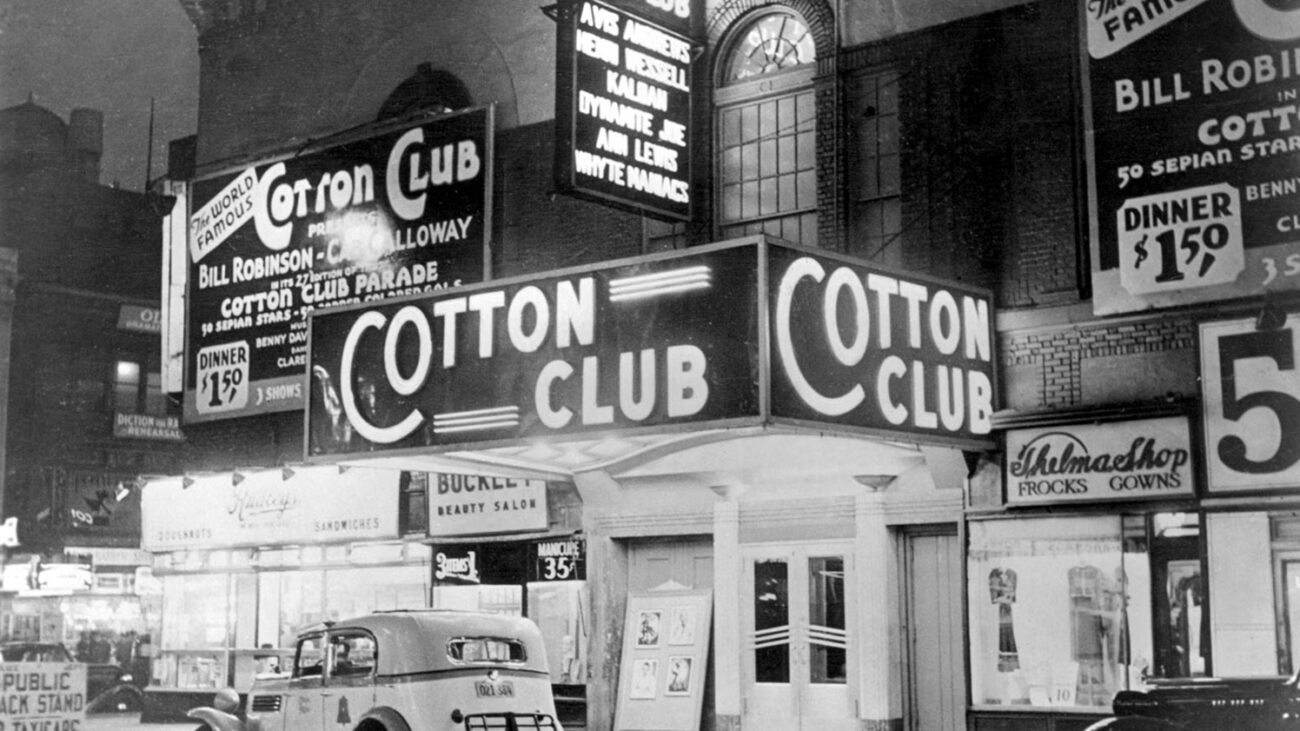
Few places represent that history more vividly than The Cotton Club, the legendary Harlem nightclub that helped define the sound, spectacle, and cultural influence of the big band era. The story of that venue—its complicated past, its extraordinary music, and its lasting impact on American culture—remains inseparable from the music that continues to inspire audiences today.
As listeners tune in tonight, they will hear echoes of that historic stage in every horn section, every piano run, and every thunderous swing rhythm that once electrified New York City during the height of the Harlem Renaissance.
Harlem, Jazz, and the Birth of a Musical Powerhouse
The Cotton Club stood at the center of Harlem’s cultural explosion during the early twentieth century. Located on 142nd Street and Lenox Avenue, the venue quickly became one of the most talked-about nightclubs in America.
Originally opened in 1920 as Club DeLuxe, the venue was founded by Jack Johnson, the groundbreaking heavyweight boxing champion who became a cultural icon in his own right. The club would soon undergo a transformation that would cement its place in entertainment history.
In 1923, the club was taken over by Owney Madden, a notorious New York mob figure who transformed the venue into a lavish speakeasy during the Prohibition era. Madden renamed the club The Cotton Club, turning it into a glamorous destination for wealthy socialites, celebrities, and tourists who were eager to experience Harlem nightlife.
Yet the club existed within a deeply contradictory social reality. While it showcased extraordinary Black musicians, dancers, and entertainers, the audience itself remained exclusively white, reflecting the racial segregation that defined the era.
Despite that exclusionary structure, the music created inside the Cotton Club would help reshape American entertainment forever.
The Cotton Club Sound That Changed Music
The Cotton Club quickly evolved into one of the most influential musical venues in the country. The stage became a proving ground for some of the greatest performers in jazz history.
One of the most significant figures to emerge from the club was Duke Ellington, who led the Cotton Club’s house band beginning in 1927. Ellington’s orchestra delivered nightly performances that combined sophisticated arrangements with the improvisational brilliance that defined early jazz.
His residency at the club helped transform him from a rising bandleader into a national star.
Weekly live broadcasts from the Cotton Club were transmitted over radio station WHN, bringing the energy of Harlem nightlife into living rooms across the United States. For many Americans, those broadcasts served as their first exposure to the electrifying sound of big band jazz.
The club’s stage would also host an extraordinary lineup of performers whose influence continues to resonate today:
- Cab Calloway, whose flamboyant stage presence and infectious swing rhythms captivated audiences nationwide
- Louis Armstrong, whose trumpet playing helped redefine the boundaries of jazz performance
- Ethel Waters, whose powerful voice bridged blues, jazz, and popular music
- Lena Horne, who later became one of the most iconic performers of the twentieth century
- Bill “Bojangles” Robinson, whose dance innovations helped shape the future of tap performance
The Cotton Club became a launchpad for these artists, amplifying their music through live radio broadcasts and transforming them into household names.
The Radio Era That Spread Swing Across America
The Cotton Club’s national radio broadcasts were revolutionary. At a time when radio was rapidly becoming the dominant form of home entertainment, live performances from Harlem clubs gave millions of listeners a front-row seat to the jazz revolution.
These broadcasts allowed the big band sound to travel far beyond New York City. Audiences across the country were suddenly hearing the driving rhythms, bold brass arrangements, and improvisational brilliance that defined swing.
In many ways, those broadcasts were the predecessors of what The Improv Cafe continues to do today.
By focusing exclusively on live jazz and big band recordings, the station recreates the same immersive musical experience that radio audiences first encountered nearly a century ago.
Listeners aren’t just hearing music—they are stepping into the atmosphere of legendary performance halls where the music was born.
A Complicated Legacy
While the Cotton Club’s musical influence remains undeniable, its social history is equally important to understand.
The club’s décor and stage productions often reflected stereotypical “plantation” themes designed to appeal to white audiences who traveled uptown for what was sometimes described as “slumming.” Performers were frequently required to wear costumes that reinforced racist caricatures of Black culture.
Despite these injustices, the musicians themselves transformed the stage into a place of artistic brilliance.
The music they created transcended the limitations placed upon them, ultimately reshaping American culture and paving the way for future generations of artists.
Their talent and creativity turned the Cotton Club into a symbol of both the struggles and triumphs of the Harlem Renaissance.
The Cotton Club’s Closing Years
The original Harlem location of the Cotton Club closed following the Harlem race riots of 1935, marking the end of one chapter in the venue’s history.
The club briefly reopened in Midtown Manhattan at Broadway and 48th Street in 1936, attempting to recapture its earlier success. However, changing musical tastes and mounting legal issues—including investigations into tax evasion—eventually forced the venue to close permanently in 1940.
By that time, swing music had already spread across the nation, carried by radio broadcasts, touring orchestras, and the growing popularity of big band dance halls.
The Cotton Club itself may have faded, but the music it helped elevate had already become part of the American cultural foundation.
The Modern Cotton Club in Harlem
Today, a venue carrying the Cotton Club name operates on West 125th Street in Harlem.
While it is not the same organization as the original segregated nightclub, the modern venue celebrates Harlem’s musical heritage by hosting live jazz and gospel performances that continue the neighborhood’s historic tradition of live music.
Visitors in recent months have reported that the club still features outstanding musicians who keep the spirit of Harlem jazz alive.
In many ways, that ongoing commitment to live performance reflects the same philosophy embraced by The Improv Cafe.
Music is most powerful when experienced live.
The spontaneity.
The improvisation.
The raw energy of musicians responding to each other in real time.
Those elements define both the golden era of big band jazz and the programming that listeners enjoy on The Improv Cafe today.
Tonight on The Improv Cafe: Swing with the Big Bands
That brings us to tonight’s highly anticipated broadcast.
Every Friday evening, “Swing with the Big Bands” brings together legendary live recordings from the greatest big band artists in history. The show captures the exhilaration of swing music in its purest form, allowing listeners to hear the music exactly as audiences experienced it decades ago.
Expect powerful horn sections, driving rhythms, and unforgettable solos from some of the most celebrated orchestras ever assembled.
From the golden age of jazz ballrooms to historic radio broadcasts and live concert recordings, the program explores the performances that defined the swing era.
It’s a chance to hear the kind of music that once filled legendary venues like the Cotton Club—and to experience it with the same excitement that audiences felt when those bands first took the stage.
So if you’re looking for something special on a Friday night, tune in and let the music carry you back to a time when swing ruled the dance floor.
Turn up the volume.
Clear some space to dance.
Let the brass section lead the way.
Because when the big bands start swinging on The Improv Cafe, the spirit of jazz history comes roaring back to life.