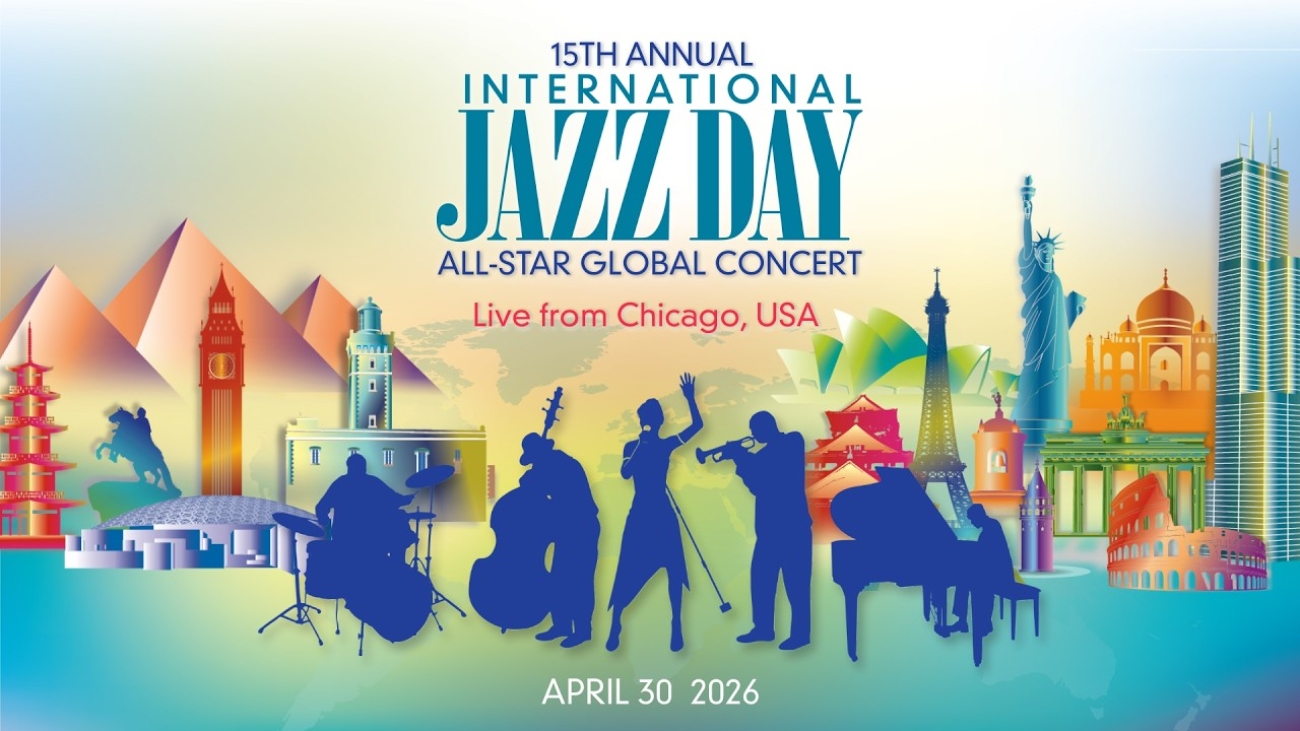
There are moments in the lifecycle of an art form when its global presence, cultural urgency, and live performance tradition align with unmistakable clarity. As April 30 approaches, the jazz world is not simply preparing for another annual celebration—it is converging around a milestone. The 15th anniversary of International Jazz Day is unfolding with Chicago at its epicenter, reaffirming jazz not as a genre confined to history, but as a living, breathing, evolving language rooted in performance. For a platform like The Improv Cafe’, where every note broadcast is drawn from live recordings, this moment represents something deeper than a headline—it is validation of a philosophy: jazz is meant to be experienced in real time, in real space, and in direct connection with the audience.
Chicago’s designation as the 2026 Global Host City is not symbolic—it is structural. The city’s lineage in jazz history, from South Side clubs to its role in shaping modern improvisational forms, makes it a natural focal point for a global gathering of artists. The centerpiece event at the Lyric Opera of Chicago will bring together a cross-generational lineup of musicians under the musical direction of Herbie Hancock, whose influence extends far beyond performance into cultural stewardship. The All-Star Global Concert is not designed as a retrospective—it is an active statement about where jazz exists today: borderless, collaborative, and grounded in live interpretation.
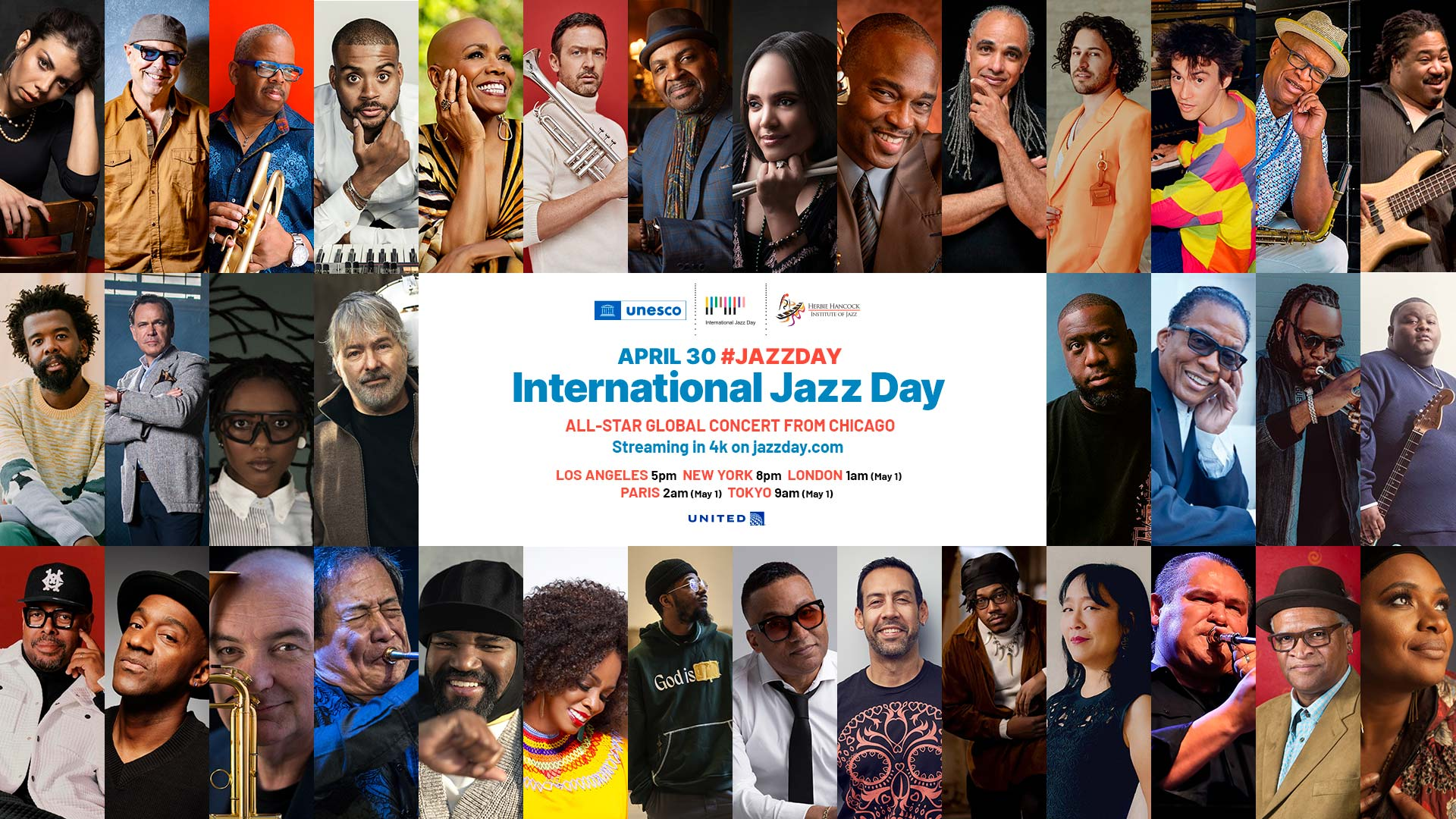
That emphasis on live performance is precisely where The Improv Cafe’ operates with authority. While streaming platforms continue to prioritize studio recordings and algorithmic discovery, this station’s commitment to exclusively live jazz, live big band, live swing, and live vocal jazz places it in direct alignment with the core of what International Jazz Day represents. The difference is not subtle. Live recordings capture the elasticity of tempo, the spontaneity of improvisation, the risk inherent in performance, and the chemistry between musicians that cannot be replicated in controlled environments. In many ways, what Chicago will present on April 30 is exactly what The Improv Cafe’ delivers every day—unfiltered, unscripted, and fully alive.
International Jazz Day is officially celebrated on April 30, and in 2026, Chicago is the Global Host City. While the main “All-Star Global Concert” is the centerpiece, cities across the world—including New Jersey and Philadelphia—host their own performances during the surrounding week.
Global Centerpiece (Chicago, IL)
As the host city, Chicago is running a citywide program called “Neighborhood Nights”.
- All-Star Global Concert (Apr 30): Held at the Lyric Opera of Chicago, this flagship event is led by Herbie Hancock and Music Director John Beasley. It will be livestreamed globally.
- Jazz Day Club Tour (Apr 27): Reggies Chicago is hosting a three-room “Club Tour Experience” featuring Neal Alger and others.
- Neighborhood Jazz Night (Apr 30): A tribute to Ramsey Lewis and Herbie Hancock featuring the Theodis Rodgers Jr. Quartet at the Little Black Pearl Art Academy.
New Jersey Shows
- NJPAC (Newark) – Tomorrow, Apr 26: A free performance spotlighting the “next generation” of jazz artists, co-presented by JAZZ HOUSE KiDS.
- Metuchen Public Library – Apr 30: The Cornerstone Jazz Series will feature the Leonieke Scheuble Trio with jazz legend Bill Crow on bass.
- Rutherfurd Hall (Hackettstown) – Tomorrow, Apr 26: The Giacomo Gates Trio is performing a fundraiser set as part of their 2026 Jazz Series.
Philadelphia & Regional Highlights
Sassafras (Old City) – Apr 30
This venue will host an official International Jazz Day celebration to wrap up Philly Jazz Month.
A special Michael Brecker Jazz Showcase and Benefit featuring talented musicians paying tribute to the late saxophonist.
Online & Broadcast
If you can’t make it to a live venue, PBS just premiered a special called “International Jazz Day from Abu Dhabi,” featuring a 2025 All-Star concert hosted by Jeremy Irons.
Beyond Chicago, the global circuit is equally active, reinforcing the scale and diversity of jazz as a worldwide movement. In London, the Brick Lane Jazz Festival is in its final stretch, offering a contemporary counterpoint to traditional forms, with emerging artists redefining genre boundaries through fusion and experimentation. Simultaneously, the Saint Lucia Jazz & Arts Festival begins its extended run, blending jazz with broader artistic disciplines and regional cultural expression. These festivals are not isolated events—they are nodes in a larger network that underscores jazz’s adaptability across geographies and audiences.
At the industry level, innovation continues to reshape how jazz is discussed, documented, and disseminated. The launch of the “Jazz Language” podcast by Chill Tone Records introduces a new layer of intellectual engagement, with Noah Preminger leading in-depth conversations with contemporary voices shaping the genre. This is not surface-level commentary—it is a technical and philosophical exploration of improvisation, composition, and the evolving vocabulary of jazz. For listeners who engage with The Improv Cafe’, this type of discourse complements the listening experience, offering context to the performances they hear.
Equally notable is the continued crossover between genres, exemplified by Flea and his debut jazz album Honora. His return to the trumpet and entry into the jazz space is more than a side project—it reflects a broader trend of artists revisiting foundational influences and engaging with jazz as a discipline rather than a novelty. This cross-pollination reinforces jazz’s role as both a foundation and a frontier within the music ecosystem.
Closer to home, the regional landscape across New Jersey and Philadelphia is not merely participating in this global moment—it is actively contributing to it. The Germantown Jazz Festival is currently in full swing, with a programming structure that blends performance and education. Today’s focus on Terell Stafford exemplifies that dual approach, pairing a master class with a live quintet performance at the Settlement Music School. This format is critical. Jazz has always been transmitted through mentorship and live demonstration, and festivals that prioritize both are essential to sustaining the art form.
In Newark, New Jersey Performing Arts Center is preparing to host a community-driven International Jazz Day celebration, emphasizing accessibility and youth engagement. The inclusion of emerging artists and student ensembles ensures that the next generation is not positioned as future participants, but as active contributors in the present. This aligns directly with the ethos of live jazz as a continuum rather than a fixed canon.
The regional calendar continues with performances that reflect the breadth of the jazz spectrum. At Rutherfurd Hall, the Giacomo Gates Trio will deliver a performance rooted in vocal jazz tradition, while the Monroe Quinn Trio brings a “Swing into Spring” program to the Mahwah Public Library, reinforcing the accessibility of live jazz in community spaces. Meanwhile, the Sunhouse Singers will perform in Wayne, extending the reach of vocal harmony traditions into local concert settings.
Taken together, these events illustrate a critical point: jazz is not centralized. It operates simultaneously at the highest levels of global production and within intimate local environments, each reinforcing the other. The same improvisational principles guiding an All-Star ensemble in Chicago are present in a trio performance in New Jersey or a festival set in Philadelphia. That continuity is what sustains the genre.
For The Improv Cafe’, this convergence is not just news—it is a moment of amplification. As International Jazz Day approaches, the station stands uniquely positioned to connect listeners with the essence of what is being celebrated worldwide. Every broadcast becomes part of a larger narrative, one that prioritizes authenticity, musicianship, and the irreplaceable energy of live performance. In an era where music consumption is increasingly fragmented and digitized, the commitment to live recordings is not nostalgic—it is forward-thinking.
April 30 will serve as a global focal point, but the reality is that jazz does not begin or end on a single date. It is ongoing, adaptive, and perpetually in motion. From Chicago’s grand stage to the clubs, halls, and community spaces of New Jersey and beyond, the message is consistent: jazz is alive, it is evolving, and it is meant to be heard as it happens.