Labor Day Jazz, Miles at 100,
and a Summer That Delivered
Detroit Jazz Festival: Four Days, Free Admission, and the Strongest Lineup in Years
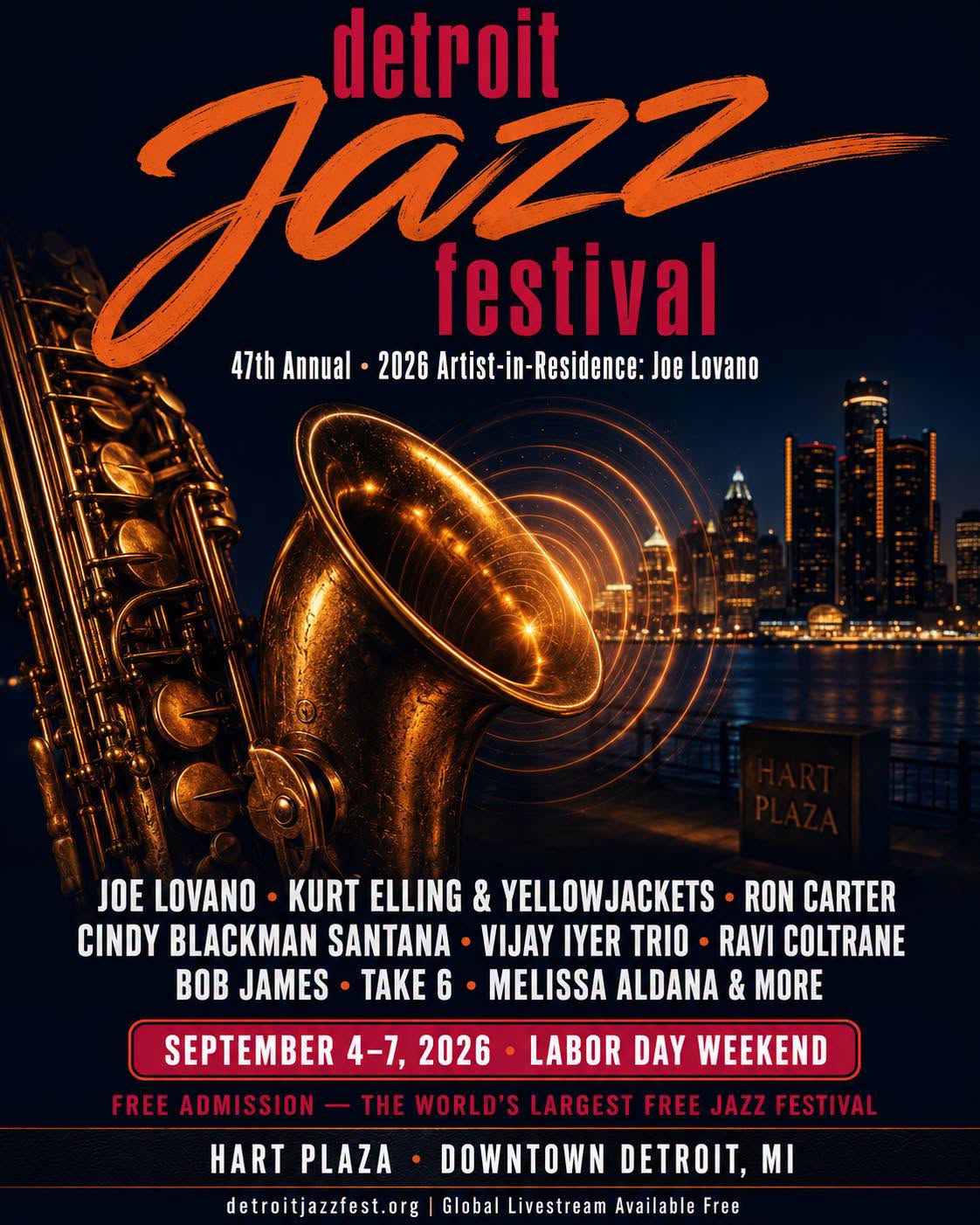
The Detroit Jazz Festival runs September 4 through 7 at Hart Plaza in downtown Detroit, and this year’s 47th edition is genuinely extraordinary. The world’s largest completely free jazz festival has consolidated all three of its main outdoor stages inside a single walkable Hart Plaza footprint for the first time, making it easier to move between performances and catch more of what matters. No admission charge. No tickets. You show up and you hear world-class jazz on multiple stages for four days straight.
Saxophonist Joe Lovano is the 2026 Artist-in-Residence, and his presence runs through the entire weekend. He opens Friday night with his Paramount Quartet featuring guitarist Julian Lage, bassist Asante Santi Debriano, and drummer Will Calhoun. He returns Sunday with trumpeter Dave Douglas in their Sound Prints quintet, and closes the entire festival Monday night with a Coltrane 100 tribute alongside Melissa Aldana, Nduduzo Makhathini, Linda May Han Oh, and Jeff “Tain” Watts. That closing Monday night set, titled “Both Directions at Once,” is the centennial celebration that this whole year has been building toward.
The surrounding lineup is just as strong. Saturday brings the Ravi Coltrane Quartet in its own centennial tribute, Kurt Elling and Yellowjackets celebrating the music of Weather Report, and Bob James. Sunday features Dee Dee Bridgewater and Bill Charlap, the Vijay Iyer Trio with Adam O’Farrill, and Take 6. Monday closes with Cindy Blackman Santana, the Joey Alexander Trio, the Django Festival Allstars with Grace Kelly, and Ron Carter and Foursight. The all-women jazz supergroup Artemis also performs across the weekend. For anyone unable to travel to Detroit, the entire festival streams free through the Detroit Jazz Festival’s website, YouTube, Facebook, and Instagram.

DC JazzFest at The Wharf and the Charlie Parker Festival in Tompkins Square Park
Labor Day Weekend isn’t just Detroit. Washington D.C. launches its DC JazzFest citywide activations on September 2 at the Wharf, anchoring the holiday around an America 250 historical theme that connects live jazz directly to the national birthday celebration running all year. The festival features Emmet Cohen, Brandon Woody’s Upendo, and the José André Quartet, alongside the highly competitive DC Jazz Prix Finals, which each year identifies the country’s most promising emerging jazz talent in a live performance competition with real national stakes.
In Manhattan, the Charlie Parker Jazz Festival returns to Tompkins Square Park for its free annual Sunday afternoon concert, celebrating what would have been Parker’s 106th birthday. The headline slot goes to Ravi Coltrane, the son of John and Alice Coltrane, alongside the Billy Hart Quartet and Kassa Overall. A free outdoor park concert headlined by one of the most respected saxophonists working in jazz today, honoring the bebop pioneer who changed everything, is exactly the kind of afternoon that makes New York in late summer worth being present for.
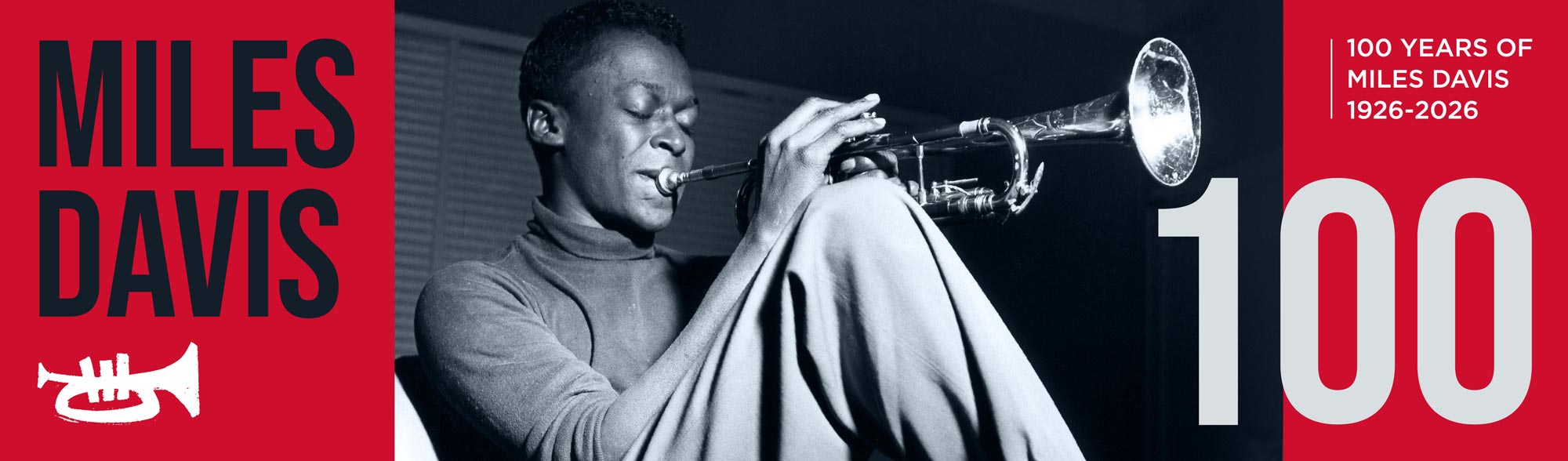
Miles Davis at 100: European Venues Are Digging Deep Into the Archive
While American festivals celebrate the Miles Davis and John Coltrane centennials through live tribute performances, the European jazz community is approaching the anniversary with a different kind of intensity. Concert halls and performance spaces across Europe are running archival retrospective series that go well beyond tribute concerts, staging specialized live analyses of Davis’s rarest performance moments, including focused study of “Circle,” a composition he performed live on only a handful of documented occasions. European critics and historians are treating the centennial as an opportunity for genuine scholarly engagement with the recordings rather than simply recreating them.
The particular draw of Davis’s European recordings for this programming is well-founded. He played differently in Europe, especially in France, Germany, and Scandinavia in the 1960s and 70s, where audiences listened with a focused attentiveness that Davis responded to directly. The live recordings from those tours are looser, more extended, and more willing to sit in discomfort than the American concert recordings from the same periods. The European archive contains things the American archive doesn’t, and the retrospective programming running across the continent right now is treating that archive seriously. For listeners of The Improv Café, these are exactly the live recordings that belong on the air: the European Miles, unguarded and reaching.
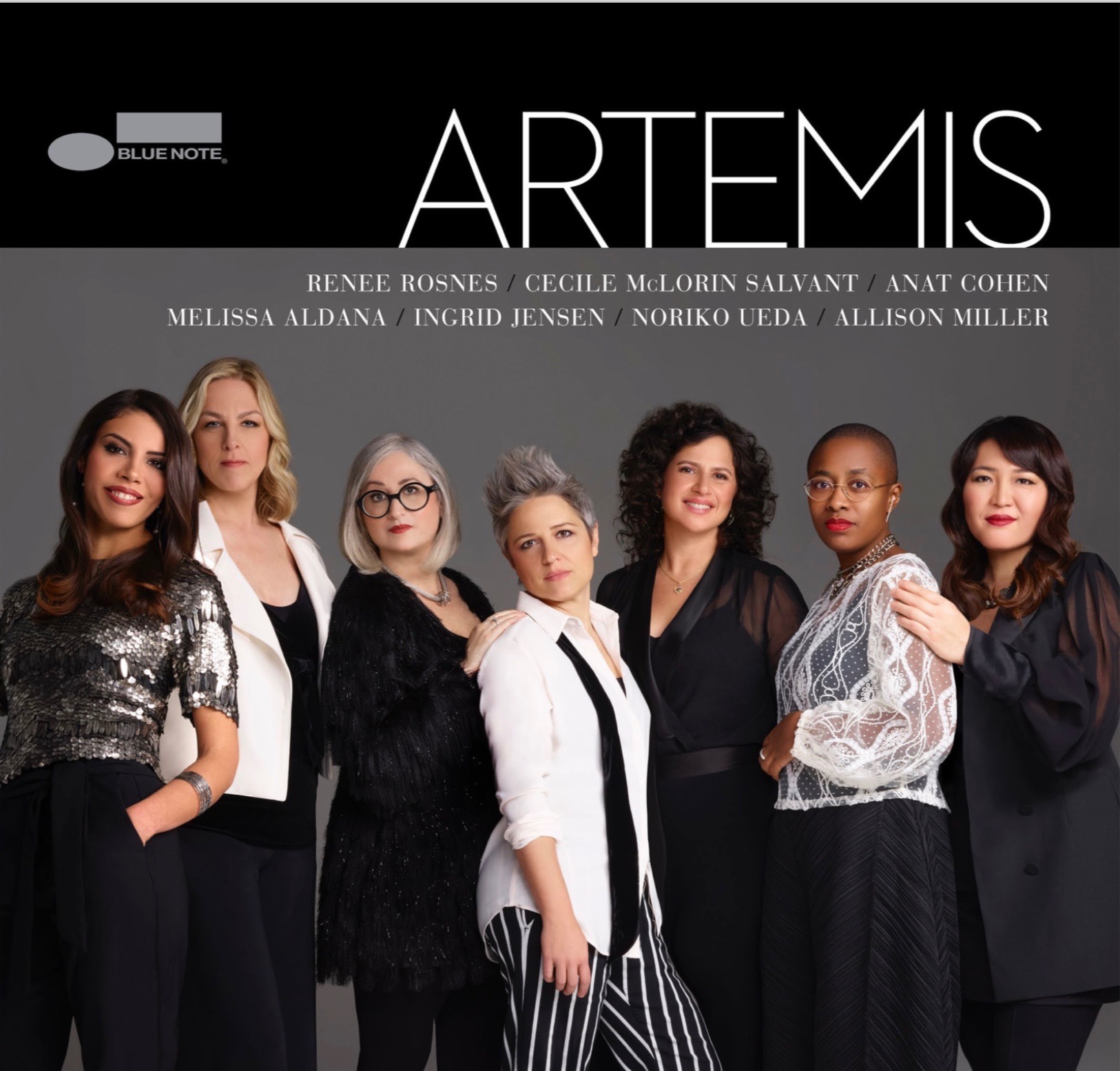
Artemis Is Filling Festival Main Stages Across Europe and Asia Right Now
The multinational jazz collective Artemis has become one of the most in-demand ensembles on the international festival circuit in 2026, drawing major-stage crowds across Europe and Asia that prove contemporary improvised jazz has no ceiling when the music is genuinely great. The group brings together five musicians who are each individually capable of leading their own celebrated ensembles: pianist Renee Rosnes, trumpeter Ingrid Jensen, saxophonist Nicole Glover, bassist Noriko Ueda, and drummer Allison Miller. What makes Artemis more than the sum of those names is the collective nature of the music itself, where the conversation between five fully developed musical personalities produces something none of them could reach alone.
Their success on the international main stage in 2026 reflects something real about where serious jazz finds its widest audiences right now. The festival circuit, particularly in Europe, has always treated jazz with a seriousness that translates into large and attentive crowds for exactly this kind of ensemble. Artemis performs with the musical substance to hold a large outdoor audience’s full attention from the first note to the last, and the response they are receiving this summer confirms that the appetite for this music, at this level, is as strong as it has ever been.
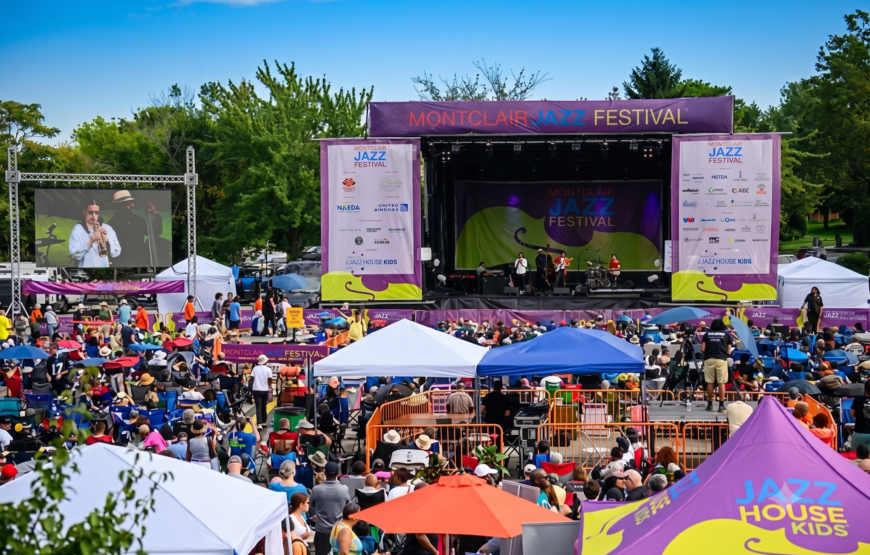
Long Branch, Montclair, and Union: A Summer of Live Jazz Right Here
Tonight, the Jersey Shore Jazz and Blues Foundation hosts its signature Long Branch Jazz and Blues Festival at the Great Lawn at Beachfront North in Long Branch, New Jersey. Free admission, a full roster of regional jazz ensembles and blues artists, local food trucks, and a beachfront fireworks display closing the evening. This is one of the finest free outdoor music events the Shore produces all year, and if you are anywhere near Long Branch tonight, there is no better reason to be outside.
The Montclair Jazz Festival, led by Artistic Director and legendary bassist Christian McBride, just concluded its 2026 Downtown Jamboree block party, drawing over 30,000 attendees across its Jazz House and Main Stage programming. The Christian McBride Big Band featuring Bilal, the Spanish Harlem Orchestra, Patrice Rushen, and Dianne Reeves headlined a lineup that covered the full arc of jazz, from Latin and Afro-Caribbean to R&B and the vocal tradition. Those attendance numbers confirm what Montclair has been proving for years: serious live jazz, presented accessibly, draws enormous crowds.
The Union Jazz Festival at the Union Arts Center Plaza also wrapped a successful three-day indoor run curated by Mike Griot Presents, featuring the Dave Stryker Trio, Stephane Wrembel, Marel Hidalgo, and James Gibbs III. The indoor acoustic format, with masterclass programming running alongside the performances, gave attendees something that outdoor festivals rarely offer: genuine proximity to the musicians and access to them as thinkers and teachers, not just performers. A strong finish to the northern New Jersey summer jazz season.
Two Inaugural Festivals Canceled at the Last Minute
Not every story from this week is good news. The inaugural LA Jazz Festival, which had announced a major closing concert at Dockweiler Beach featuring John Legend, Janelle Monáe, Parliament-Funkadelic, and Terrace Martin, was canceled hours before it was set to begin, citing unexpected public safety costs and municipal permitting fees that organizers could not cover on the timeline they had. The debut has been pushed to 2027. Simultaneously, the first-ever BKLYN Jazz Festival at Prospect Park, which had promised an avant-garde lineup including Jason Moran, Chris Potter, and Linda May Han Oh, was quietly canceled without a public announcement. Two cities, two inaugural festivals, the same weekend. The lesson is one that the live festival industry keeps having to relearn: booking the lineup is the easy part. The operational and municipal infrastructure required to actually stage a large outdoor event in a major American city takes longer to build than a press release takes to write.
Friday Night Is Here. The Big Bands Are On the Air.
Tonight on The Improv Café: Swing with the Big Bands. Every Friday night this station broadcasts live recordings of the greatest big band performances in history. Not studio recordings. Not digital reconstructions. The actual performances, captured live in ballrooms and concert halls and festival stages, exactly as they happened the night they were played. Turn it on. Dance if the room lets you. Bop if it doesn’t. The horns are up and the rhythm section is ready.

Two Big Bands, One Flight Deck, and America’s 250th Birthday
This past May, the flight deck of the USS Intrepid in New York City became something it hadn’t been since the ship was commissioned in 1943: a swing dance hall. The Intrepid Museum and Prohibition Productions presented the Battle of the Big Bands, placing two full orchestras on opposite ends of the flight deck with a 3,200-square-foot wooden dance floor between them, more than 75 performers, a second stage at the bow of the ship, a vintage fashion contest, barbershop quartet, swing dance competitions, and free beginner Lindy Hop lessons for first-timers. All of it tied directly to the America 250 national celebration, on a ship that was commissioned at the literal peak of the Swing Era.
The competitive format is what makes this event something beyond a concert. Two orchestras trading charts back and forth, brass section against brass section, arrangement against arrangement, recreates the competitive ballroom culture of the 1930s and 40s when rival big bands genuinely battled for the loyalty of devoted dancers. That energy, on the flight deck of a 1943 aircraft carrier above the Hudson River, is exactly the kind of live swing experience that no recording can fully replicate. It has to be felt in the room. And for everyone who was there in May, it was.
The Not Quite Big Band: What Happens When Younger Musicians Stop Playing It Safe
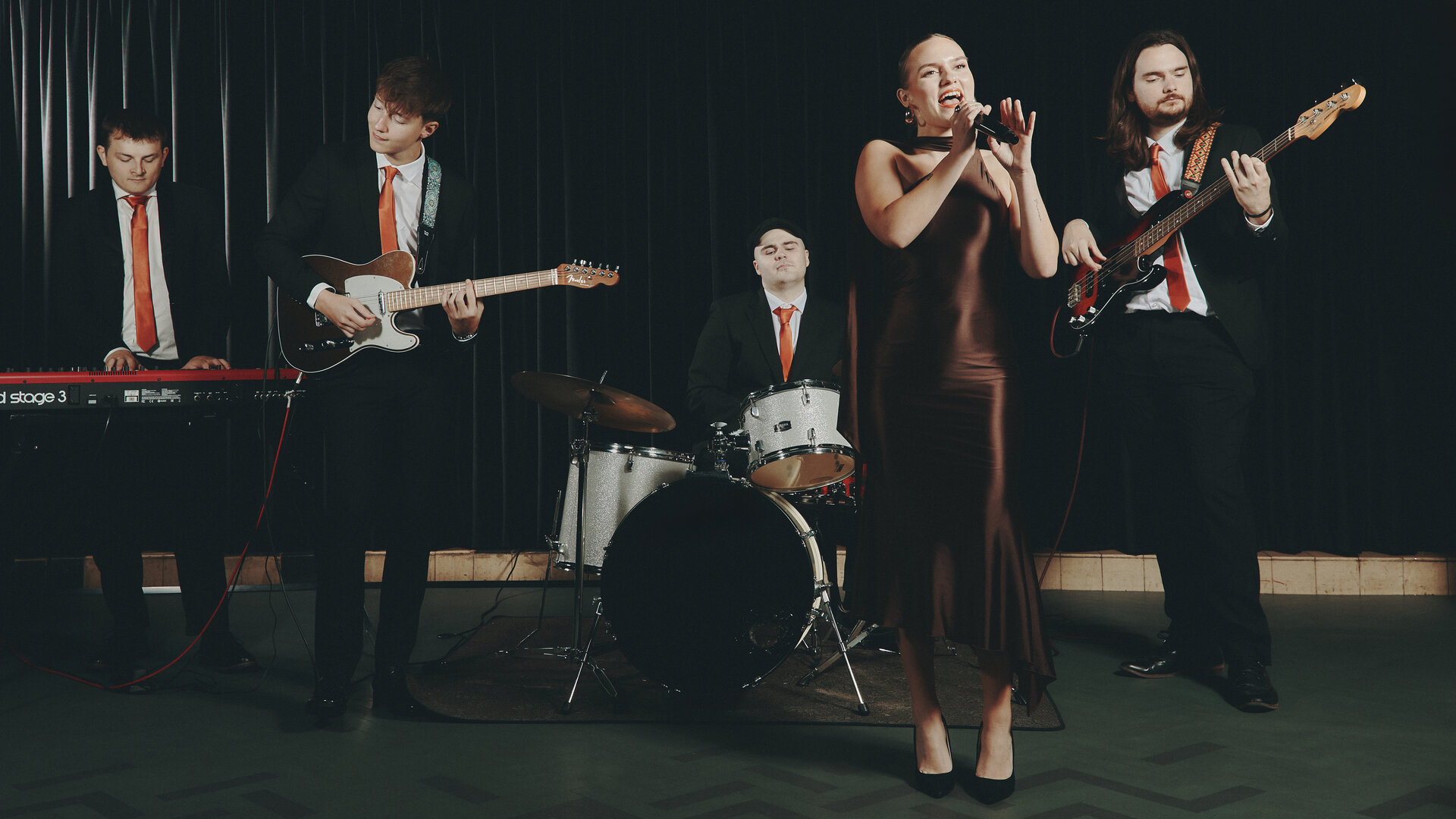
One of the most compelling stories in the current big band world is a 17-piece UK ensemble called the Not Quite Big Band, which built its following by doing something radical: playing the music they actually wanted to play. Formed by university friends booking speakeasy gigs together, the band started weaving Delta blues, rockabilly energy, and Latin syncopation into their Count Basie-style brass charts, not as novelty but as creative honesty. The suits stayed sharp. The 17-piece configuration stayed intact. The music just started reflecting what these musicians actually loved. The result was sold-out theater bookings and the attention of critics who cover the genre seriously.
Their story proves something the best musicians in every generation have had to re-prove: honoring a tradition means putting your own life into it, not freezing it in place. A big band arrangement played with genuine personal conviction sounds completely different from one performed as careful historical recreation. The Not Quite Big Band found that difference, and audiences responded immediately.
In the Mood: Big Band Swing Had Deep Roots in the American Heartland
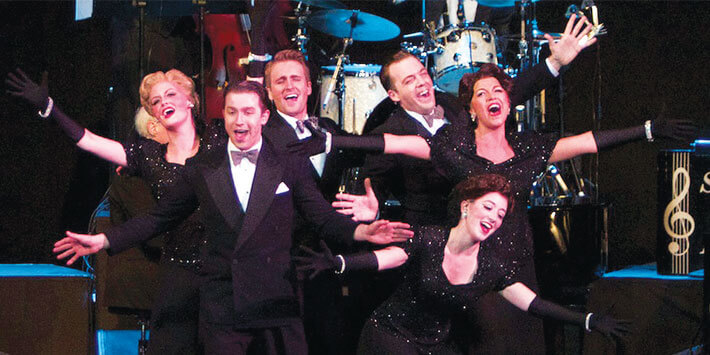
Most jazz histories center the big band story on New York and Chicago. The documentary “In the Mood: The Big Band Era in the Bluegrass,” produced by Kentucky Educational Television and broadcast through PBS, tells a different and largely forgotten chapter. Featuring the 17-member DiMartino-Osland Jazz Orchestra with guest trumpeter and vocalist Byron Stripling, the film recreates the Lexington, Kentucky dance-club scene of the 1940s and 50s, when now-forgotten ballrooms and dance halls regularly drew Duke Ellington, Artie Shaw, and other major orchestras deep into the American countryside. Kentucky jazz artists Byron Romanowitz of the Men of Note and Mike Allen of the Mike Allen Trio also perform, connecting the archival history to living musicians who inherited that tradition.
Big band swing was America’s popular music in the fullest sense. It reached every corner of the country where there was a dance floor and a crowd willing to pay for a live orchestra. The rural ballrooms of Kentucky weren’t on the margins of that story. They were part of the audience that kept these orchestras touring, recording, and developing the music. Modern big bands revisiting these towns and playing authentic original arrangements are recovering a chapter of American cultural history that the standard jazz books have always overlooked.