Farewell to Cassandra Wilson, Coltrane at 100 in Philly, Samara Joy, and a Fall Season Worth Showing Up For
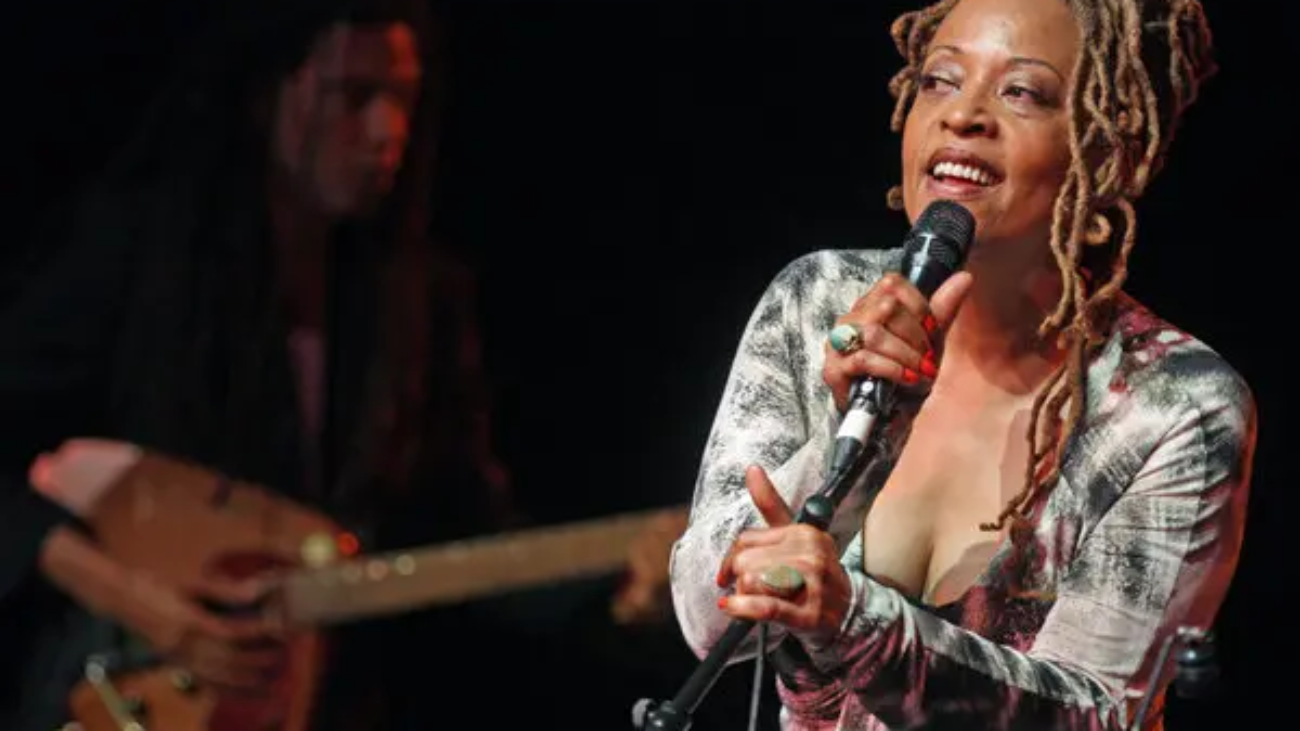
The World Lost Cassandra Wilson on September 2, 2026. She Was 70.
Cassandra Wilson, the two-time Grammy Award-winning jazz vocalist, songwriter, producer, and 2022 National Endowment for the Arts Jazz Master, passed away peacefully at home in Jackson, Mississippi, on September 2, 2026. She was 70, and she was one of the most singular voices American music has produced in the past half century. Her longtime manager Robert Torre confirmed the news in a statement to WBGO, the New Jersey jazz station that had covered her career for decades, noting that she was surrounded by family and close friends at the time of her passing.
Wilson was born Cassandra Fowlkes in Jackson on December 4, 1955, to a family where music was part of daily life. Her father Herman was a guitarist and bassist who worked as an educator; her mother Dr. Mary Fowlkes was also a teacher. Cassandra began playing piano at six, took up guitar at twelve, and was singing professionally by her late teens. She earned a degree in mass communications from Jackson State University before moving to New York City, where she met saxophonist Steve Coleman and co-founded the M-Base Collective, a loose network of musicians committed to developing a new kind of rhythmically sophisticated jazz composition. That collective launched her career onto a national stage, but the music she was most associated with came after she signed with Blue Note Records in 1992 and released “Blue Light ‘Till Dawn,” a landmark album that drew from Delta blues, country, and folk traditions to create something that sounded like nothing else in jazz at the time. NPR described her voice as capable of inspiring metaphors of maplewood smoke or wildflower honey, and that description is accurate. She had a contralto of enormous depth and warmth, and she used it to make music that was entirely her own.
She won her two Grammy Awards for Best Jazz Vocal Album for “New Moon Daughter” in 1996 and “Loverly” in 2008, and she performed a leading role in Wynton Marsalis’s oratorio “Blood on the Fields,” the first jazz work ever to win the Pulitzer Prize for Music, in 1997. Time magazine named her America’s best singer in 2001. She collaborated with the Roots, Angelique Kidjo, and dozens of the most important musical figures of her era. The Improv Café has always broadcast her live performances because Cassandra Wilson in concert was a different experience from Cassandra Wilson on record, more spacious, more physical, more directly communicative. She leaves behind a body of work that will be listened to for generations, and a voice that the jazz world will not hear again.

Wynton Marsalis Named Lincoln Center’s 2026–2027 Visionary Artist in His Final Year at the Helm
Lincoln Center has officially named trumpeter, composer, and educator Wynton Marsalis its 2026–2027 Visionary Artist, honoring him in what will be his final year leading Jazz at Lincoln Center, the organization he co-founded and built into the most prominent jazz institution in the world. Marsalis has led Jazz at Lincoln Center since its founding in 1987, building it from a concert series into a fully independent nonprofit performing arts organization with its own home at Frederick P. Rose Hall, its own resident orchestra, its own radio presence, and an educational outreach program that has reached millions of students across the country and internationally.
The Visionary Artist designation is Lincoln Center’s highest honor, and placing it on Marsalis in his final year as artistic director is both a celebration of what he built and an acknowledgment of what the organization will need to carry forward without him. His tenure coincided with some of the most important moments in the public conversation about jazz’s place in American culture, from the landmark Ken Burns documentary that Jazz at Lincoln Center helped shape, to the Pulitzer Prize awarded to “Blood on the Fields,” to the ongoing battle Marsalis has waged, publicly and consistently, for jazz to be treated with the institutional seriousness it deserves. Whatever one thinks of his artistic positions, the scope of what he built at Lincoln Center is genuinely historic.
For listeners of The Improv Café, Marsalis’s legacy is inseparable from his recordings and broadcasts as a live performer. The Jazz at Lincoln Center Orchestra’s live concerts, many of which have been broadcast and recorded, represent some of the finest large ensemble jazz of the past four decades, rooted in the tradition and executed with precision and passion. His departure from the organization he built marks the end of an era, and the 2026–2027 season will be a remarkable final chapter to witness.

The John Coltrane 100th Anniversary Festival Is Coming to Philadelphia This September
The single most significant live jazz event happening in the Philadelphia region this fall is the five-night John Coltrane centennial festival presented by Ars Nova Workshop, running across multiple venues in late September and building a program that honors Coltrane’s legacy without turning it into a museum piece. This is not a tribute concert in the conventional sense. It is a serious, multi-night engagement with one of the most complex and spiritually charged bodies of work in American music history, presented by artists who have something genuine to say about it.
The festival opens September 23 at Solar Myth in Philadelphia with the Sun Ra Arkestra performing Coltrane’s music. The Sun Ra Arkestra, now led by Marshall Allen at 100 years old, carries its own deep historical connection to the avant-garde tradition that Coltrane helped define, and hearing them interpret his compositions in the intimate Solar Myth setting is a genuinely rare convergence of two of the most important forces in experimental American music. On September 25, the program moves to the Mandell Theater, where Irreversible Entanglements perform a live rendition of Coltrane’s monumental “Ascension,” sharing the stage with a super-trio of living legends: saxophonist Odean Pope, bassist Reggie Workman, and drummer Andrew Cyrille, three musicians who have direct personal and musical connections to the Coltrane tradition stretching back decades.
The combination of Irreversible Entanglements’ politically charged, free-jazz energy with the historical weight of Pope, Workman, and Cyrille on the same stage is the kind of programming that defines what serious jazz presenting looks like. “Ascension,” originally recorded in 1965, was Coltrane’s most radical large-ensemble statement, and performing it live in 2026, one hundred years after his birth, with artists who span the full generational arc from the original moment to the present, is exactly the kind of event that justifies the centennial celebration. This is the fall concert to prioritize if you are within driving distance of Philadelphia.
Samara Joy Brings Her Full Septet to Wilmington on September 27
Six-time Grammy winner Samara Joy is performing at the Grand Opera House in Wilmington, Delaware on September 27, 2026, with her full septet, and this is the regional vocal jazz event of the season. Joy, who won the Grammy for Best New Artist in 2023 alongside Best Jazz Vocal Album, has become the most discussed and most celebrated young jazz vocalist working today, recognized for a voice and a musical sensibility that places her in direct lineage with Ella Fitzgerald, Sarah Vaughan, and Carmen McRae without sounding like an imitation of any of them. She is genuinely her own musician, and her live performances with the septet are consistently described by critics as the definitive version of what she does.
Joy grew up in the Bronx, raised by grandparents who were both gospel musicians, and she absorbed the full sweep of Black American vocal tradition before finding jazz as her primary language. Her debut album on Verve Records announced her as something genuinely new in the vocal jazz world, and the albums that followed deepened and expanded the picture. The Grand Opera House in Wilmington is a beautiful, appropriately scaled room for what she does, intimate enough to hear every nuance of her voice but formal enough to honor the full performance.
For listeners in Cherry Hill, Philadelphia, and across the Delaware Valley, Wilmington is an easy drive, and the September 27 date is a Thursday. This is the kind of concert that sells out without much warning because Joy’s profile has grown significantly in 2026. If you have not bought tickets yet, now is the time.
The 8-Bit Big Band Brings Video Game Music and Jazz to Miller Theater on October 24
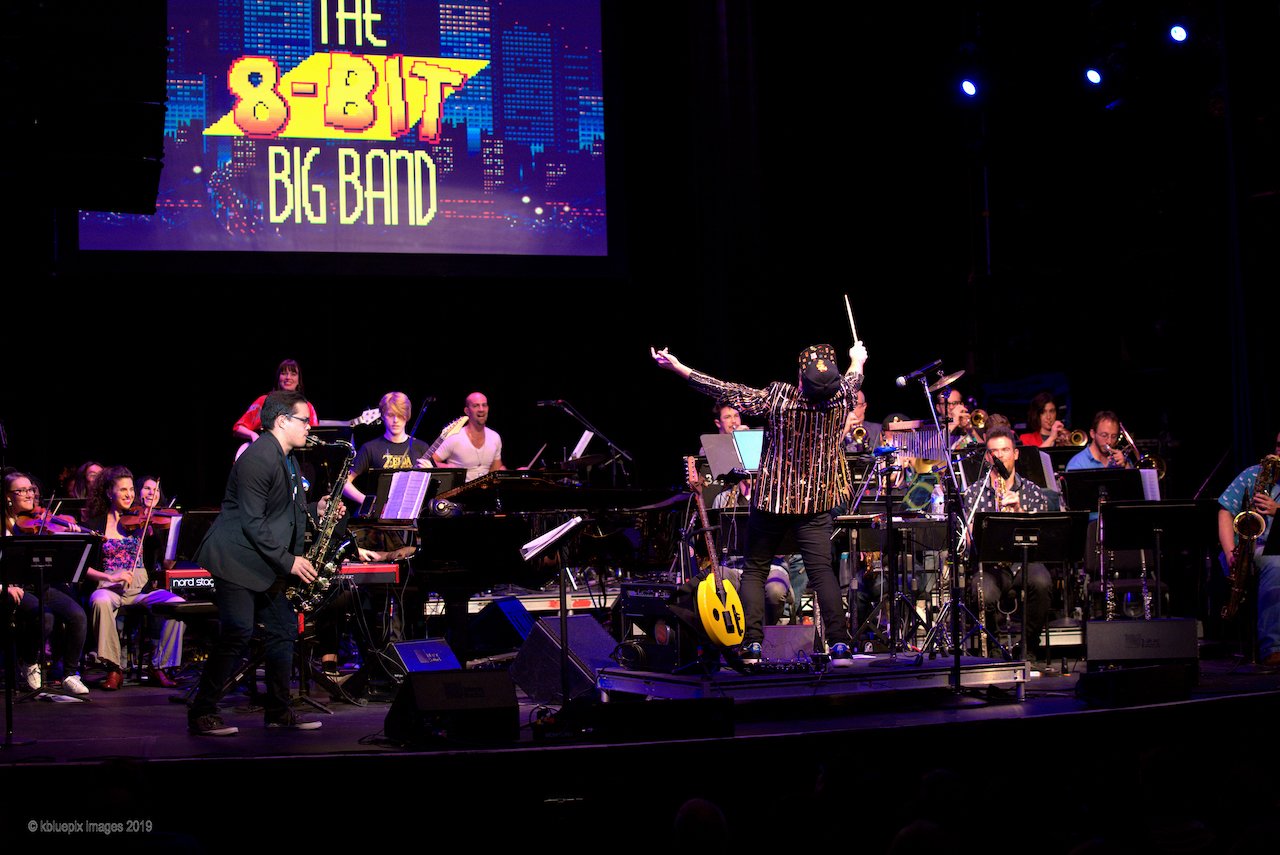
For something completely different, the Grammy-winning 8-Bit Big Band hits the Miller Theater in Philadelphia on October 24, 2026, with a show that has been selling out venues across the country for exactly the reason the name suggests: they take video game soundtracks and arrange them for a full, high-energy big band jazz orchestra. The results are not novelty. The arrangements are genuinely sophisticated, the musicianship is at the highest level, and the experience of hearing a classic Nintendo or PlayStation soundtrack played by a 20-piece jazz ensemble in full swing is something that lands with audiences who grew up with games and with audiences who have never touched a controller in their lives.
Founded by Charlie Rosen, the 8-Bit Big Band has released multiple studio albums and earned Grammy recognition while building a devoted following that spans jazz purists and gaming communities in a genuinely rare crossover. Their live shows are high-energy productions with arrangements that reward close listening while never losing the fun of the source material. They have arranged music from Final Fantasy, The Legend of Zelda, Super Mario, and dozens of other canonical game scores, treating each one with the same orchestral seriousness a jazz arranger would bring to a Gershwin standard.
The Miller Theater is an excellent venue for this, with the acoustics to support a full big band and the sight lines to let the audience watch the ensemble work. October 24 is a Saturday night, which makes it an easy decision for anyone in the Philadelphia area who wants a big band concert that is genuinely unlike anything else on the fall calendar.

Vibraphonist Behn Gillece Performs at Rowan University on September 8
Vibraphonist and composer Behn Gillece, a fixture of both the New York and Philadelphia jazz circuits, brings his musicianship to Rowan University in Glassboro, New Jersey on Tuesday, September 8, 2026, for an educational showcase that puts one of the region’s finest improvisers in direct conversation with students and community members. Gillece has built a reputation over the past decade as a vibraphonist of exceptional sensitivity and harmonic intelligence, drawing from the tradition of Milt Jackson and Bobby Hutcherson while developing a voice that is distinctly contemporary.
The vibraphone is one of the most physically beautiful instruments in jazz, and hearing it live, in a room where the resonance of the bars and the sustain of the pedal work are part of the experience, is fundamentally different from hearing it on a recording. Gillece understands this, and his live performances consistently use the physical presence of the instrument as part of the musical communication. An educational showcase at Rowan gives students who may be encountering serious jazz vibraphone for the first time a direct encounter with the instrument and the tradition it carries.
For local jazz fans in South Jersey, September 8 at Rowan University is a short drive and an opportunity to hear a genuinely accomplished musician in a setting where the music gets the focused attention it deserves. This is the kind of regional programming that builds jazz audiences one room at a time, and Gillece is exactly the right artist to anchor it.
Blue Note Records Announces Its Autumn 2026 International Showcase Tour
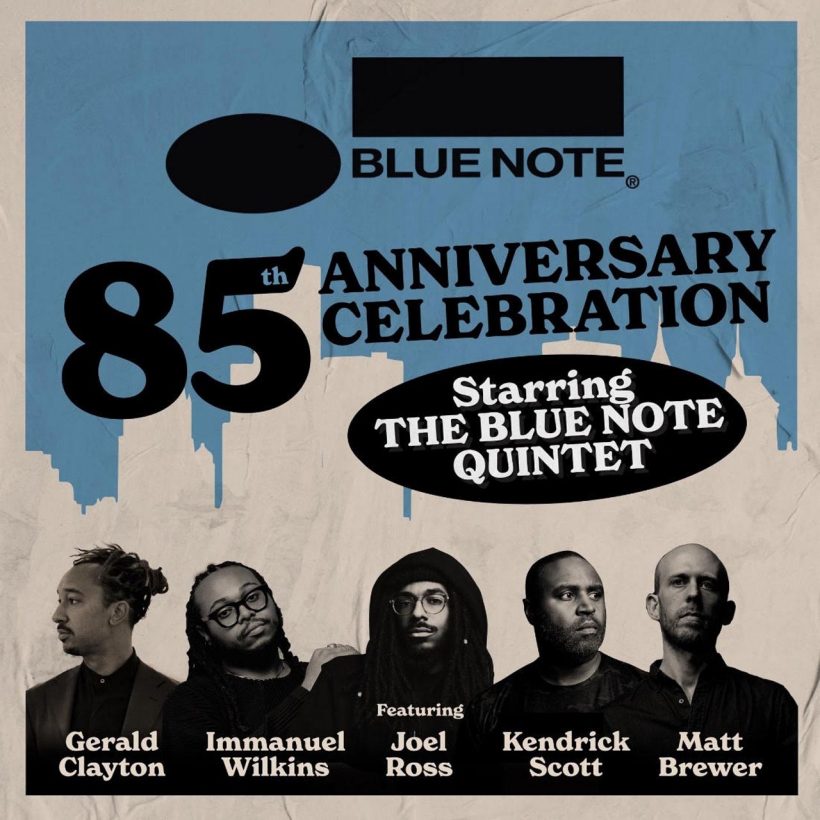
Blue Note Records, the most storied label in jazz history, has announced its official Autumn 2026 international showcase tour, spotlighting a new generation of post-bop and contemporary jazz artists across Western Europe, Japan, and the U.S. East Coast. The tour is designed as both a commercial showcase and a statement of artistic direction, with Blue Note using its fall touring presence to introduce the artists it is betting on to the international audiences that have always been among jazz’s most devoted listeners.
Blue Note’s roster in 2026 includes some of the most discussed names in contemporary jazz, among them Immanuel Wilkins, whose three-volume live recording from the Village Vanguard was one of the year’s most celebrated releases, and a broader stable of post-bop and avant-leaning artists who represent where the label sees jazz going in the next decade. The European and Japanese legs of the tour will put these artists in front of audiences who consume jazz with an appetite and an attentiveness that remains unmatched anywhere in the world. The East Coast U.S. return in November brings that momentum home.
For listeners of The Improv Café, the Blue Note Records label is inseparable from the history of live jazz that this station broadcasts. From the classic Blue Note releases of the 1950s and 60s that defined hard bop and post-bop, to the contemporary artists carrying that tradition forward today, the label’s catalog represents a significant portion of the most important live recordings in the music’s history. An international showcase tour in Autumn 2026 is a reminder that the label’s role in presenting and documenting live jazz is as active now as it has ever been.

The Count Basie Orchestra Is Touring the Mid-Atlantic This October
The Count Basie Orchestra, now in its 90th year of continuous operation, is actively touring the Mid-Atlantic region this October with theater stops that put one of the great living institutions of American swing within reach of audiences across the region. The Basie Orchestra has operated without interruption since Count Basie himself led it from Kansas City to New York in the 1930s, and the current ensemble, under its current director, maintains the signature sound that made the band legendary: a massive, precisely coordinated brass section, a rhythm section that swings at every tempo, and an approach to dynamics that can go from a whisper to a wall of sound in a single bar.
Ninety years is an almost incomprehensible span of continuous musical activity for any ensemble, and the Count Basie Orchestra’s longevity is inseparable from the quality of the musicians who have passed through it. Alumni of the Basie Orchestra read like a who’s who of jazz history, and the current ensemble upholds that standard with the same commitment to the big band tradition that has defined the organization across nine decades. The October Mid-Atlantic dates put this ensemble in theaters close to Cherry Hill, Philadelphia, and the surrounding region.
For listeners of The Improv Café, the Count Basie Orchestra is one of the most frequently heard ensembles on Swing with the Big Bands, our Friday night broadcast of live big band recordings. Hearing the orchestra live in a theater setting is the full version of what those recordings point toward: the physical experience of a 17-piece ensemble playing at full volume in a room designed for music, with the brass section directly in front of you and the rhythm section behind you and the whole thing swinging from the first downbeat to the last.

Cape May Jazz Vespers, Chris’ Jazz Café, and the Ongoing Local Scene
For listeners looking for a regular, accessible live jazz option close to home, two recurring series deserve your attention this September. The Cape May Jazz Vespers series continues its seasonal run along the shore, offering intimate Sunday afternoon performances featuring regional trios and vocalists in a setting that prioritizes listening and community. The series draws musicians from across the Delaware Valley and South Jersey jazz community, and the Cape May location gives it a particular atmosphere, close enough to the water to feel like a genuine summer-into-fall transition, intimate enough to hear everything clearly.
Chris’ Jazz Café in Philadelphia, one of the finest small jazz rooms on the East Coast, has released its full September calendar featuring weekly weekend sets from local big bands and organ trios. Chris’ has operated as one of the anchor venues for the Philadelphia jazz scene for decades, and its September programming reflects the full range of what that scene produces: organ jazz in the tradition of Jimmy Smith and Jack McDuff, big band sets from local ensembles, and the occasional vocal jazz showcase that draws on the city’s deep vocal talent pool. A Friday or Saturday night at Chris’ Jazz Café is one of the most reliable live jazz experiences available within an easy drive of Cherry Hill.
Taken together, the Cape May series and the Chris’ Jazz Café calendar represent exactly what the Improv Café broadcasts every night on a local level: live music, in real rooms, played by real musicians for real audiences. The venue doesn’t need to be the Village Vanguard or the Highmark Mann Center for the music to matter. It needs to be live, and both of these series deliver that every week.