Feature · Festivals · Berlin, Germany
Booed in 1966, Cheered in 2026: Globe Unity Orchestra Brings Jazzfest Berlin to a Triumphant 60th Anniversary Finale
Sixty years after a commission that divided its audience, Alexander von Schlippenbach’s free improvising big band returned to the festival that gave it life and earned a standing ovation, capping a four day celebration of jazz’s most daring large ensembles.
Every Friday Night on The Improv Cafe’
Swing with the Big Bands: legendary live performances from the top big band artists in history
Some big bands swing. Others set out to explode the very idea of what a big band can be. In the autumn of 1966, a young German pianist named Alexander von Schlippenbach answered a commission from the Berliner Jazztage, the festival now known as Jazzfest Berlin, with a radical new ensemble that abandoned written charts in favor of collective free improvisation on a grand scale. He called it the Globe Unity Orchestra. The premiere drew a fiery mix of boos and cheers, and one critic dismissed it with a withering phrase. Sixty years later, on November 1, 2026, the orchestra returned to the same festival to close its 63rd edition, and this time the audience rose to its feet.
That full circle moment was the emotional summit of Jazzfest Berlin 2026, which ran from October 29 through November 1 under the evocative theme “Dream, Baby, Dream.” Over four days and 24 acts, the festival placed experimental large ensembles at the center of its program, and critics from around the world praised it for remaining, after more than six decades, one of Europe’s most forward looking jazz gatherings. It is a story with special resonance for big band lovers everywhere, and a fitting moment to remind our listeners that the great big bands, from the most traditional to the most adventurous, come alive every Friday night on The Improv Cafe’.
A Festival That Never Grew Old
Jazzfest Berlin traces its roots to 1964, when the Berliner Jazztage was founded in what was then West Berlin. From the start, it embraced the new and the unexpected, presenting American legends alongside the emerging European free jazz scene that was beginning to forge its own identity. The festival’s 1966 commission of the Globe Unity Orchestra was a bold statement of that philosophy, and in the decades that followed, Berlin became one of the world capitals of free improvisation, home to the pioneering label Free Music Production and a thriving community of experimental musicians.
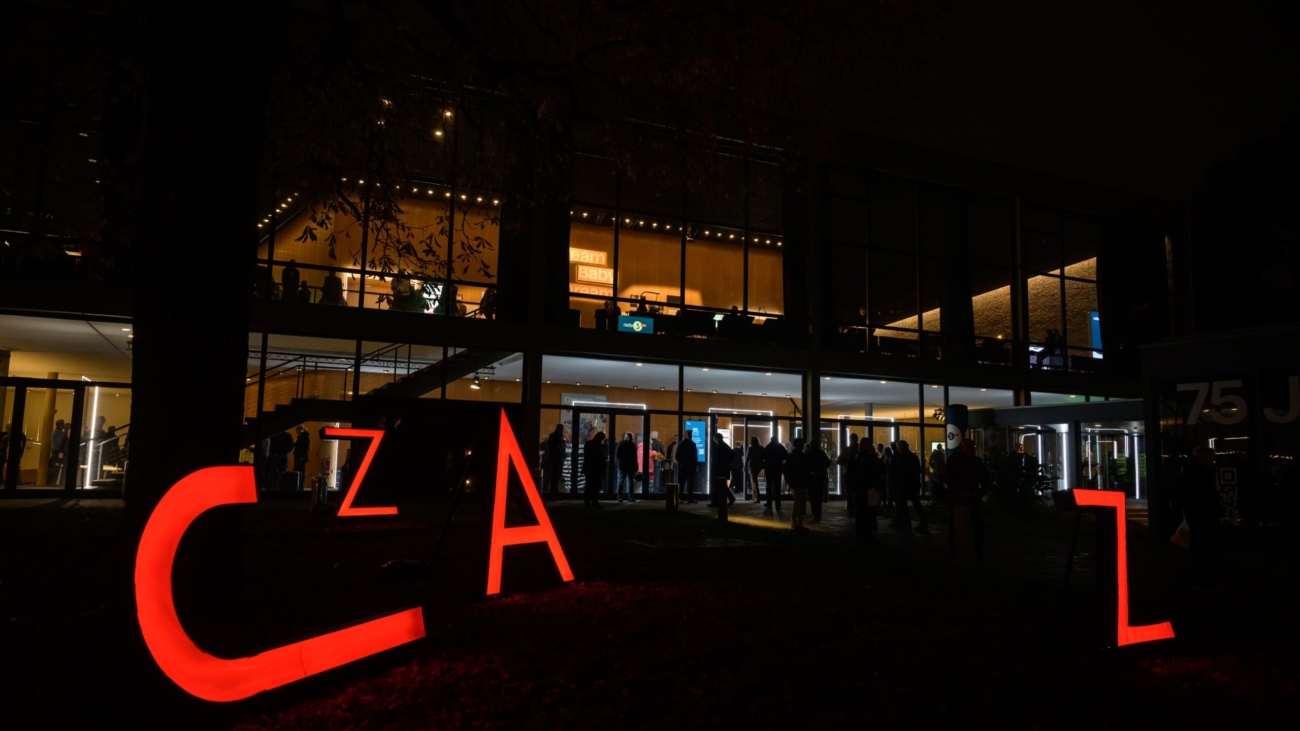
The 2026 edition, centered at the Haus der Berliner Festspiele, honored that history while looking firmly ahead. Its theme, “Dream, Baby, Dream,” invited artists and audiences to imagine new possibilities, and the program answered with a remarkable run of unconventional ensembles, world premieres, and collaborations that crossed generations and continents. Reviews in JazzTimes and UK Jazz News celebrated how one of Europe’s oldest jazz festivals has managed to stay so new.
Sixty Years of Globe Unity
For its anniversary performance, the Globe Unity Orchestra presented a single, nearly hour long structured improvisation titled Apokalyptische Nabelschau, which translates roughly as “Apocalyptic Navel-Gazing.” The title was a wonderfully cheeky choice, borrowed directly from a 1966 review that had panned the orchestra’s original concert. Six decades later, the insult became a badge of honor, and the music proved just how far ahead of its time the original vision had been.
At the center of it all sat Alexander von Schlippenbach, now 88, still leading the ensemble he founded as a young man. Beside him was trumpeter Manfred Schoof, now 90, the only other surviving charter member on stage, a living link to that first tumultuous night. They were joined by a remarkable roster of veterans who joined the orchestra in the 1970s, including British saxophonist Evan Parker, one of the most influential improvisers in the history of the music, drummer Paul Lytton, Parker’s longtime partner in the celebrated Schlippenbach Trio, and composer and trombonist George Lewis, the scholar and AACM pioneer, making a rare return to playing the trombone. Newer mainstays, including trumpeter Axel Dörner and bass clarinetist Rudi Mahall, brought fresh energy to the fifteen piece ensemble.
Founder
Historic First
Charter Member
1970s Era
1970s Era
1970s Era
Mainstay
Mainstay
Perhaps the most meaningful moment of the evening came from pianist Aki Takase, Schlippenbach’s wife and longtime musical partner. Takase became the first woman to perform with the Globe Unity Orchestra in its sixty year history, sharing the piano bench with her husband for four hand interludes and helping to conduct the ensemble. The Japanese born pianist, a formidable composer and improviser in her own right, has collaborated with Schlippenbach for decades, and her presence gave the anniversary concert both a sense of history and a welcome step forward.
A Festival of Daring Big Bands
The Globe Unity finale was the climax of a festival that put adventurous large ensembles on the main stage every single night. Opening night featured British pianist Alexander Hawkins and his eleven piece group Willow Music, setting the tone for what was to come. German drummer Christian Lillinger presented Open Form for Society II, a striking work scored for five keyboards and three double basses, with no horns at all. And trombonist Matthias Muche staged one of the festival’s most unforgettable events with BONECRUSHER, an ensemble of eleven trombones and two percussionists performing inside Berlin’s Kaiser Wilhelm Memorial Church, the landmark whose bomb damaged spire stands as a memorial to the Second World War.
The 24 act program also featured several major premieres. The legendary composer and saxophonist Anthony Braxton, a towering figure of Chicago’s AACM, unveiled the world premiere of a new septet. The Immanuel Wilkins Quartet, whose acclaimed three volume Live at the Village Vanguard series has made it one of the most celebrated working bands in jazz, brought its spiritually charged sound to Berlin. The Chicago trio Twin Talk and the luminous vocalist ganavya added further variety, and the German premiere of a trio featuring pianist Georg Graewe, bassist Brad Jones, and drummer Hamid Drake shared the closing night bill with Globe Unity.
From Free Jazz to Swing: The Big Band Lives On
The story of Globe Unity is a reminder that the big band has never been a museum piece. From the swing era orchestras of Count Basie, Duke Ellington, Benny Goodman, and Glenn Miller to the daring free ensembles of Berlin, the large jazz ensemble has always been a laboratory for new ideas, a place where musicians push one another to new heights. The bands that packed the ballrooms of the 1930s and 1940s were the cutting edge of their own time, and the same spirit of adventure that drove Duke Ellington’s experiments drives Schlippenbach’s orchestra today.
That is exactly why we celebrate the big band tradition every week. Looking for some fun on Friday nights? Tune in to Swing with the Big Bands on The Improv Cafe’, where you will hear legendary live performances from the top big band artists throughout history. The show airs every Friday night from 9:00 PM to 2:00 AM Eastern, including this coming Friday, November 27, the perfect way to dance off your Thanksgiving dinner. Make sure to dance, bop, and swing to the beat as you indulge in these incredible performances.
For more on this year’s festival, visit the Berliner Festspiele, which presents Jazzfest Berlin, and read DownBeat’s festival coverage.