Feature · Festivals · Newcastle upon Tyne, England
Hot Jazz on the Tyne: Mike Durham’s International Classic Jazz Party Celebrates Jelly Roll Morton’s Centennial and Sets Its 2027 Dates
For three days every autumn, the finest early jazz specialists from Britain, Europe, and North America gather in the North East of England to bring the music of 1900 to 1940 roaring back to life, and this year’s party saluted the Red Hot Peppers at 100.
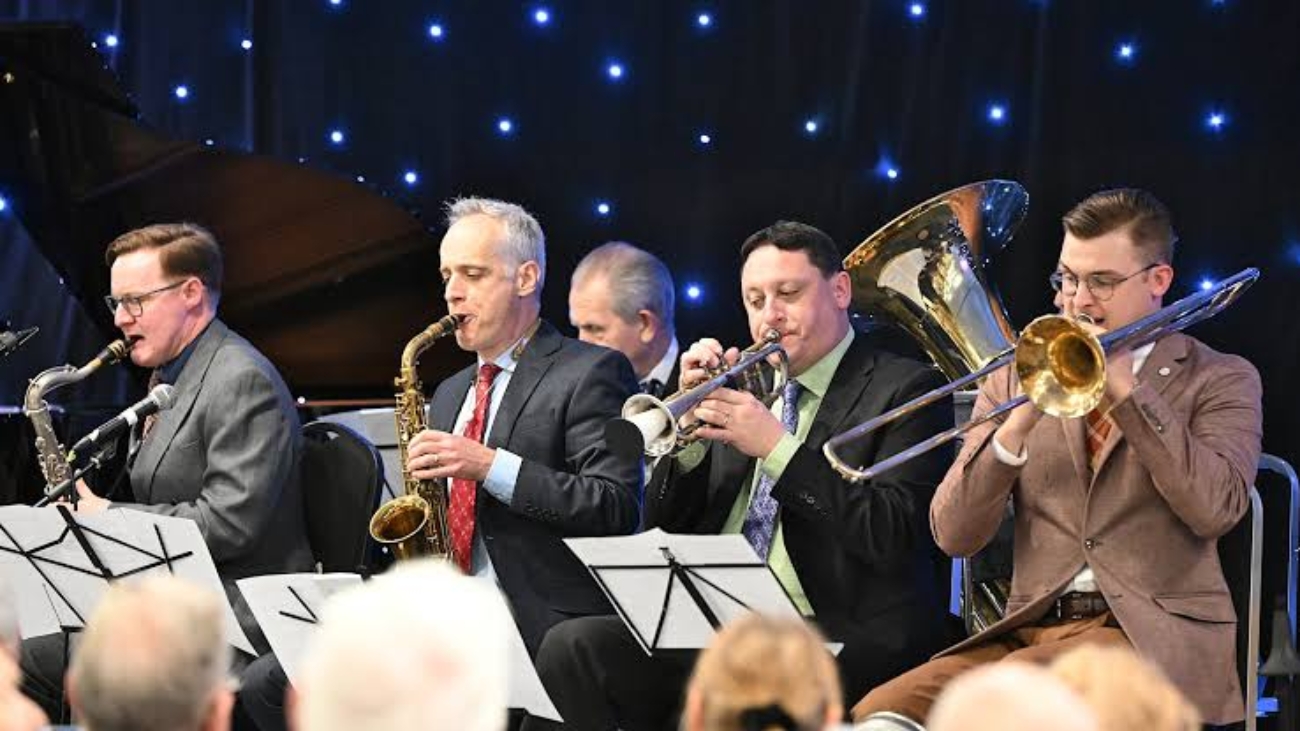
Most jazz festivals look forward. One of the most beloved festivals in Britain looks gloriously, unapologetically back. Every autumn, Mike Durham’s International Classic Jazz Party brings together an international company of musicians who have devoted their careers to the earliest decades of the music, and for three days they play nothing composed or popularized after about 1940. The result is a weekend that feels like stepping into a time machine, a place where the sounds of New Orleans, Chicago, Harlem, and the great hot dance bands of the 1920s and 1930s are performed not as museum pieces but as living, breathing, swinging music.
This year’s party, held from November 6 through 8, 2026, presented more than two dozen specialized tributes, headlined by a centennial celebration of Jelly Roll Morton’s Red Hot Peppers. And with the 2027 dates already announced for October 29 through 31, fans of traditional jazz on both sides of the Atlantic can start planning their next pilgrimage to the North East of England.
A Festival Born of One Man’s Passion
The party bears the name of its founder, the late British trumpeter, broadcaster, and jazz enthusiast Mike Durham, who launched the event in 1990 out of a simple conviction: that the jazz of the music’s first four decades deserved to be heard played at the highest possible level, by musicians who understood its language from the inside. Durham spent years building a network of like minded players from across Britain, continental Europe, the United States, and beyond, and the festival he created, long known to its devotees simply as “Whitley Bay” after the seaside town near Newcastle upon Tyne where it began, became a cornerstone of the international traditional jazz calendar.
Since Durham’s passing, his friends and colleagues have kept the party going in his spirit and under his name, preserving the format and the standards he set. The festival has grown a devoted following of fans who return year after year, many traveling from the United States, Scandinavia, Germany, France, and Australia, and it has become one of the few places in the world where early jazz enthusiasts can hear such a concentration of specialists in a single weekend.
The First Forty Years of Jazz
The party’s repertoire draws strictly from roughly 1900 to 1940, and within that window the range is astonishing. Audiences hear the collective improvisation of New Orleans style jazz, the hot, driving ensemble sound of Chicago in the 1920s, the elegant and often mischievous arrangements of the great hot dance orchestras, the virtuosic two fisted piano of Harlem stride, and the first flowering of the swing era. It is the music of Jelly Roll Morton, King Oliver, Louis Armstrong, Bix Beiderbecke, Fats Waller, Duke Ellington, and Fletcher Henderson, the foundation on which every later style of jazz was built.
What makes the weekend so distinctive is its structure. Rather than booking fixed bands, the festival assembles a pool of top specialists, and the schedule, running from Friday midday through late Sunday evening, is built from distinct themed sets, each conceived and directed by one of the participating musicians. One set might recreate a specific band and era note for note, while the next might explore the repertoire of a forgotten bandleader or the songbook of a single singer. The approach turns the weekend into a series of lovingly researched concerts, each with its own story.
2026: The Red Hot Peppers at 100
The centerpiece of this year’s program was a centennial tribute to Jelly Roll Morton’s Red Hot Peppers. In September 1926, Morton, the brilliant and famously self confident New Orleans pianist, composer, and bandleader, walked into a Victor recording studio in Chicago with a hand picked band and began a series of sessions that would become some of the most celebrated recordings in jazz history. Tunes like “Black Bottom Stomp,” “The Chant,” and “Grandpa’s Spells” combined the spontaneity of New Orleans jazz with Morton’s meticulous compositional vision, and a century later they remain models of how written and improvised music can live together.
Alongside Morton, the program ranged across the full sweep of early jazz history. A tribute to James Reese Europe’s Harlem Hellfighters honored the pioneering bandleader whose 369th Infantry Regiment band introduced ragtime and early jazz to European audiences during World War I. A Fletcher Henderson set saluted the orchestra that, with arrangers Don Redman and later Henderson himself, created the blueprint for big band swing. Adrian Rollini’s Tap Room Gang paid homage to the multi-instrumentalist who mastered the bass saxophone and later the vibraphone, leading small swing groups at his own Manhattan nightspot in the 1930s. Tributes to the gentle swing vocalist Maxine Sullivan and to Al Bowlly, the much loved crooner of the British dance band era, gave the weekend a lyrical, romantic thread.
An International Company of Specialists
The festival’s roster reads like a who’s who of the global traditional jazz scene. Among the musicians who regularly appear are British trumpeter Enrico Tomasso, a master of the Louis Armstrong tradition; clarinetist and saxophonist Michael McQuaid; American cornetists Colin Hancock and Andy Schumm, two of the leading young interpreters of 1920s hot jazz; New York trumpeter Mike Davis; French cornetist Malo Mazurié; Norwegian stride pianist Morten Gunnar Larsen; and British guitarist, banjoist, and vocalist Thomas “Spats” Langham, whose way with the songs of the dance band era is a perennial audience favorite.
The mix of nationalities is part of the magic. Players who might otherwise meet only on recordings come together for a weekend of rehearsals, concerts, and late night camaraderie, forming new combinations that would be impossible anywhere else. For American readers, it is a striking reminder that the music born in New Orleans and Chicago has become a genuinely global passion, preserved and celebrated by devoted musicians on every continent.
A Party in Every Sense
The name is not an exaggeration. The concerts take place inside a four star hotel, historically the Village Hotel near Newcastle, with cabaret style seating of eight guests per table. To make sure no one spends the whole weekend in the back, organizers use a clever twice daily table rotation, moving guests through the room so that everyone enjoys close up views of the bandstand at some point. It is a small detail that says a great deal about the festival’s spirit of generosity.
The table rotation: eight guests per table, moved twice a day, so every fan gets a front row view at some point during the weekend.
When the formal evening concerts end, the party simply moves to the hotel bar, where musicians and guests gather for informal jam sessions that often stretch well into the small hours. Many regulars say these after hours sessions, where players from different countries trade choruses on tunes they all grew up loving, are the true heart of the weekend.
Passing the Torch: The Young Talent Award
Established in Mike Durham’s memory, the festival’s Young Talent Award ensures that this music has a future as well as a past. Each year, the initiative sponsors an emerging classic jazz musician between the ages of 18 and 25 to attend rehearsals, meet and learn from veteran players, and perform during the weekend. For a young musician drawn to the sounds of the 1920s and 1930s, there may be no better education than three days surrounded by the world’s leading specialists, and the award has become one of the festival’s proudest traditions.
Mark Your Calendar for 2027
The 2027 edition is scheduled for October 29 through 31, 2027, and seat reservations are managed through the official Whitley Bay Jazz Fest website. Given the festival’s loyal following and intimate seating, early booking is wise. For American fans of traditional jazz, the trip to Newcastle upon Tyne, a vibrant city with a rich industrial and cultural heritage of its own, makes for an unforgettable autumn getaway.
In an age when so much music is disposable, there is something deeply moving about a festival devoted to keeping the jazz of a century ago alive, not as nostalgia, but as some of the most joyful and inventive music ever made. Mike Durham understood that, and thanks to the friends and musicians who carry on his party, the first forty years of jazz still swing as hard as ever.