
There are rare moments in jazz history when an archival discovery transcends the excitement of a standard reissue and instead becomes a genuine cultural event. The unveiling of previously unheard live recordings from a legendary improviser does not simply add another title to the catalog. It expands the historical record itself. It reshapes understanding. It allows listeners to step directly into vanished rooms and experience the unpredictable electricity of artists operating in real time at the height of their creative powers.
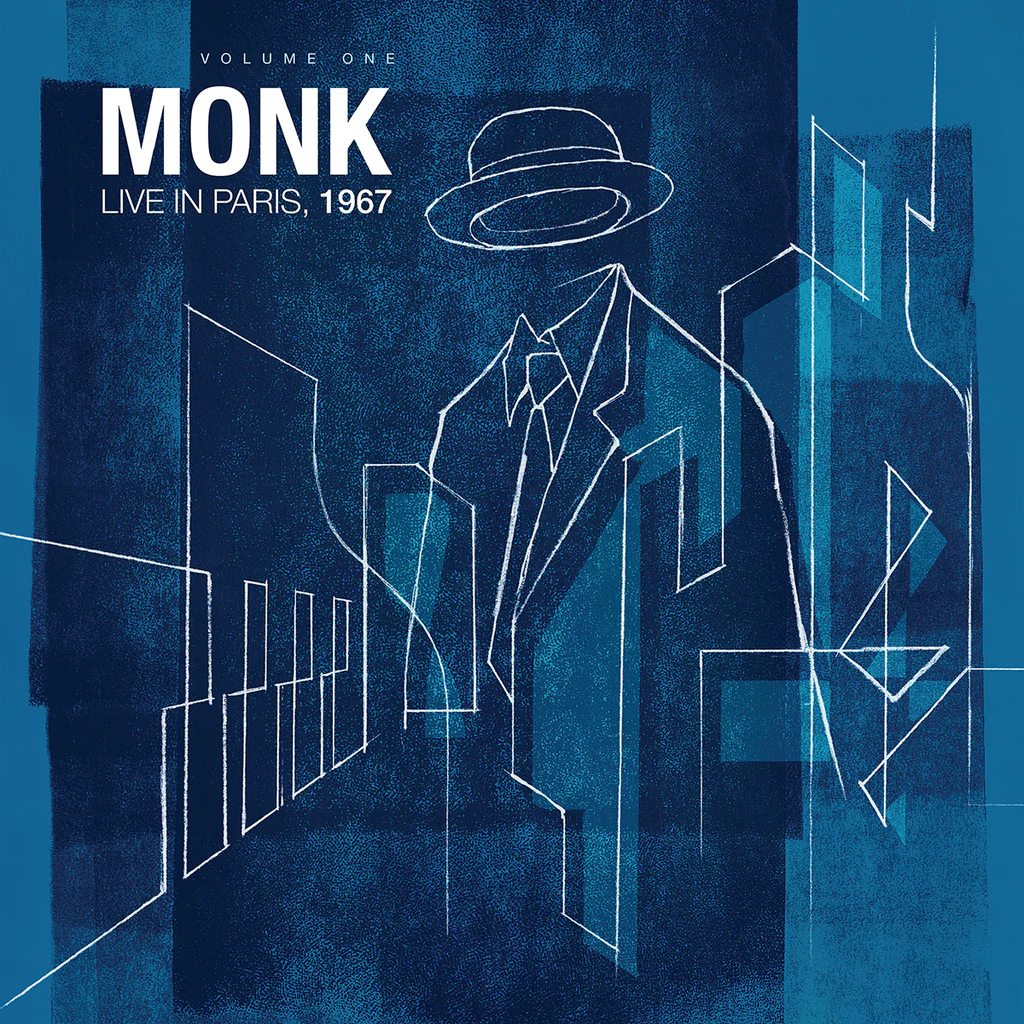
That is precisely why the release of Monk Live in Paris, 1967: Volume One has immediately become one of the most important live jazz developments of the year.
For The Improv Cafe’ — the station devoted entirely to broadcasting live Jazz, live Big Band, and live Swing performances — few discoveries could align more perfectly with the station’s mission than the recovery of a pristine 1967 concert featuring Thelonious Monk and his legendary working quartet in full improvisational flight. This is not merely another archival release designed to capitalize on nostalgia. It is a deeply significant restoration of living jazz history captured during one of the most creatively important periods in modern improvisational music.
The impact of the discovery reverberates far beyond collectors and historians.
In many ways, the release represents everything that makes live jazz recordings irreplaceable. Studio sessions can document composition, structure, and arrangement with extraordinary clarity, but live recordings reveal something entirely different. They expose risk. They capture communication between musicians in real time. They preserve audience energy, spontaneous detours, emotional tension, and the evolving architecture of improvisation itself.
That is where jazz truly lives.
And nowhere is that truth more apparent than in the newly recovered Paris recordings from Monk’s extraordinary late-1960s quartet featuring Charlie Rouse, Larry Gales, and Ben Riley.
By 1967, this ensemble had evolved into one of the most deeply synchronized working groups in modern jazz. The musicians understood Monk’s famously angular harmonic language instinctively. They navigated his sudden rhythmic pivots, unexpected pauses, percussive chord attacks, and asymmetrical melodic structures with remarkable fluidity. Years of performance experience had transformed the quartet into a living conversational organism capable of moving between elegance, abstraction, humor, tension, and explosive swing momentum without warning.
That chemistry now becomes fully audible again through the recovered recordings from the historic concert at Salle Pleyel.
The venue itself carries enormous symbolic weight within jazz history. Salle Pleyel stood for decades as one of Europe’s most prestigious concert halls, hosting classical giants alongside groundbreaking jazz performers who increasingly found deeply appreciative audiences across the continent during the postwar years. By the late 1960s, Paris had become one of jazz’s most important international centers, offering American improvisers an environment where experimental artistry was often embraced with greater seriousness than it sometimes received back home.
Monk’s performances in Europe during this period therefore occupy a uniquely important place in jazz history.
He was no longer merely an influential innovator fighting for recognition. By 1967, Monk had become a towering cultural figure whose compositions had permanently altered the harmonic vocabulary of modern jazz. Yet even at the height of that acclaim, his live performances retained a sense of unpredictability and danger. Monk never approached the piano conventionally. His improvisations could feel simultaneously mathematical and chaotic, delicate and aggressive, playful and deeply philosophical.
That complexity explains why these recovered recordings feel so significant.
Critics and historians are already describing the release as one of the most valuable live jazz archival discoveries in recent memory, praising both the restored sound quality and the astonishing immediacy of the performances themselves. More importantly, the release offers listeners a remarkably vivid portrait of late-1960s post-bop evolution captured in real time by one of the genre’s defining architects.
The release also carries profound emotional significance because of the story behind its recovery.
The project marks the first official estate-authorized release drawn from a massive archive reportedly containing hundreds of hours of recovered Thelonious Monk recordings. The archive was assembled through the determined efforts of Monk’s son, T.S. Monk, who engaged directly with collectors preserving long-circulating bootleg tapes and private recordings hidden within jazz collector circles for decades.
That detail matters enormously.
Jazz history has often survived through fragile preservation networks operating outside traditional institutional systems. Enthusiasts, collectors, engineers, broadcasters, and fans quietly protected live recordings long before the industry fully recognized their historical value. Many legendary performances survived only because someone carried a tape recorder into a club, stored a radio broadcast, or preserved an unofficial pressing that otherwise might have disappeared forever.
The recovery of Monk’s Paris recordings reflects that larger preservation tradition.
For live jazz radio stations like The Improv Cafe’, the significance runs even deeper because the station’s entire identity is built around the preservation and celebration of live performance culture. Every broadcast reinforces the idea that jazz reaches its highest form through improvisation unfolding spontaneously in front of audiences. Live recordings preserve the emotional unpredictability that defines the genre itself.
That philosophy is increasingly important in the modern streaming era.
Today’s digital music landscape often encourages compressed attention spans, shortened song structures, and playlist-friendly uniformity. Jazz, particularly live jazz, resists those limitations entirely. A Monk performance may stretch unexpectedly into silence before erupting into rhythmic complexity. A solo may wander deliberately away from the melody before resolving into brilliance several minutes later. The pleasure comes not from predictability but from discovery.
The newly unearthed Paris recordings embody exactly that spirit.
Listeners can hear the quartet operating with fearless confidence, moving through Monk’s compositions with extraordinary elasticity and intuition. Charlie Rouse’s tenor saxophone work remains especially vital to the group’s chemistry. Unlike many saxophonists who struggled adapting to Monk’s unusual harmonic structures, Rouse developed an almost conversational relationship with Monk’s phrasing. His solos flow naturally through the pianist’s fragmented rhythmic architecture while maintaining warmth, sophistication, and melodic clarity.
Meanwhile, Larry Gales and Ben Riley provide the rhythmic foundation that allows Monk’s angular ideas to breathe without collapsing into abstraction. Their interplay demonstrates why great jazz rhythm sections are not passive accompaniment but active collaborators shaping the emotional direction of every performance.
That level of interaction can only truly emerge through live performance.
It is one reason archival discoveries like Monk Live in Paris, 1967: Volume One resonate so deeply with jazz audiences. They allow listeners to experience improvisation as living dialogue rather than fixed composition. Every moment feels unstable in the best possible sense. The musicians are listening, reacting, challenging one another, and collectively constructing something ephemeral that exists only inside that performance.
That ephemerality has always been central to jazz’s emotional power.
Unlike classical composition, where the score represents permanence, jazz thrives on variation. The same standard can evolve completely differently from night to night. Tempos shift. Rhythms stretch. Solos mutate. Entire emotional atmospheres transform depending on the room, the audience, the acoustics, and the musicians’ instincts at that exact moment in time.
The Improv Cafe’ continues building its identity around that exact principle.
By exclusively programming live Jazz, live Big Band, and live Swing recordings, the station preserves the unpredictability that makes improvised music so culturally essential. The listener is not simply consuming polished product. They are entering historical moments. They are hearing musicians think in real time. They are experiencing the emotional architecture of live performance itself.
The release of Monk Live in Paris, 1967: Volume One therefore feels like a perfect reflection of everything The Improv Cafe’ represents.
It reconnects modern audiences with one of jazz’s most fearless innovators at a moment when his quartet had reached astonishing creative maturity. It reinforces the enduring importance of archival preservation. It demonstrates the emotional immediacy of live improvisation decades after the original performance occurred. And perhaps most importantly, it reminds listeners that jazz history is still alive, still evolving, and still capable of revealing entirely new treasures hidden inside forgotten tapes, distant archives, and recovered performances.
For longtime jazz devotees, the release offers a priceless opportunity to revisit Monk’s brilliance through newly restored clarity. For younger audiences discovering him for the first time, it serves as a powerful entry point into the boundless possibilities of live improvisational music.
And for The Improv Cafe’, it represents yet another reminder that the greatest moments in jazz were never static museum pieces. They were living conversations unfolding onstage in real time, filled with risk, surprise, humor, tension, elegance, and invention.
Thanks to this remarkable archival recovery, one of those conversations is finally being heard again.