Feature · Awards · Jazz Honors
DownBeat’s 91st Readers Poll: Kenny Burrell Enters the Hall of Fame as McBride, Emmet Cohen, Carter, and Hancock Top the Ballot
Jazz fans have spoken. The world’s most storied jazz magazine crowns a 95-year-old guitar master, celebrates a historic Monterey reunion, and names Christian McBride and Emmet Cohen the big winners of the year.
For more than nine decades, jazz fans have waited each year to see who comes out on top in the DownBeat Readers Poll, the longest running and most widely watched popular vote in the music. Founded in Chicago in 1934, DownBeat has chronicled nearly the entire history of modern jazz, and its readers’ choices offer a snapshot of who is moving audiences right now. The results of the 91st annual Readers Poll, published in the magazine’s December 2026 issue, honor a fascinating mix of living legends and modern stars, led by a long overdue Hall of Fame induction for guitarist Kenny Burrell and a sweep of major categories by bassist Christian McBride and pianist Emmet Cohen.
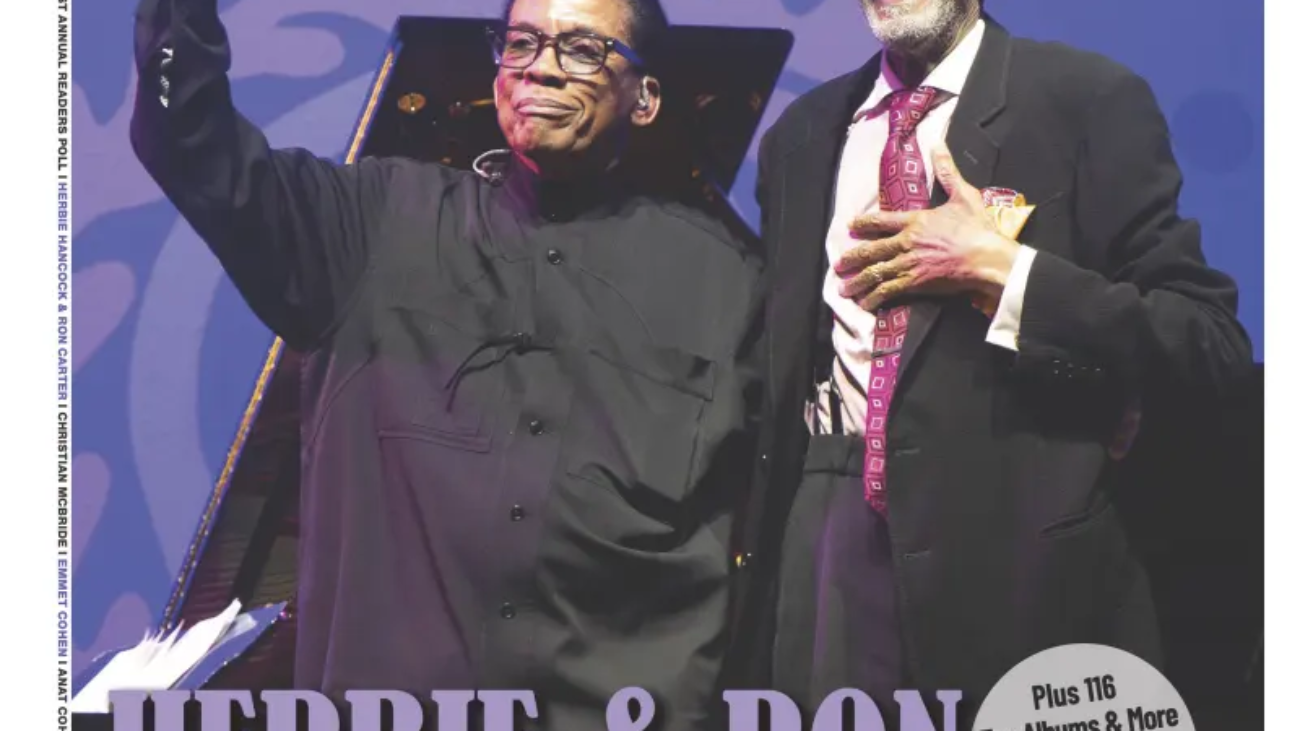
The issue also features a remarkable cover story on Ron Carter and Herbie Hancock, who topped the Bass and Keyboard categories respectively, and who this fall reunited at the Monterey Jazz Festival for their first ever duo performance, a tribute to their old boss, Miles Davis. Add clarinetist Anat Cohen, organist Larry Goldings, and a live Blindfold Test with saxophonist Joe Lovano, and you have one of the most compelling DownBeat issues in recent memory.
Kenny Burrell, a Class Act Enters the Hall of Fame
The DownBeat Hall of Fame is the magazine’s highest honor, a pantheon that began in the early 1950s with Louis Armstrong and has since grown to include the most important figures in jazz history. This year, readers voted in Kenny Burrell, the elegant guitarist whose warm tone, bluesy phrasing, and impeccable taste have made him one of the most admired musicians of the past seventy five years. In a profile by writer Bill Milkowski, the 95-year-old Burrell looks back on his remarkable life from his home in Los Angeles.
Burrell’s story begins in Detroit, the remarkable jazz city that produced a generation of great players in the years after World War II. His recording career started on March 1, 1951, when he entered the studio with Dizzy Gillespie in a session that also featured a young John Coltrane and vibraphonist Milt Jackson, an astonishing lineup for anyone’s debut. Burrell soon moved to New York, where he became one of the most in demand guitarists of the hard bop era, recording a string of classics for Blue Note and Prestige, including the beloved 1963 album Midnight Blue, a touchstone of blues drenched small group jazz.
Among his most celebrated partnerships was a long collaboration with the Hammond B3 organ master Jimmy Smith, whose albums with Burrell helped define the soul jazz sound of the late 1950s and 1960s. Burrell also stepped out as a singer on Weaver of Dreams, a 1961 vocal album that revealed a gentle, intimate side of his artistry. Duke Ellington, who knew a thing or two about elegance, famously named Burrell his favorite guitarist, and Burrell returned the admiration with years of devoted study and performance of Ellington’s music.
Burrell’s influence extends far beyond his recordings. As the founding director of the Jazz Studies program at UCLA, he shaped the education of countless young musicians, and his Jazz Guitar Band served as a training ground for players who went on to distinguished careers. In DownBeat’s tribute, two of his former protégés from that band, Rodney Jones and Bobby Broom, share their reflections, as does 27-year-old guitarist Chris Minami, a reminder that Burrell’s legacy continues to inspire new generations. His induction is a fitting crown for a career defined by grace, generosity, and swing.
Christian McBride’s Triple Crown
If any single artist dominated the 2026 ballot, it was Christian McBride. The Philadelphia born, Montclair based bassist swept three of the poll’s most prestigious categories, winning Artist of the Year, Arranger of the Year, and Producer of the Year. It caps an extraordinary year that included an eleventh Grammy Award for his big band album Without Further Ado, Vol. 1, the debut of his new band Ursa Major with the album Points of Light, a sold out run at London’s Ronnie Scott’s, and, just this afternoon, the finale of Newark’s TD James Moody Jazz Festival, where he performs with the New Jersey Symphony.
DownBeat’s profile of McBride, written by Phillip Lutz, catches the bassist backstage at Ronnie Scott’s in early October, surrounded by friends and a packed house. It is a fitting portrait of a musician who has become something like jazz’s ambassador at large, equally at home leading a big band, producing records, hosting radio programs, directing festivals, and mentoring young players through programs like Montclair’s Jazz House Kids. For New Jersey jazz fans, his sweep feels like a hometown victory.
Emmet Cohen’s Banner Year
Pianist Emmet Cohen matched McBride with three wins of his own, taking Album of the Year, Pianist of the Year, and Jazz Group of the Year. Cohen has become one of the most popular jazz musicians of his generation, in large part thanks to Live from Emmet’s Place, the joyful webcast he launched from his Harlem apartment during the pandemic, which has grown into a global phenomenon featuring legends and rising stars alike. As DownBeat’s profile by Allen Morrison notes, this has been a year of major change for Cohen, including a new Harlem home, a new venue for his webcast, a new album, and an intense international touring schedule.
Cohen’s success also has a New Jersey thread. McBride has pointed to Cohen as one of the many young musicians who came up through the Garden State’s thriving jazz education programs, alongside artists like Tyshawn Sorey and Immanuel Wilkins. To see both the mentor and one of the mentees topping the same readers poll is a powerful testament to that pipeline.
Carter and Hancock: Reminiscing About Miles at Monterey
The issue’s cover story belongs to two of the most important musicians in jazz history. Ron Carter, who won the Bass category, and Herbie Hancock, who topped Keyboards, were the rhythm section foundation of Miles Davis’s legendary second great quintet in the 1960s. In 1963, they played the Monterey Jazz Festival together as members of Davis’s band. More than six decades later, at the 2026 festival, they returned to Monterey for their first ever performance as a duo, a heartfelt tribute to Davis in the year of his centennial.
Writer Paul de Barros sat down with both men for DownBeat’s cover story, a conversation that ranges across their shared history with Miles and their decades of friendship. For readers, the piece offers a rare chance to hear two architects of modern jazz reflect on the music they helped create. Carter, now 89 and the most recorded bassist in history, has been as busy as ever this year, from his annual October residency at Birdland to his upcoming headline appearance in South Florida. Hancock, the visionary pianist and keyboardist whose career spans Maiden Voyage to Head Hunters and beyond, remains one of the music’s great innovators.
Anat Cohen, Larry Goldings, and More
Clarinetist Anat Cohen, one of the most expressive and versatile instrumentalists in jazz, was named Clarinetist of the Year. In DownBeat’s profile by Ted Panken, Cohen discusses her long creative partnership with producer Oded Lev-Ari, with whom she has run the independent label Anzic Records since 2005, and offers a glimpse of a new, as yet untitled album the two were mastering this fall. Fans of her lyrical, joyful playing have plenty to look forward to.
Organist Larry Goldings took the top spot in the Organ category and placed sixth in Keyboards, a testament to his remarkable range. Goldings is beloved both as one of the great modern masters of the Hammond B3 and as a longtime collaborator of James Taylor, a career that bridges jazz and popular music with ease. His win also carries a lovely echo of Kenny Burrell’s Hall of Fame honor, given Burrell’s legendary work with organ titan Jimmy Smith.
The Blindfold Test: Joe Lovano Live in Detroit
Every DownBeat issue includes the Blindfold Test, the magazine’s famous feature in which a musician listens to recordings without being told who is playing and responds in real time. This month’s test was conducted live onstage at the Detroit Jazz Festival with saxophonist Joe Lovano, who was played a fascinating cross section of tenor saxophone history, from swing era masters like Don Byas and Flip Phillips to the adventurous sounds of Dewey Redman, Jane Ira Bloom, and James Carter, and a classic from Sonny Rollins. For saxophone fans, it is a delightful listening list in its own right.
- Ernie Krivda“Insomnia’s Embrace” · November Man
- Dewey Redman“Dew” · Momentum Space
- George Garzone“Gargonzola” · Quintonic
- Flip Phillips“Scatterbrain” · Your Place or Mine?
- Jane Ira Bloom“Other Eyes” · Early Americans
- Don Byas“Stardust” · Laura
- George Freeman“Cough It Up” · Birth Sign
- James Carter“Pour Que Ma Vie Demeure” · Present Tense
- Sonny Rollins“I’ve Found a New Baby” · Sonny Rollins and the Contemporary Leaders
Why the Readers Poll Still Matters
In an age of algorithms and streaming playlists, the DownBeat Readers Poll remains a refreshingly human measure of who matters in jazz, a vote cast by the people who buy the records, fill the clubs, and keep the music alive. This year’s results honor the past and the future in equal measure, celebrating a 95-year-old Hall of Famer and an 89-year-old bass legend alongside the musicians who are shaping the music’s next chapter. The complete list of winners appears in the December 2026 issue of DownBeat, and it is well worth exploring for anyone looking to discover new favorites.