Two Men Born in 1926 Changed Everything. A Century Later, the World Is Listening Again — and The Improv Café Is Broadcasting Every Moment of It.
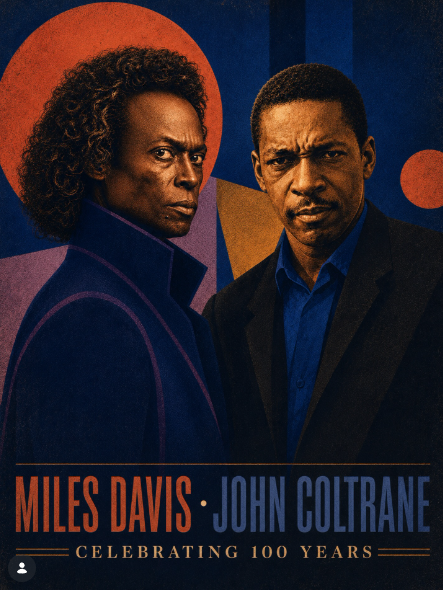
There are birthdays, and then there are birthdays. There are anniversaries that appear on a calendar and pass like any other date, and then there are the ones that stop the music industry in its tracks, open the archives, fill concert halls, ignite museum exhibitions, send musicians on tour around the globe, and cause every jazz festival with any claim to cultural seriousness to restructure its programming in recognition of something larger than any single event. The year 2026 is the second kind. Not because of one birthday, but because of two — falling just months apart — belonging to two musicians who, more than any others who ever picked up their instruments and stood in front of a microphone, reshaped what music itself could mean. Read The Improv Cafe’ Substack for Live Jazz News!
Miles Dewey Davis III was born on May 26, 1926, in Alton, Illinois. John William Coltrane was born on September 23, 1926, in Hamlet, North Carolina. One a trumpet player, cool and searching, perpetually reinventing himself with a restlessness that made him simultaneously the most influential figure in jazz history and the most difficult to contain within any single style or category. The other a tenor saxophonist of almost terrifying spiritual intensity, a man who approached the saxophone as a vehicle for the exploration of something beyond music, beyond art, beyond the ordinary boundaries of human expression. Together, before they went their separate and equally extraordinary ways, they recorded some of the most important music in the history of the 20th century. Apart, they each produced bodies of work that are still being studied, performed, analyzed, debated, and loved by musicians and listeners around the world, six decades after their most transformative records were made. Read The Improv Cafe’ Substack for Live Jazz News!
Born Months Apart, Joined at the Musical Hip — The Story of Two Architects
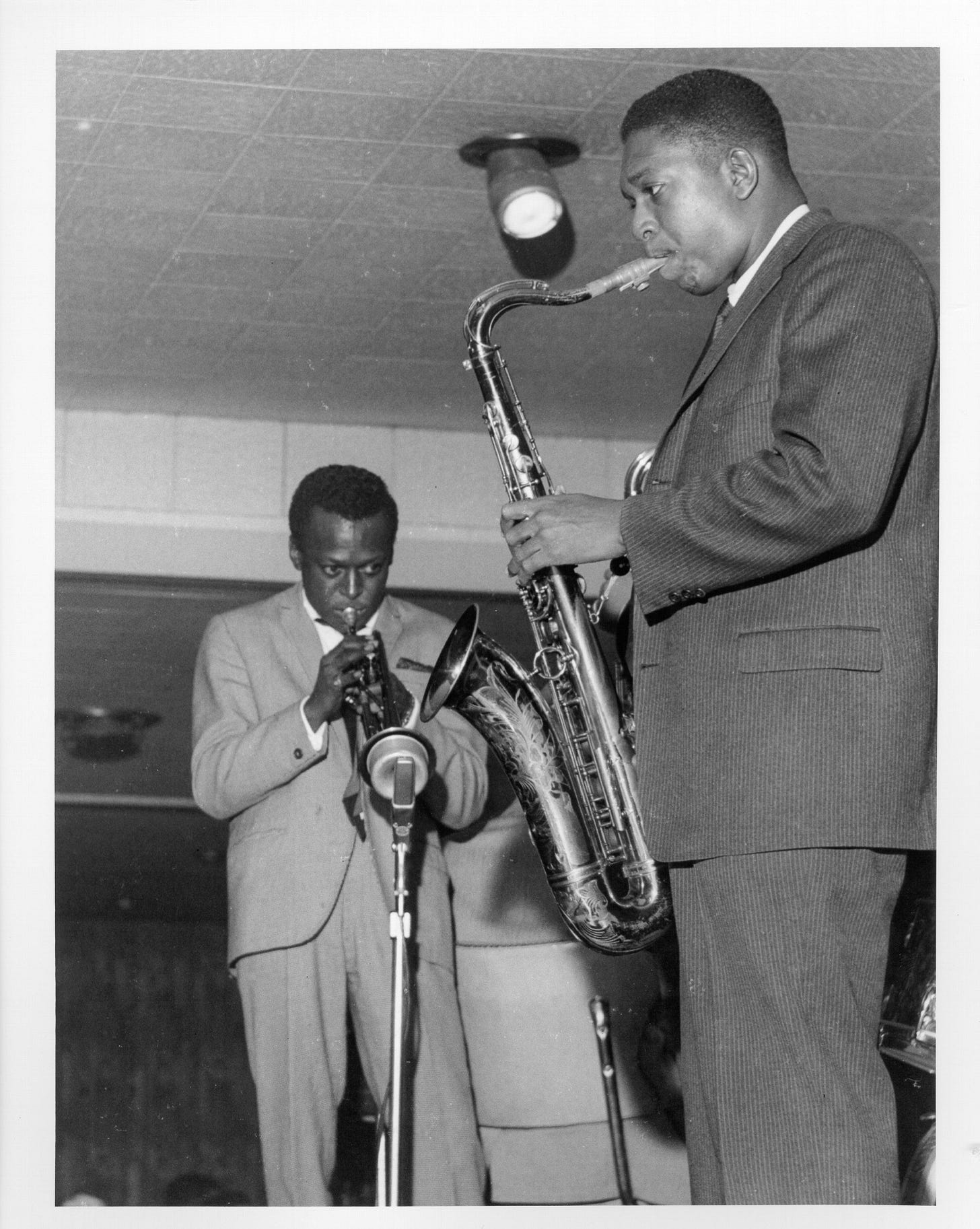
To understand why the centennial of Miles Davis and John Coltrane matters so profoundly — not just to jazz, not just to the music community, but to anyone who has ever been moved by American popular culture in any form — you have to understand what these two men were to each other and what they were, separately, to the art form they inhabited and transformed.
Their professional lives intersected at one of the most fertile and consequential moments in jazz history: the mid-1950s, when Davis assembled his First Great Quintet and placed Coltrane on tenor saxophone alongside him. Between 1955 and 1957, and again from 1958 into 1959, those two musical presences shared a bandstand, shared a studio, shared the creative challenge of figuring out what jazz could be next. The chemistry between Miles’s cool, recessive trumpet — which communicated more in the space between notes than most musicians could say with a full solo — and Coltrane’s surging, searching tenor, which pushed the harmonic boundaries of every tune it touched — was unlike anything the music world had previously produced. It was the sound of two enormous artistic minds working alongside each other at the peak of their early powers, each one pushing the other toward territory neither would have found alone. Read The Improv Cafe’ Substack for Live Jazz News!
John Coltrane: The Search That Never Stopped
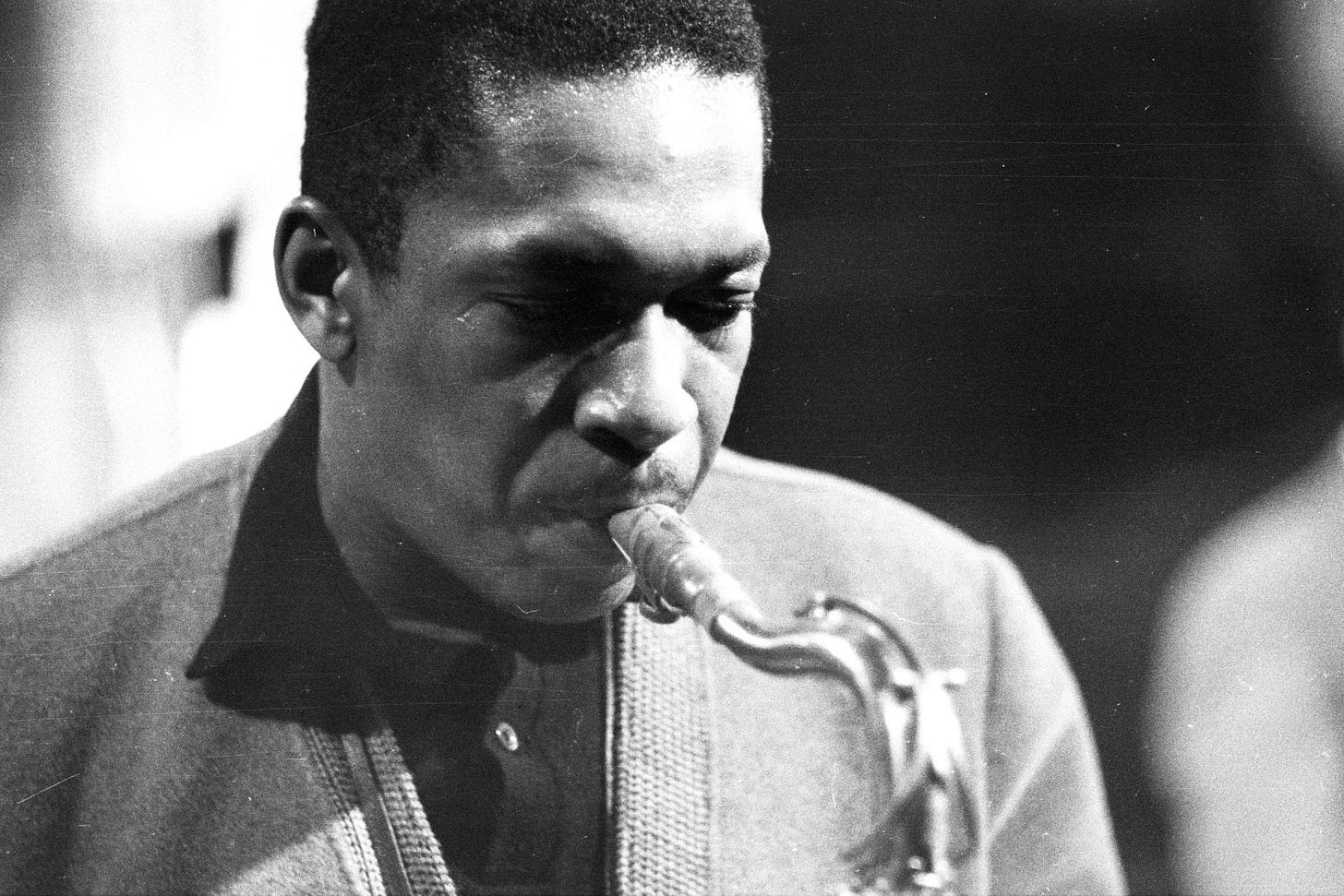
If Miles Davis was the architect of jazz’s cool — the musician who taught restraint and space as musical virtues — then John Coltrane was the force of nature who took everything Miles and the modal revolution had suggested and pushed it to its absolute limit, and then kept pushing beyond that. Coltrane did not stop at modal jazz. After Kind of Blue, he formed his own quartet and assembled one of the most extraordinary ensembles in the history of improvised music: pianist McCoy Tyner, bassist Jimmy Garrison, and drummer Elvin Jones, three musicians who were themselves innovators of the highest order, whose collective vocabulary reshaped their respective instruments in ways still felt today. Read The Improv Cafe’ Substack for Live Jazz News!
The Impact That Will Not Be Contained: How Davis and Coltrane Changed Everything Beyond Jazz
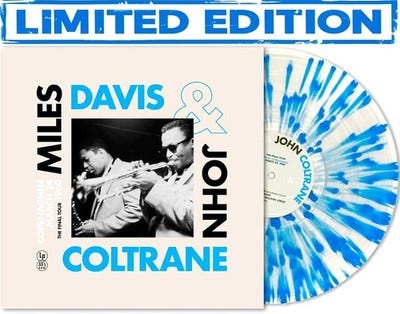
One of the things that makes the centennial of Miles Davis and John Coltrane more than a jazz industry event — that makes it a genuine cultural milestone — is the scope of their influence outside the genre they inhabited. These were not musicians who stayed in their lane. They could not have stayed in their lane if they had tried, because their musical thinking was too radical, too restless, and too generative to remain contained by genre boundaries.
Miles Davis reinvented himself more completely and more frequently than any musician of his generation. He moved from bebop to cool jazz to hard bop to modal jazz to electric jazz-fusion, and at every transition he dragged music history with him. His 1970 album Bitches Brew essentially invented jazz-rock fusion as a commercial and artistic form, influencing the development of rock, funk, and electronic music in ways that continue to reverberate. The musicians who played in his bands during the late 1960s and 1970s — Herbie Hancock, Wayne Shorter, Chick Corea, John McLaughlin, Tony Williams, Jack DeJohnette — went on to become founders of entire movements in music. What Miles taught them, consciously or not, was that the musician’s job was not to master a style but to find the next one. Read The Improv Cafe’ Substack for Live Jazz News!
The World Responds: A Global Wave of Centennial Celebration
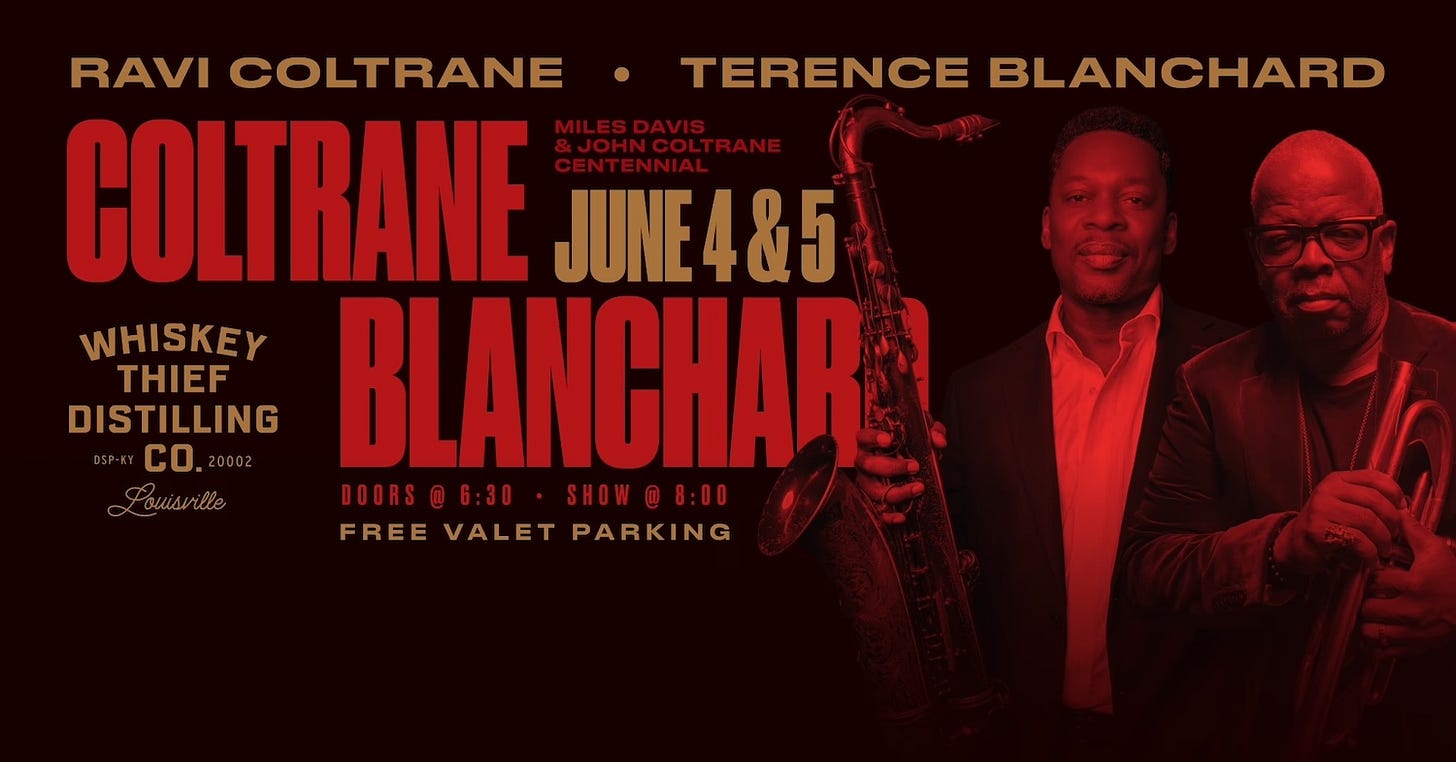
Because both men would have turned one hundred in 2026, the jazz world — and the broader music world — is responding with a scale and intensity of programming that has no modern precedent for a jazz anniversary. Every jazz festival in the world with any claim to cultural seriousness has incorporated centennial programming. College jazz programs are restructuring curricula. Record labels are mining archives. Venues are scheduling year-long residencies. And the performers carrying the tribute torch forward are some of the finest musicians currently working, bringing genuine creative investment rather than rote ceremonial recreation to the music of two men who would have despised nothing more than rote ceremonial recreation. Read The Improv Cafe’ Substack for Live Jazz News!
Newport Jazz Festival 2026: The Centennial Comes to Fort Adams
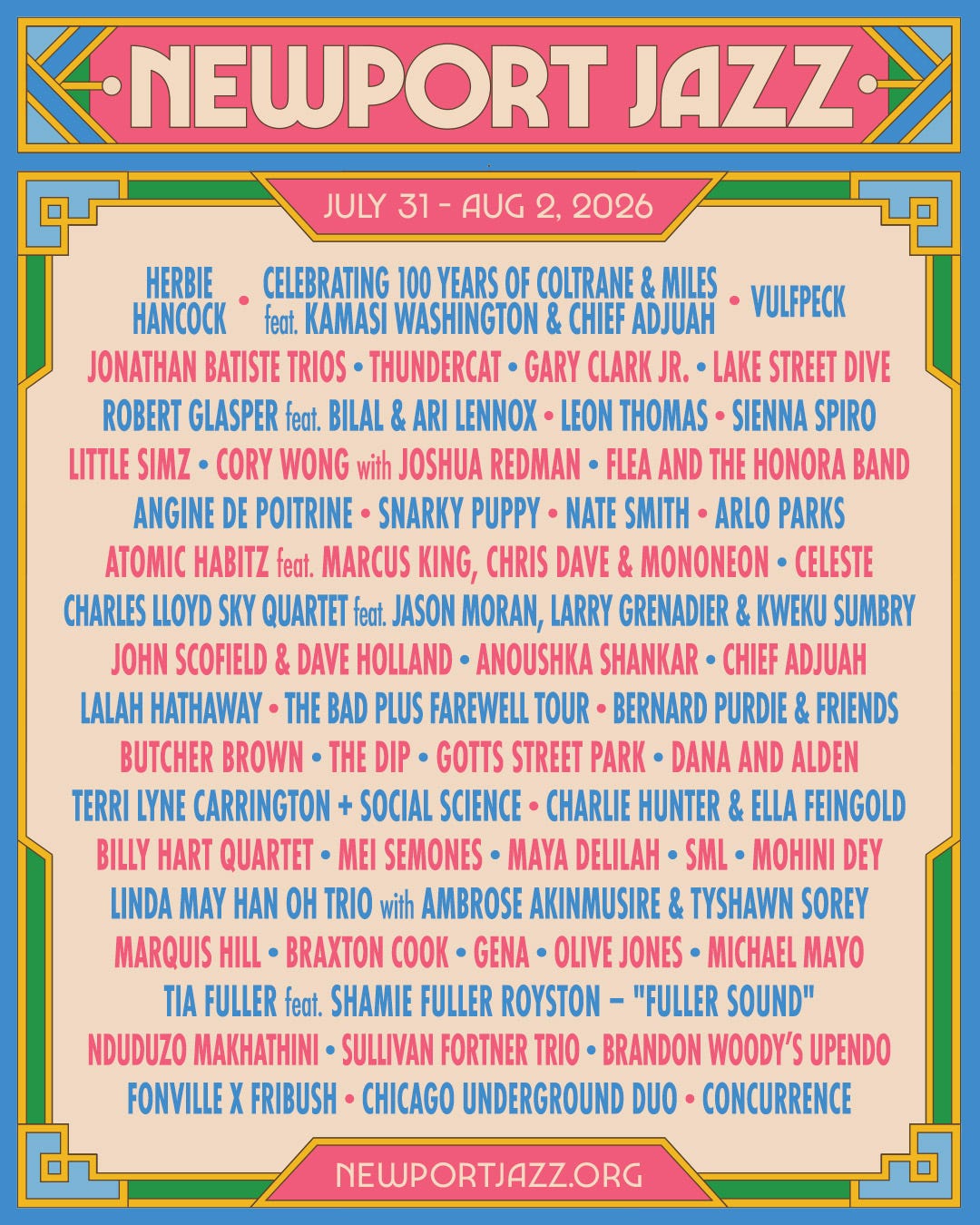
Among the concert events of the centennial year, few carry the historical resonance of what is scheduled for the Newport Jazz Festival — a festival that has its own deep connection to the legacies of both Davis and Coltrane, having hosted landmark performances by both men during their careers. The 72nd annual Newport Jazz Festival runs July 31 through August 2, 2026, at Fort Adams State Park in Newport, Rhode Island, and at its center sits a centennial tribute performance of extraordinary weight and promise. Read The Improv Cafe’ Substack for Live Jazz News!
The Vaults Open: Archival Releases and the Year of the Lost Recording
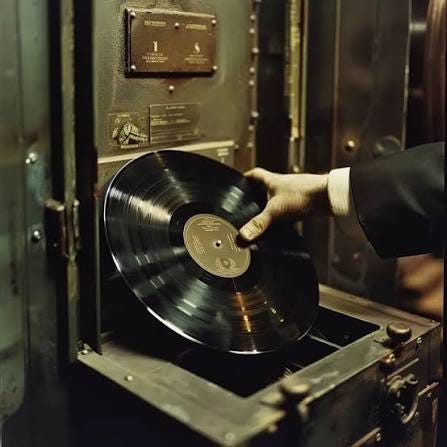
One of the most distinctive dimensions of any great musical centennial is what the record labels and estates decide to release from the archives — and 2026 has already proven to be one of the richest years in recent memory for archival jazz releases, with Davis and Coltrane at the center of the story.
Craft Recordings’ centennial reissue of Davis’s The New Sounds — his first release as a bandleader, originally pressed on Prestige in 1951 — brought one of the earliest documents of his leadership back into print in the original 10-inch format, restoring the physical object to something close to what listeners in 1951 would have held in their hands. The session’s extraordinary personnel — Jackie McLean on alto saxophone, Sonny Rollins on tenor saxophone, Art Blakey on drums — makes it a document of jazz royalty assembled at a moment when none of them had yet become the legends they would be. Read The Improv Cafe’ Substack for Live Jazz News!
Education, Research, and the Music That Teaches
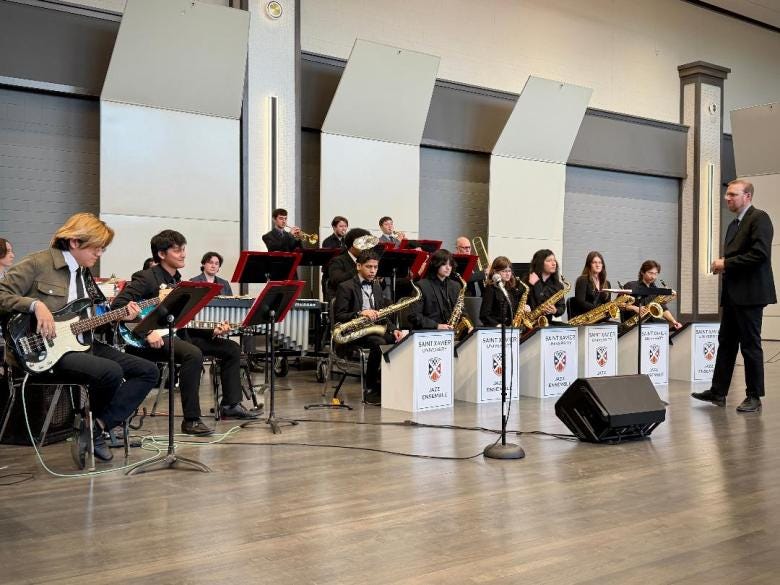
The centennial is reshaping jazz education as powerfully as it is reshaping the concert calendar. At music schools and conservatories across the country and around the world, 2026 has brought with it a wave of new curricula, workshops, lectures, and performance projects organized around the music of Davis and Coltrane and its legacy — not just within jazz but across the full range of genres that absorbed and responded to what these two men created. Read The Improv Cafe’ Substack for Live Jazz News!
What The Improv Café Brings to the Centennial
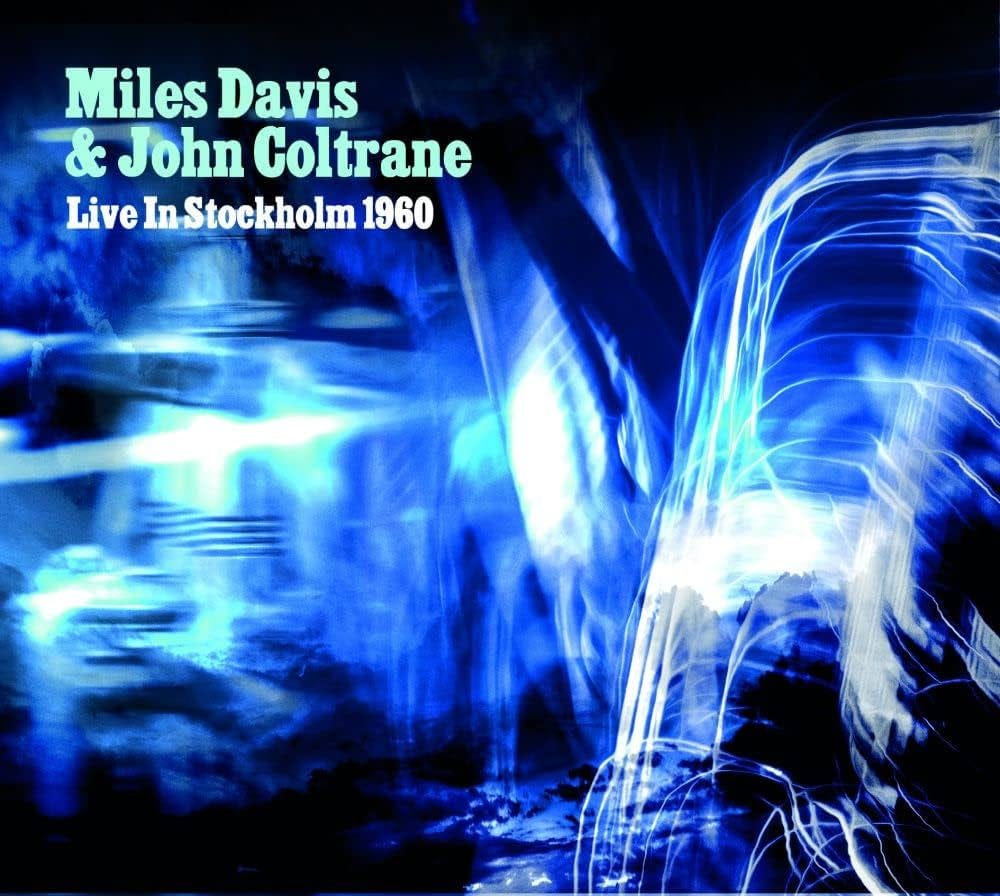
We play every live recording and every live release by both of these artists. There is only one way to truly encounter the music of Miles Davis and John Coltrane — the same way there is only one way to encounter any music that was made live, by musicians in the room, in the presence of an audience. You have to hear the live version. Not because studio recordings are inadequate — Kind of Blue itself is a studio recording, and it is one of the supreme achievements of recorded music — but because the live recordings of Davis and Coltrane carry something that studio recordings cannot fully replicate: the evidence of what happened when they played in front of people. Read The Improv Cafe’ Substack for Live Jazz News!
The Centennial That Belongs to Everyone
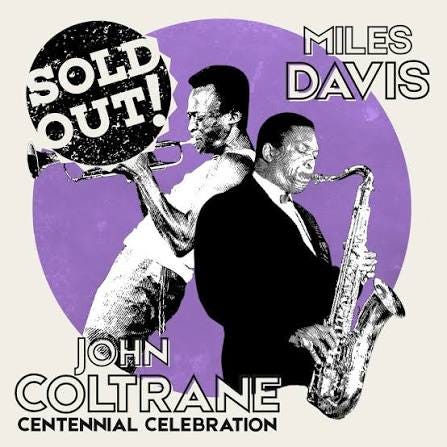
Perhaps the most striking thing about the global response to the 100th birthdays of Miles Davis and John Coltrane is how genuinely broad that response is. This is not a jazz-world-only event. The centennial is being marked by symphony orchestras and hip-hop festivals, by museum curators and rock radio stations, by academic conferences and outdoor summer concerts in parks. The music of two men who spent their lives resisting categorization turns out to belong to every category — or to none of them, which amounts to the same thing.
For listeners of The Improv Café — for everyone who has tuned in because they understand that the live version is the real version, that the spontaneous moment is the essential moment, that music heard through the filter of a stage and an audience carries something that music heard in a studio never quite can — this centennial is a homecoming. The music of Miles Davis and John Coltrane was always live at its core. It was always built on the premise that the most important thing happening in the room was what the musicians were inventing together in real time. That is the premise of every great jazz performance, and it is the premise of The Improv Café. Read The Improv Cafe’ Substack for Live Jazz News!
2026: The Year the World Listened Again
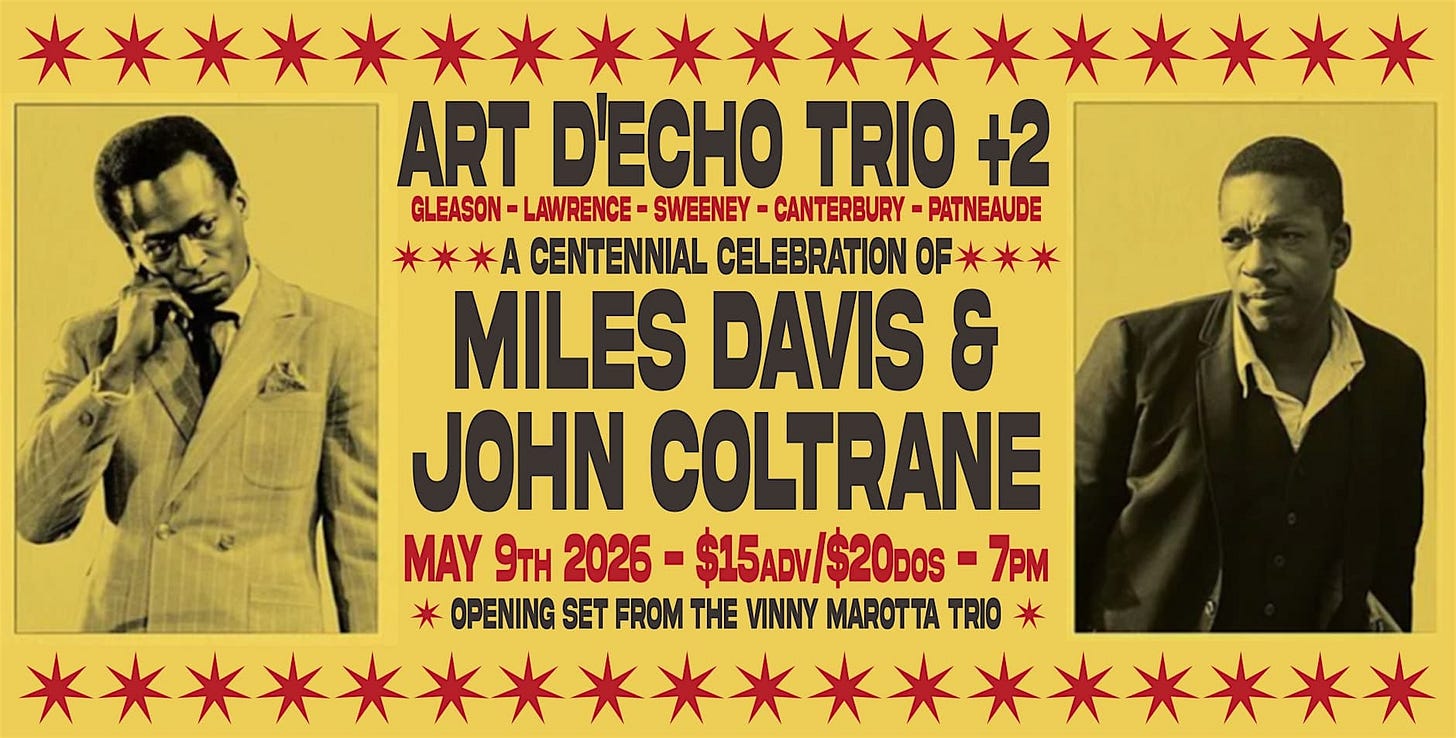
The centennial of Miles Davis and John Coltrane is not a memorial. It is not a backward glance at what was. It is an active, ongoing, globally distributed engagement with two of the most original musical minds of the 20th century, conducted by musicians who find in their work not a finished object to be preserved but a living set of questions to be pursued. Newport Jazz Festival, Smoke Jazz Club, the Montreal Jazz Festival, concert halls in Paris and Ann Arbor and Boulder and Kansas City and every point between — all of them are asking the same questions that Davis and Coltrane spent their careers asking. What comes next? What has not been played yet? Where does the music go when it reaches the edge of what it knows? Read The Improv Cafe’ Substack for Live Jazz News!
SMOKE Jazz Club (NYC): New York City’s premier venue announced a major August lineup dedicated to these centennials. Grammy-winner Nicholas Payton will lead a marquee tribute performing Davis’s Kind of Blue and Coltrane’s A Love Supreme.
New Album Announcements: Renowned jazz vocalist Lizz Wright and pianist Kenny Banks Sr. just announced their upcoming intimate duo LP, Nearness, slated for a September release.
Regional Series: The Queens Jazz Trail Concert Series launched outdoor performances across New York City parks to honor historic neighborhood jazz icons.
The Miles & Coltrane Collaborative Playlist: These five essential tracks trace their time together in Miles’s “First Great Quintet” and the legendary 1959 sextet sessions. They show how Miles’s spacious, cool trumpet perfectly balanced Coltrane’s high-energy, rapid-fire saxophone style.
- “So What” (Kind of Blue, 1959)
The ultimate introduction. It features Miles’s most famous, relaxed trumpet solo, followed immediately by a powerful, legendary solo by Coltrane. - “‘Round Midnight” (‘Round About Midnight, 1957)
A beautiful, moody performance of Thelonious Monk’s classic ballad. This track put the jazz world on notice that this duo was something special. - “All Blues” (Kind of Blue, 1959)
A dreamy, late-night blues track in a rolling 6/8 time signature. It highlights their incredible chemistry and contrasting solo styles. - “If I Were a Bell” (Relaxin’ with the Miles Davis Quintet, 1958)
A bright, joyful, and up-tempo show tune. It opens with Miles playfully ringing a dinner bell and features a incredibly fluid, swinging solo by Coltrane. - “Blue in Green” (Kind of Blue, 1959)
A deeply melancholic, poetic ballad. The song moves like a slow-motion watercolor painting, showcasing their unmatched emotional depth.
Local Jazz News: Philadelphia & Cherry Hill Area
If you are looking to catch a live show near Cherry Hill and Philadelphia, local jazz hubs have an incredibly active lineup of concerts and album release parties over the next two weeks:
- Meron Menares Macbride Album Release Show
- Date & Time: Tuesday, July 14, 2026 at 7:30 PM
- Venue: Chris’ Jazz Cafe, 1421 Sansom St, Philadelphia, PA
- Description: Pianist Daniel Meron, bassist Pablo Menares, and drummer Jimmy Macbride perform a night of modern jazz blending Middle Eastern and Latin American rhythms to celebrate their new live album.
- Cost: Ticket prices vary by package (General Admission a la carte to VIP Dinner options).
- Ragan Whiteside Live
- Date & Time: Thursday, July 9, 2026 at 9:00 PM
- Venue: Gerald Veasley’s Unscripted Jazz Series at SOUTH Restaurant & Jazz Parlor, 600 N Broad St, Philadelphia, PA
- Description: A high-energy, soulful performance by the chart-topping contemporary jazz flutist and NAACP Image Award nominee.
- Cost: Admission ticket required.
- Saxophonist Robert Boyd Jr. & His Quartet
- Date & Time: Friday, July 10, 2026 at 9:30 PM
- Venue: Chris’ Jazz Cafe, 1421 Sansom St, Philadelphia, PA
- Description: Straight-ahead, hard-hitting quartet jazz led by Robert Boyd Jr.
- Cost: $25 General Admission; Dinner packages available from $100–$120.
- Frank Sinatra & Judy Garland Tribute
- Date & Time: Saturday, July 11, 2026 at 7:30 PM & 9:30 PM
- Venue: Chris’ Jazz Cafe, 1421 Sansom St, Philadelphia, PA
- Description: A vocal jazz tribute tracking the American Songbook classics, featuring Bruce Klauber and Mary Ellen Desmond.
- Cost: $30 General Admission; Dinner packages available.
- Behn Gillece & Brian Betz Duo
- Date & Time: Wednesday, July 8, 2026 at 5:30 PM
- Venue: Time Bar, 1315 Sansom St, Philadelphia, PA
- Description: A brilliant local happy-hour set featuring virtuosic vibraphonist Behn Gillece alongside guitarist Brian Betz.